
Clover leafwing
Caenurgina crassiuscula
Description
How to identify
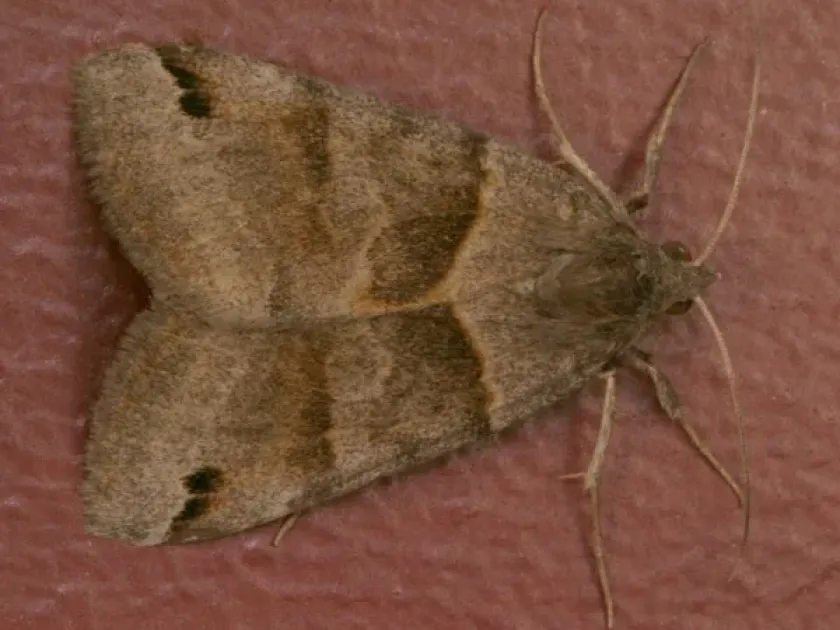
The clover leafwing (Caenurgina crassiuscula) is a moth species belonging to the Erebidae family, known for its cryptic coloration that helps it blend into its habitat.
Adult moths typically have a wingspan ranging from 30 to 35 mm, with forewings displaying mottled brown and grey patterns that mimic dry leaves or bark.
The larvae, or caterpillars, are typically slender and exhibit movement patterns characteristic of "looper" or "inchworm" type insects, facilitating their identification in the field.
These moths are primarily nocturnal or crepuscular, spending daylight hours hidden within the thick foliage of host plants or resting near the ground level.
The taxonomic classification reflects its place among the broader group of noctuid-like moths that have adapted to feed on a variety of low-growing vegetation.
What it damages
The primary host plants for this species include various legumes, most notably clover (Trifolium spp.) and alfalfa (Medicago sativa).
Larvae consume the foliage, beginning with the margins and progressing towards the veins, which can significantly reduce the photosynthetic capacity of the plants.
Severe infestations can lead to substantial biomass loss, negatively impacting both the hay yield and the nutritional quality of the forage crop.
The feeding activity is particularly damaging to young, developing stands, as it stunts growth and weakens the overall vigor of the legume field.
While often seen as a secondary pest, under favorable environmental conditions, populations can surge, causing widespread defoliation across large areas.
When it appears
The life cycle of the clover leafwing is closely synchronized with the growth cycles of its host plants throughout the spring, summer, and autumn.
Adults typically emerge in late spring as temperatures rise, signaling the start of the first generation's reproductive activity.
Multiple generations can occur within a single growing season, with peak larval populations frequently appearing during mid-summer months.
Overwintering occurs in the pupal stage, usually sequestered in the soil or protected under crop debris, which allows for survival through colder winter periods.
The duration of each developmental stage is highly dependent on ambient temperature, meaning that warmer seasons often result in faster generation cycling.
Signs of infestation
Early symptoms of infestation include small, irregular holes or notches found along the leaf margins of host plants during the initial larval feeding stage.
As the larvae mature, they consume more substantial portions of the leaves, eventually leaving behind only the tougher midribs and larger veins.
The presence of frass (larval droppings) at the base of the plants or on the surface of the soil is a reliable indicator of active larval feeding nearby.
One may observe adults fluttering in short, jerky flights when disturbed in the field, particularly during dusk or when walking through dense stands.
Patches of yellowing or stressed vegetation in a field, especially when not correlated with irrigation or soil issues, often point to a localized larval outbreak.
Control measures
Effective management begins with proper agronomic practices, such as well-timed mowing, which removes the host plants and disrupts the larval development cycle.
Crop rotation serves as a critical strategy to prevent the buildup of pest populations, forcing the insects to find hosts elsewhere or reducing their survival success.
Biological control methods involve encouraging the presence of natural predators and parasitoids, which naturally regulate caterpillar numbers in the field.
Chemical intervention should be considered only when scouting reveals that the population density has reached the economic injury level for the specific crop.
Consistent field monitoring using light traps or sweep-net sampling is essential to detect the arrival of the pest early and implement control measures promptly.
Taxonomy
- Latin name
- Caenurgina crassiuscula
- Order
- Lepidoptera (butterflies)
- Family
- Erebidae
- EPPO code
- CAENCR
Discussion
No discussions yet — be the first.