
Raspberry beetle
Byturus unicolor
Description
How to identify
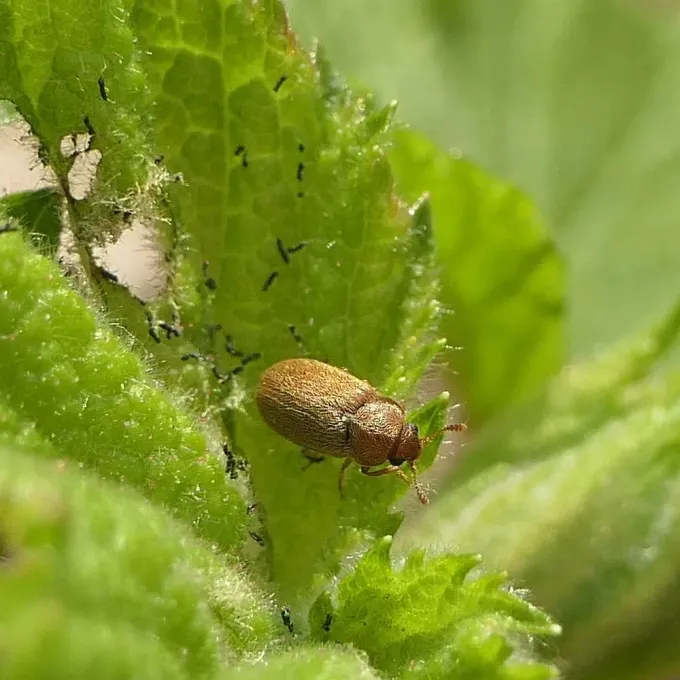
The raspberry beetle (Byturus tomentosus) is a small coleopteran insect belonging to the family Byturidae. Adults are approximately 4 mm long, with a body covered in dense, yellowish-grey hairs that give them a distinctive matte appearance.
The larvae, which reach 6–7 mm in length, are light-colored with visible brown segments. They develop within the fruit before falling to the soil to pupate. The pupal stage occurs in the ground under the raspberry canes.
Adults overwinter in the soil at a depth of 10–20 cm. As temperatures rise in early spring, they emerge to feed on developing leaves and buds, beginning their annual cycle that synchronizes with the raspberry's flowering phase.
Female beetles lay eggs inside the blossoms or on young fruitlets. A single female can produce dozens of eggs, leading to rapid infestation if environmental conditions are favorable for the pest.
The synchronization between the beetle's life cycle and the plant's phenology is critical. Successful management relies on understanding this timing to intervene before the larvae damage the marketable fruit.
What it damages
This pest primarily attacks raspberries and blackberries. Adult beetles feed on foliage, creating irregular holes, and cause damage to buds, which can lead to reduced flowering and poor fruit set.
The most significant damage is caused by the larvae, which burrow into the developing berries. They feed on the fruit tissue and seeds, rendering the berries unmarketable and prone to rotting.
Infested fruit often appears deformed, smaller than healthy berries, and may exhibit signs of fungal decay, such as gray mold, due to the entry points created by the feeding larvae.
In high-infestation years, the raspberry beetle can destroy a large percentage of the harvest. Early-ripening varieties are particularly susceptible as their peak flowering time often aligns with the beetle's activity.
Besides immediate loss, the feeding process weakens the plant's vigor, making it less productive in subsequent seasons if the infestation is not managed appropriately.
Signs of infestation
Early symptoms include skeletonized or hole-riddled leaves in the spring. During the budding stage, look for damaged petals and bored-out blossoms within the raspberry patch.
At the harvesting stage, the presence of wormy fruit is the most obvious sign. These berries often look prematurely ripened, deformed, or have visible entry holes where larvae have exited.
Frequent dropping of young fruitlets can also indicate a high population of beetles. If you observe berries with dark spots or irregular shapes, it is highly likely that larvae are present inside.
Inspecting the center of the flowers during the day can reveal adult beetles, as they are often active within the blossoms, feeding on pollen and nectar before laying eggs.
- Holes in leaves;
- Damaged buds;
- Deformed and rotting berries;
- Larvae inside fruit;
- Premature fruit drop.
Control measures
Cultivation practices are essential for control. Regularly loosening the soil around the base of the bushes in autumn and spring helps expose and kill the pupae residing in the upper soil layers.
During the budding phase, a simple and effective physical method is to shake the beetles off the bushes onto a cloth early in the morning, while the insects are still sluggish due to cooler temperatures.
Biological control agents, such as specific entomopathogenic fungi or bacteria, can be applied to reduce the adult population without harming the beneficial pollinators vital for fruit production.
Chemical insecticides should be used as a last resort and only applied before the flowers open. Spraying during bloom is strictly prohibited, as it will kill bees and other essential pollinators.
Sanitation is key: ensure that all damaged or overripe fruit is removed from the field during harvest to break the cycle and prevent larvae from entering the soil for pupation.
Taxonomy
- Latin name
- Byturus unicolor
- Order
- Coleoptera (beetles)
- Family
- Byturidae
- EPPO code
- BYTUUN
Discussion
No discussions yet — be the first.