
Baker's raspberry beetle
Byturus bakeri
Description
How to identify
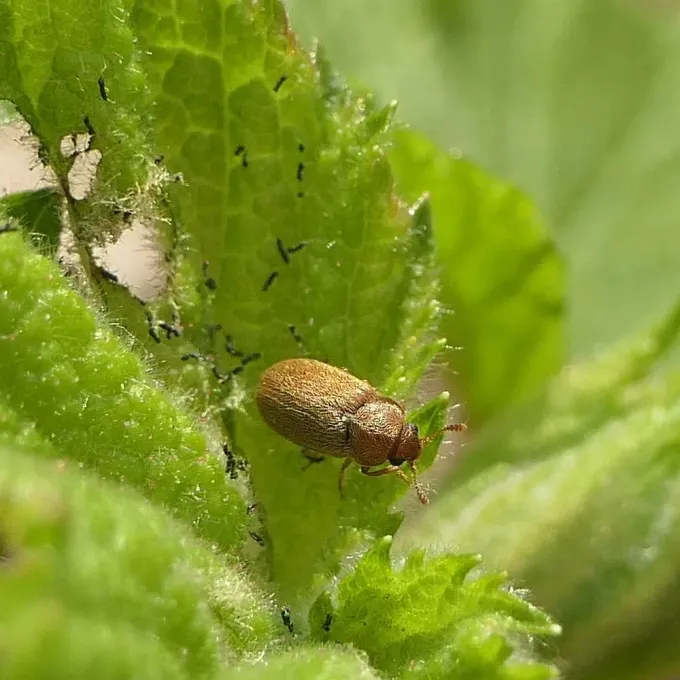
Baker's raspberry beetle (Byturus bakeri) is a member of the family Byturidae within the order Coleoptera. These small insects, usually measuring about 4 to 5 millimeters in length, are often difficult to spot due to their cryptic coloration.
Their bodies are elongated and densely covered in yellowish-gray hairs, which blend in perfectly with the reproductive parts of the host plant. The color varies from light brown to dark brown, depending on the maturity of the adult beetle.
The larvae are typically creamy-white or yellowish with a dark head and three pairs of well-developed thoracic legs. They are notably active, allowing them to navigate efficiently through the fruit structures while feeding.
The eyes of the beetle are highly sensitive, aiding them in locating the flowers of host plants for feeding and subsequent oviposition. Their development is perfectly synchronized with the phenology of raspberry plants.
Distinguishing Byturus bakeri from related species often requires close examination of morphological characteristics, such as the shape of antennae and tarsi, which are specific to this particular species.
What it damages
This pest primarily targets plants within the genus Rubus, with raspberries and blackberries being the most affected crops. The damage caused by these beetles can result in significant yield losses if left unmanaged.
Adult beetles inflict damage during the early stages of plant growth by feeding on developing buds and young leaves, creating irregular holes. This feeding behavior stunts shoot growth and reduces the plant's overall vigor.
The most severe damage occurs when larvae tunnel into developing berries. They feed on the internal tissues, causing the fruit to become deformed, discolored, and ultimately unsuitable for market or consumption.
Infested berries often rot or drop prematurely from the cane. The presence of larvae inside the fruit significantly compromises its shelf life and quality, making them undesirable for consumers and processing plants.
Secondary infections, such as gray mold or other fungal pathogens, frequently colonize the wounds created by the larvae, leading to further fruit rot and accelerating the spread of disease within the patch.
When it appears
Adult beetles emerge from the soil in spring as soil temperatures rise, typically coinciding with the bud-break stage of raspberry plants. This is the period when they are most active near the host plants.
Mating and egg-laying occur during the blossoming period. Females place their eggs directly into or near the flower buds, ensuring the larvae have immediate access to food once they hatch.
Larval development takes place inside the ripening berries over several weeks. Once the larvae complete their feeding cycle, they exit the fruit to drop into the soil for pupation.
The beetles overwinter as adults in the soil at a depth of up to 20 centimeters. They remain dormant throughout the winter until the soil warms up again the following spring.
Timing control measures based on these seasonal milestones is essential for success. Applications of management strategies during the pre-blossom stage are crucial to prevent widespread infestation of the fruit.
Signs of infestation
Initial signs of an infestation include the appearance of small, irregular holes in the newly unfurled leaves and evidence of beetle feeding on the flower buds before they open.
As the berries develop, they may appear stunted, misshapen, or exhibit premature ripening and decay. These visual symptoms are clear indicators of internal larval feeding activity.
- Presence of larval frass on the exterior of the berry.
- Premature fruit drop or shriveling of the receptacle.
- Uneven fruit development within the cluster.
- Discovery of larvae inside the fruit upon breaking it open.
In the early morning, adults can often be observed sitting on the open flowers. Monitoring with visual inspections or pheromone traps is highly recommended to assess population levels early in the season.
Post-harvest soil analysis under the raspberry canes can reveal the presence of pupae, helping to estimate the potential pressure for the next season and allowing for proactive planning.
Control measures
Cultural control methods, such as deep cultivation between rows and under the canes, are effective. This disturbs the soil and exposes the pupae to environmental conditions, leading to higher mortality.
Sanitation is key; collecting and disposing of damaged or infested berries during the harvest season prevents larvae from returning to the soil to pupate, thus reducing the next generation's population.
For small-scale plots, hand-picking beetles during the early morning hours—when they are sluggish—is a simple, non-chemical method that can keep populations at manageable levels.
Chemical control involves the application of appropriate insecticides, but treatments must be strictly limited to the pre-bloom stage. This timing is vital to protect beneficial pollinators like bees.
Biological control agents, such as entomopathogenic fungi, represent an eco-friendly alternative. These can target larvae and adults effectively while minimizing harmful residues on the berry crop.
Taxonomy
- Latin name
- Byturus bakeri
- Order
- Coleoptera (beetles)
- Family
- Byturidae
- EPPO code
- BYTUBA
Discussion
No discussions yet — be the first.