
Raspberry beetle
Byturus
Description
How to identify
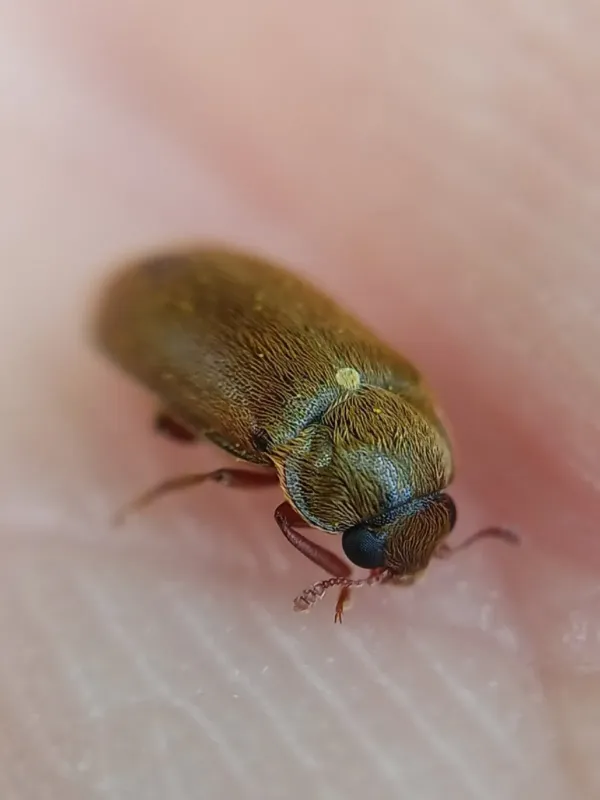
The raspberry beetle (Byturus tomentosus) is a small pest approximately 3.5–4 mm long, covered with fine, dense, greyish or yellowish-brown hairs.
Belonging to the Byturidae family of the order Coleoptera, these beetles have a compact oval body and functional wings, allowing them to fly between host plants.
The larvae, which cause the most significant damage, are about 6–7 mm long, cream-white in color, and possess a distinct brown head capsule.
Adult beetles overwinter in the soil at a depth of 5–10 cm, primarily near the root systems of host plants like raspberry and blackberry bushes.
Their life cycle consists of one generation per year, making seasonal monitoring and targeted intervention essential for maintaining a healthy plantation.
What it damages
The primary hosts are raspberry and blackberry. Both adults and larvae contribute to crop loss by damaging various parts of the plant throughout the season.
Adults consume young foliage and buds, leaving visible holes and weakening the plant's ability to produce energy through photosynthesis.
The larvae tunnel into the developing flower buds and later into the fruit, feeding on the fleshy interior of the drupelets.
Infested berries are usually deformed, stunted, and prone to premature decay, rendering them completely unsuitable for fresh consumption or commercial sale.
In high-pressure years, the presence of these larvae inside fruits leads to significant yield reductions, impacting the economic viability of the crop.
When it appears
Adults emerge from the soil in spring when temperatures reach approximately 12-15 degrees Celsius, coinciding with the early bud development of raspberries.
The pre-flowering and flowering stages are the most critical, as adults feed heavily on floral parts and females deposit eggs into the open blossoms.
Larval development occurs primarily within the ripening fruit during the harvest window in summer, making them a direct threat to the yield.
By mid-summer, fully grown larvae drop from the berries to the ground, where they pupate in the soil and prepare to hibernate through the winter.
Late summer and autumn are spent in the soil as adults or pupae, completing the lifecycle and setting the stage for the next year's infestation.
Signs of infestation
Initial signs include small holes in the emerging leaves, indicating the presence of adults that have just emerged from the soil.
Damage to flower buds is a critical indicator, as they may become withered or drop prematurely, significantly reducing the potential yield.
The most recognizable sign of infestation is finding larvae inside the fruit during harvest, often accompanied by decay and discoloration of the berries.
- Perforated leaves on new growth.
- Premature bud and flower drop.
- Deformed or rotting berries.
- Presence of small brown beetles on the flowers.
Severe infestations often result in a significant number of berries showing internal waste, which is frequently discovered too late for effective treatment.
Control measures
Cultural control involves deep cultivation of the soil around the base of the bushes in autumn and spring to disturb overwintering sites.
Mechanical control, such as shaking beetles off the bushes onto a collection sheet in the early morning, can be very effective in small garden plots.
Chemical control should be applied strictly before flowering to minimize residues in the berries and protect pollinating insects.
Biological control agents, such as nematodes or specific bacterial strains, can be used to manage larval populations in the soil without harsh chemicals.
Maintaining healthy, vigorous plants through proper pruning and nutrition helps the bushes withstand minor attacks and promotes faster recovery after pest pressure.
Taxonomy
- Latin name
- Byturus
- Order
- Coleoptera (beetles)
- Family
- Byturidae
- EPPO code
- BYTUSP
Discussion
No discussions yet — be the first.