
Raspberry beetle
Byturus rubi
Description
How to identify
The raspberry beetle, known scientifically as Byturus rubi, is a small member of the Byturidae family, typically measuring about 4 mm in length.
Adult beetles are oval-shaped and covered in dense, yellowish-grey hairs, which give them a dull, brownish appearance when observed in the field.
They overwinter as adults in the soil at depths of 15 to 20 cm, emerging in spring when temperatures consistently reach 12–13 degrees Celsius.
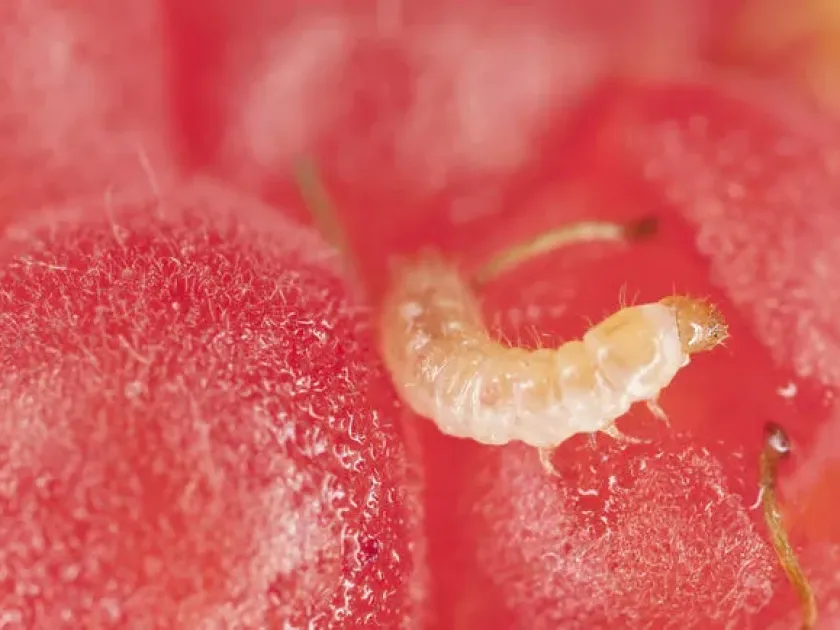
The larvae are creamy-white, reaching about 7 mm at maturity, characterized by dark brown plates on each dorsal segment of their bodies.
The lifecycle is strictly univoltine, meaning there is only one generation per year, with the larvae pupating in the soil during the summer.
What it damages
The beetle primarily attacks raspberries and blackberries, although it can occasionally be found on other members of the Rosaceae family.
Adult beetles feed on the buds, foliage, and flowers, causing visible holes and disrupting the initial development of the crop's reproductive parts.
The most severe damage is caused by the larvae, which burrow into the developing fruit, consuming the interior tissues and causing the berry to deform.
Infested berries become unmarketable, stunted, and often rot prematurely due to the introduction of fungal pathogens through the larvae's entry points.
In cases of high pest pressure, the beetle can destroy more than half of the total harvest, significantly impacting the commercial viability of the farm.
Signs of infestation
Early spring signs include characteristic ragged holes in young, emerging leaves, often accompanied by visible damage to the unopened flower buds.
During the blooming season, adults can be found inside the flowers, where they feed on pollen and nectar, weakening the plant's capacity to set fruit.
The presence of larvae inside the fruit is often signaled by a misshapen, lopsided berry that matures unevenly compared to healthy counterparts.
Small exit holes on the surface of the fruit, often surrounded by brownish debris, are a clear indication of a larval infestation within the berry.
Premature ripening and the sudden drop of berries from the canes are common symptoms of significant infestation during the harvest period.
Control measures
Cultivation practices such as deep hoeing or tilling around the base of the canes during the pupation period can physically destroy the overwintering population.
In the early morning, when the beetles are less active, gardeners can shake the canes over a collection sheet to capture and dispose of the adult insects.
Chemical control should be limited to the pre-flowering stage to protect beneficial pollinators, using approved insecticides according to local agricultural regulations.
Biological control options, including the use of entomopathogenic nematodes or specialized microbial sprays, offer a more sustainable way to manage the larvae in the soil.
- Pruning and destroying heavily infested canes during the winter months.
- Using physical barriers like fine mesh netting to prevent adults from accessing the flower buds.
- Monitoring beetle presence with white sticky traps or visual inspection before bloom.
Taxonomy
- Latin name
- Byturus rubi
- Order
- Coleoptera (beetles)
- Family
- Byturidae
- EPPO code
- BYTURU
Discussion
No discussions yet — be the first.