
Raspberry beetle
Byturus tomentosus
Description
How to identify
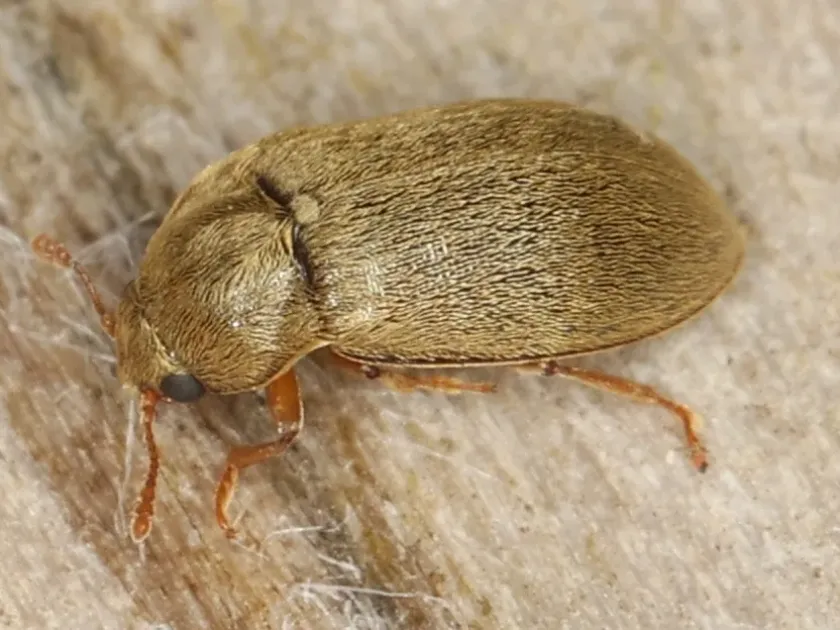
The raspberry beetle (Byturus tomentosus) is a small beetle belonging to the family Byturidae within the order Coleoptera. Adult beetles are typically about 4 mm long and are densely covered with tiny yellowish-grey or brown hairs.
The beetle has an oval shape and a dark-colored body. The larvae are creamy-white, reaching about 6-7 mm in length, and possess distinct dark transverse bands on their dorsal segments, which helps in identifying the species during field scouting.
What it damages
This pest is a major threat to raspberry and blackberry production. In the absence of primary hosts, it can also infest other Rosaceae species, including apple, cherry, and strawberry crops, causing economic damage.
Adults feed on young foliage and blossoms, leading to holes and structural damage to the buds. The larvae are the most destructive stage, as they burrow into the fruit, feeding on the fleshy interior and ruining the quality of the raspberries.
When it appears
Adult beetles emerge from the soil in early spring when temperatures rise above 12-13 degrees Celsius. The emergence typically coincides with the bud development stage of raspberries, allowing beetles to begin feeding immediately.
Females lay individual eggs inside the blossoms or on young fruitlets. After the larvae complete their development within the fruit, they drop to the ground and burrow into the soil to pupate, remaining there as adults until the next spring.
Signs of infestation
Early symptoms include small irregular holes in the developing leaves. As the season progresses, damaged blossoms may wither and drop off before they can produce fruit.
The most common sign of infestation is the presence of worm-like larvae inside the ripened berries. Infected fruit often appears deformed, dull in color, or starts to rot, making it unsuitable for fresh consumption or market sale.
Control measures
Cultural control involves cultivating the soil around the base of the bushes in late summer to disrupt the pupation process and reduce the overwintering population. Manual removal of infested berries helps stop the cycle of development.
Chemical control should be applied carefully before the flowering stage to kill adults before they lay eggs. Using selective insecticides during the bud stage is the most effective way to ensure a high-quality, pest-free harvest.
Taxonomy
- Latin name
- Byturus tomentosus
- Order
- Coleoptera (beetles)
- Family
- Byturidae
- EPPO code
- BYTUTO
Discussion
No discussions yet — be the first.