
European green toad
Bufo viridis
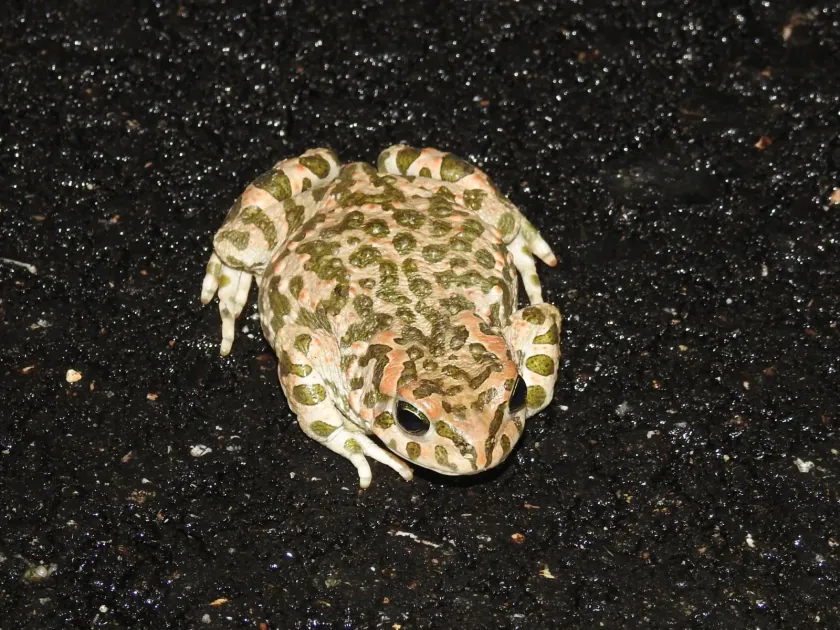
Description
How to identify
The European green toad (Bufo viridis) is an amphibian species belonging to the family Bufonidae, notable for its distinctive appearance.
It possesses a light-colored, grayish-green skin covered with dark green patches bordered by a darker rim, providing excellent camouflage.
The toad is adapted to various habitats, including dry landscapes, gardens, and agricultural fields, demonstrating high resilience.
This species is strictly nocturnal, remaining inactive in burrows or hidden spots during the daylight hours to avoid heat and dehydration.
Its skin glands secrete toxins that serve as a chemical defense mechanism, making it unpalatable to most common garden predators.
What it damages
In agronomy, the European green toad is categorized as a beneficial organism rather than a pest to cultivated crops.
The diet of this toad consists exclusively of invertebrates, primarily insects and mollusks, which are often major agricultural pests.
It does not feed on plant tissues, meaning it causes no direct damage to leaves, roots, stems, or fruits of vegetables.
Occasional physical disturbance of young seedlings may occur if the toad's migration paths cross high-density nursery beds.
Its overall impact is positive as it significantly contributes to the biological control of populations of slugs and beetle larvae.
When it appears
Emergence from hibernation typically occurs in early spring once the soil temperature stabilizes above freezing levels.
The reproductive phase takes place from spring to early summer, requiring access to shallow water bodies for spawning.
During the warmer months, the toad remains active on land, hunting at night when the humidity allows for movement.
As the weather cools in late autumn, the toads begin searching for suitable hibernation sites to endure the winter months.
Hibernation is characterized by a period of metabolic suppression in frost-free locations such as underground burrows or basements.
Control measures
There is no standard agricultural control program for the European green toad because it is considered an ecological asset.
If its presence is undesirable in specific high-precision growing areas, the best strategy is physical exclusion using fences.
Sanitation practices that remove debris, wood piles, and stagnant water help reduce attractive hiding places for the toads.
Integrated Pest Management (IPM) encourages the conservation of such species due to their natural role in suppressing harmful insects.
Chemical control is not recommended as it is ecologically harmful and disrupts the natural food chain within the agro-ecosystem.
Taxonomy
- Latin name
- Bufo viridis
- Family
- Bufonidae
- EPPO code
- BUFOVI
Discussion
No discussions yet — be the first.