
Toad
Bufo
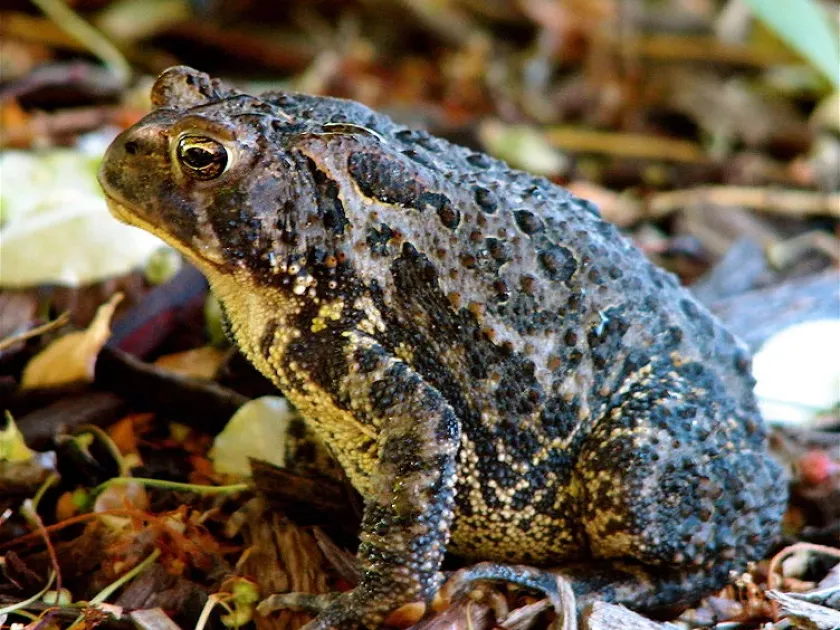
Description
How to identify
Toads (family Bufonidae) are tailless amphibians characterized by their dry, warty skin and squat, sturdy body shape. Unlike frogs, they are primarily terrestrial and move by walking or short, clumsy hops.
Their coloration is typically dull, ranging from shades of brown to gray, which serves as effective camouflage on soil and leaf litter. They are nocturnal hunters, making them rarely seen during the bright daytime hours.
Toads possess prominent parotoid glands located behind their eyes. These glands secrete a mild toxin as a defense mechanism against predators, which is generally harmless to humans unless ingested or rubbed into eyes.
Adult toads typically measure between 8 and 15 cm in length. They lack teeth and rely on a long, sticky tongue to capture prey, which they swallow whole after rapid ingestion.
While they are amphibians, they depend on water only during the breeding season. For the rest of the year, they prefer moist, shady habitats such as burrows, underneath logs, or dense vegetation.
What it damages
Toads are not agricultural pests and cause no damage to cultivated plants. They do not feed on roots, leaves, fruits, or seeds, meaning they have zero negative impact on your vegetable garden's harvest.
Any perceived damage attributed to toads is usually caused by other garden pests like slugs, snails, or cutworms. Toads are often found near these damaged sites simply because they are hunting the actual pests.
Toads serve as biological controllers, feeding on a wide range of invertebrates, including insects and mollusks that do damage to crops. They are highly valued in integrated pest management systems.
There is no scientific evidence of toads causing harm to vegetable production. Their presence is a sign of a healthy garden environment where natural balance is maintained without the need for heavy chemical use.
While a toad might occasionally move through a young seedling bed, its impact is negligible compared to the significant benefits it provides by reducing the overall insect population in the garden area.
When it appears
The activity cycle of toads begins in early spring when they emerge from hibernation and migrate to ponds or slow-moving water sources for the breeding season.
Following the breeding period, which lasts for several weeks, adult toads disperse into gardens, fields, and forests to spend the summer months feeding and growing.
During the heat of the summer, toads are strictly nocturnal. They remain hidden in cool, moist spots during the day to prevent dehydration and emerge at night to forage for food.
As temperatures drop in autumn, toads seek out deep burrows or loose soil to hibernate. They remain underground in a state of torpor throughout the winter, surviving on stored energy reserves.
The life cycle involves an egg stage, followed by aquatic tadpoles, and finally the metamorphosis into terrestrial adults. This process typically occurs in aquatic environments during late spring and early summer.
Signs of infestation
Detecting the presence of toads is usually done by hearing their characteristic trilling calls during the breeding season or spotting them during night garden work. They are silent and subtle residents.
There are no "signs of infestation" because toads are not pests. Instead, you might notice a reduction in common garden pests such as beetles, moths, and slugs, which indicates the presence of these beneficial amphibians.
If you see a toad in your garden, it is an indicator that there is a sufficient prey base, meaning the toad has found a source of food in the form of unwanted insects.
Physical traces left by toads are minimal; you might occasionally find small, shallow depressions in soft soil where they have rested during the day, which do not interfere with plant growth.
The absence of damage on your leafy greens despite a healthy garden environment is a positive sign that natural predators, including toads, are working effectively to manage pest populations.
Control measures
No protection measures are needed against toads, as they are strictly beneficial to the gardener. Their presence should be encouraged and protected rather than suppressed.
The most important action is to reduce or eliminate the use of broad-spectrum chemical pesticides and herbicides, which are toxic to amphibians and can cause population declines.
To encourage toads to stay in your garden, provide small shaded areas or "toad houses" (like upturned terracotta pots or piles of stones) to offer them protection from the midday sun.
If you wish to discourage them from specific areas for agricultural reasons, simply maintain soil that is less moist and keep the area free of heavy mulch, which will make the habitat less attractive to them.
View toads as a free, natural pest management service. Protecting these amphibians is one of the most effective ways to maintain a balanced, chemical-free garden with minimal effort.
Taxonomy
- Latin name
- Bufo
- Family
- Bufonidae
- EPPO code
- BUFOSP
Discussion
No discussions yet — be the first.