
Common toad
Bufo bufo
Description
How to identify
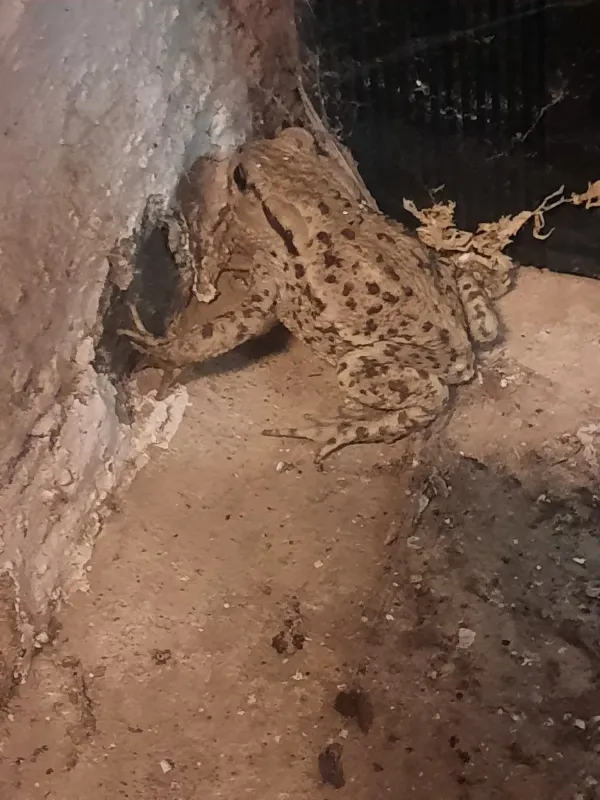
The common toad (Latin: Bufo bufo) is a species of amphibian in the family Bufonidae. It is characterized by a stocky build and dry, warty skin that ranges in color from grey to brown or olive.
Adults possess prominent parotoid glands behind the eyes, which secrete a toxin used as a defense mechanism against potential predators. The eyes themselves are typically copper-colored with horizontal pupils.
Unlike frogs, common toads have shorter hind legs, meaning they walk or crawl rather than hop. They are nocturnal creatures, spending their days hidden in cool, damp, and dark environments.
They are widely distributed across various habitats, including forests, gardens, and agricultural land, and are highly adapted to terrestrial life outside of the breeding season.
In an agricultural context, it is crucial to distinguish this species from actual crop pests, as its biology does not involve feeding on plant tissues.
What it damages
The common toad is not a plant pest. It is a strictly carnivorous animal that feeds exclusively on insects, slugs, snails, worms, and other small soil invertebrates.
It does not consume vegetables, fruits, or roots. Therefore, the common toad causes zero direct damage to agricultural crops or ornamental plants.
Mechanical damage is the only possible, albeit rare, impact. In confined spaces like greenhouses, a large toad moving through dense seedling beds may inadvertently flatten small, delicate plants.
There is no evidence of these animals eating berries or damaging crops, despite common superstitions among some gardeners. They are, in fact, professional pest controllers.
By consuming large numbers of slugs and harmful beetle larvae, the common toad provides a significant service to the farmer, acting as a natural biological control agent.
When it appears
The life cycle of the common toad is seasonal. It begins with a spring migration to water bodies for breeding, which usually occurs between March and May depending on the local climate.
After the breeding period concludes, the toads emerge from the water and return to terrestrial habitats, spending the spring and summer months in gardens and fields.
Throughout the summer, they remain active, foraging for food during the cooler night hours. They are particularly active and visible after rainfall when the ground humidity is high.
As temperatures begin to drop in late autumn, the toads seek hibernation sites. They burrow into soft soil, leaf litter, or deep holes to survive the winter temperatures.
They remain in a state of hibernation until the following spring, when increasing soil temperatures trigger the resumption of their life cycle and migration.
Control measures
There is no need to control or remove common toads from a garden. Their presence is highly beneficial and indicates a healthy, functioning ecosystem on your property.
To discourage toads from entering sensitive areas like seed trays or greenhouses, simple physical barriers such as small mesh fences are sufficient and humane.
Maintaining a tidy garden by removing piles of debris and overgrown vegetation will naturally limit the number of available hiding spots, encouraging toads to move elsewhere.
Avoid using heavy chemical pesticides, as these chemicals are absorbed through the toad's highly permeable skin, often proving lethal to these helpful animals.
Encouraging common toads on your farm supports a reduction in synthetic pesticide use, as they naturally keep populations of garden pests in check throughout the growing season.
Taxonomy
- Latin name
- Bufo bufo
- Family
- Bufonidae
- EPPO code
- BUFOBU
Discussion
No discussions yet — be the first.