
American toad
Bufo americanus
Description
How to identify
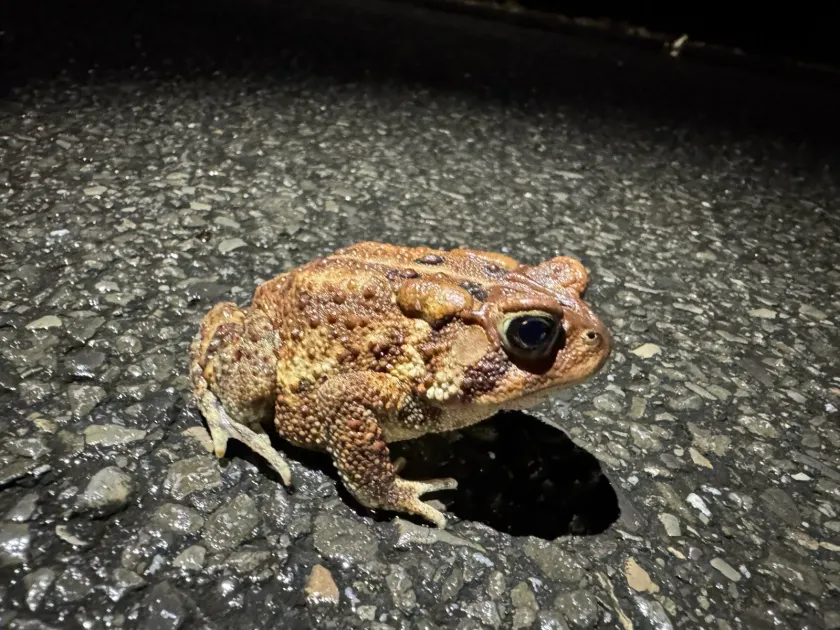
The American toad (Bufo americanus) is a species of toad in the family Bufonidae. It is characterized by its warty, dry skin, which ranges in color from brown and gray to olive or reddish-brown.
A key identifying feature of this species is the enlarged parotoid glands located behind each eye. These glands secrete a mild toxin used for defense against predators in their natural habitat.
Adult American toads are primarily terrestrial. They spend most of their time in moist environments, including home gardens, woodland edges, and urban parks with sufficient ground cover.
These toads are nocturnal, remaining active at night to hunt for food. During the day, they remain hidden in cool, moist spots such as under rocks, logs, or within self-dug burrows to prevent dehydration.
It is important to emphasize that Bufo americanus is not a crop pest. In an agricultural context, they are classified as beneficial organisms rather than threats to vegetation.
What it damages
The American toad does not feed on plants, vegetables, or fruits. It is an insectivore that focuses entirely on consuming invertebrates, making it an excellent natural pest controller.
Their diet includes a wide variety of garden pests such as beetles, slugs, caterpillars, ants, and flies. By feeding on these organisms, they help maintain the ecological balance of the garden.
Any perceived damage is negligible, such as the occasional small depression left in the soil from their burrowing. This activity does not cause economic harm or risk to the structural integrity of your crops.
The chemical defense secretions (toxins) produced by the toad are harmless to plants. These toxins are purely for protection against animals that might try to eat the toad, not for plant defense.
Therefore, there is no need for control measures to mitigate damage. Instead, gardeners should encourage their presence as a natural, chemical-free way to manage pest populations.
When it appears
The life cycle of the American toad begins in early spring, when adults migrate to temporary or permanent water bodies to breed and lay eggs.
Following the breeding season, they disperse into surrounding fields, gardens, and forests to spend the summer months feeding and growing.
As temperatures begin to drop in the autumn, American toads prepare for hibernation. They burrow deep into loose soil, often below the frost line, to survive the winter months.
Juvenile toads, or toadlets, typically emerge from the water in late summer. They continue the process of pest control throughout the remainder of the growing season.
Providing a suitable environment for them throughout the year ensures they remain on your property to assist with integrated pest management (IPM) practices.
Signs of infestation
The most common sign of an American toad's presence is the long, trilling mating call heard near water sources during warm spring evenings.
Physical signs in the garden include small, shallow indentations in soft or mulched soil where the toads have spent the day resting to escape the heat.
A significant reduction in the population of slugs, snails, and ground-dwelling insects is a strong indicator that American toads are active in your garden.
Toads do not leave behind chewed leaves, tunnels in roots, or other typical symptoms of plant injury. If you notice such signs, look for other causes rather than blaming the toad.
Finding a toad near your crops is a sign of a healthy, biodiverse garden ecosystem that can effectively manage its own insect population.
Control measures
There is no reason to control or eliminate American toads; they are highly beneficial. Management strategies should instead focus on protecting them to enhance garden health.
Avoid the use of toxic pesticides, especially those with high levels of heavy metals or harsh chemicals, as toads are highly sensitive to substances absorbed through their skin.
Providing water features, such as shallow ponds or birdbaths with easy access, will attract toads and encourage them to stay in your growing area.
Maintaining a layer of organic mulch and leaving areas of your garden with tall grass or log piles will provide the shelter they need during the heat of the day.
- Minimize pesticide application
- Create shelter using natural materials
- Maintain moist micro-habitats
- Support healthy biodiversity
Taxonomy
- Latin name
- Bufo americanus
- Family
- Bufonidae
- EPPO code
- BUFOAM
Discussion
No discussions yet — be the first.