
Bucentes geniculata
Bucentes geniculata
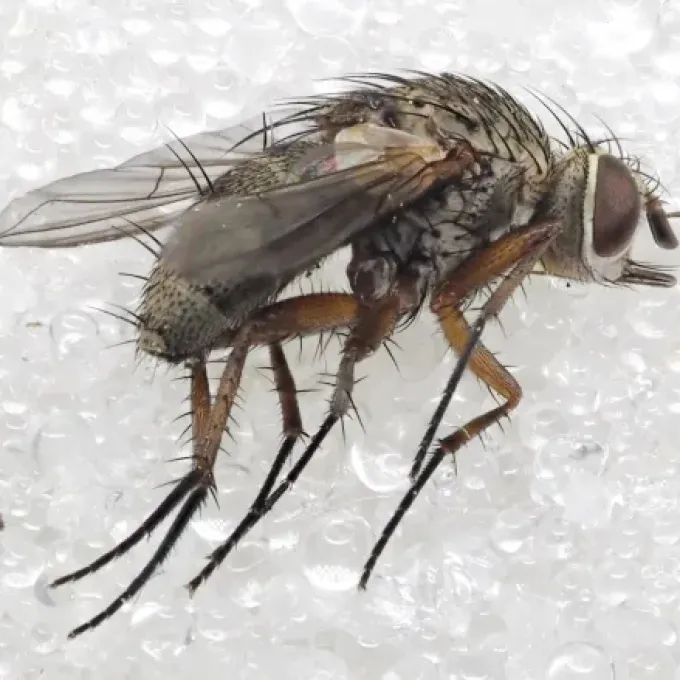
Description
How to identify
Bucentes geniculata is a species of dipteran insect belonging to the family Tachinidae. The adult fly is typically characterized by a gray body and prominent bristles, which are distinctive features of many tachinid species.
Systematically, this species is classified as a parasitic fly. While tachinid flies are generally recognized as beneficial biological control agents, the biology of this specific species involves complex interactions with various hosts, requiring professional monitoring in agricultural settings.
Adult flies possess large, multifaceted eyes and transparent wings with a characteristic venation pattern. Their mouthparts are designed for consuming nectar and aphid secretions, which draws them to fields occupied by other insect species.
The larvae are typically maggot-like, pale in color, and lack legs. They are equipped with specialized mouth hooks that enable them to attach to a host or burrow into its tissues to complete their development.
Identification in the field is challenging due to the high resemblance to other tachinid species. Precise taxonomic identification often requires microscopic examination of structural traits by an entomologist.
What it damages
The agricultural significance of Bucentes geniculata is tied to its parasitic nature. It targets a wide range of insects, acting as a parasitoid that can influence the populations of both agricultural pests and other beneficial insects.
Important hosts for the larvae include various types of weevils, such as the clover root curculio, which can cause significant damage to legumes. In this capacity, the fly acts as a natural regulator of pest populations.
Damage, from an agronomical perspective, occurs if the fly population disproportionately affects beneficial insects, thereby disrupting the natural control mechanisms established in the agroecosystem.
This fly does not cause direct physical damage to plants like leaf consumption or root destruction. Instead, its impact is indirect, manifesting through the reduction of insect populations that may otherwise affect crop yields.
Field managers must be cautious when applying broad-spectrum pesticides, as these chemicals can inadvertently eradicate beneficial parasitoids like Bucentes geniculata, leading to secondary pest outbreaks.
When it appears
Adult activity occurs throughout the growing season, typically from late spring through mid-autumn. Their peak population density often correlates with the life cycles of their primary insect hosts.
The species overwinter primarily in the pupal stage or as late-instar larvae within the soil or plant debris. This survival strategy provides protection from harsh winter temperatures.
Emergence of adult flies begins when ambient temperatures stabilize above 12-15 degrees Celsius. The adults then actively search for nectar sources and suitable hosts for oviposition.
The reproductive cycle is protracted, allowing for multiple generations per year depending on the climatic zone and the availability of hosts in the environment.
Population levels are generally highest in late summer, coinciding with the maturation of many crops and the increased activity of other insect species in the field.
Control measures
Specific chemical control measures against Bucentes geniculata are rarely implemented, as the species is often regarded as a beneficial component of integrated pest management strategies.
The primary control strategy involves the judicious use of pesticides. Applications should only be made when economic thresholds for primary pests are exceeded, ensuring minimal impact on beneficial parasitoids.
Good agricultural practices, such as proper soil cultivation and the management of crop residues, help regulate the number of overwintering sites, which can stabilize the population density of these flies.
Maintaining floral borders and hedgerows around fields supports the adult flies with necessary food sources, promoting a healthy balance of natural enemies in the agroecosystem.
- Reducing reliance on broad-spectrum insecticides.
- Promoting biological control through habitat management.
- Regular field monitoring to assess parasitism levels.
Taxonomy
- Latin name
- Bucentes geniculata
- Order
- Diptera (flies)
- Family
- Tachinidae
- EPPO code
- BUCEGE
Discussion
No discussions yet — be the first.