
Blondelia nigripes
Blondelia nigripes
Description
How to identify
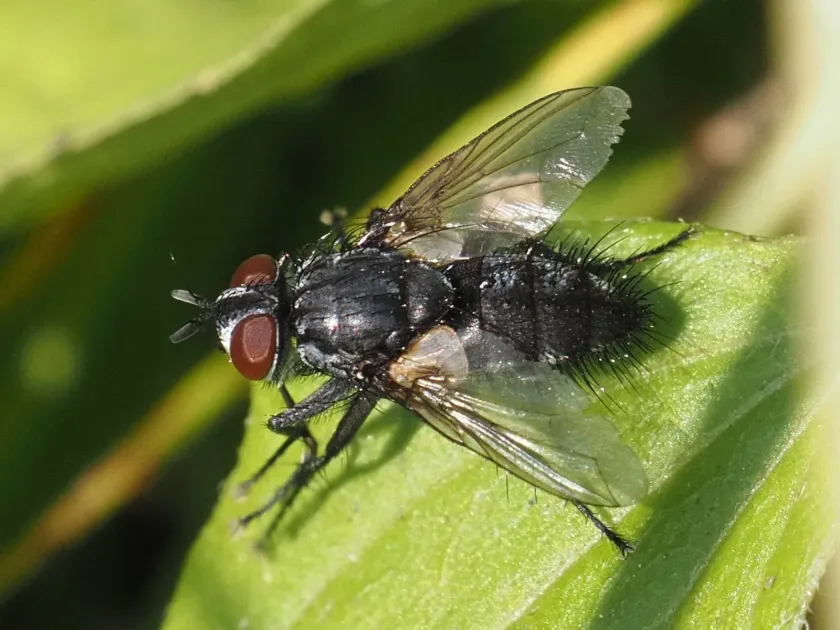
Blondelia nigripes is a fly species belonging to the Tachinidae family, order Diptera. These flies are robust, often resembling houseflies in size but distinguished by their dense setal covering and specific anatomical features.
The body coloration is predominantly black or dark grey, providing camouflage during the search for hosts. The name refers specifically to their black legs, a key identification mark.
They possess well-developed compound eyes, which are essential for navigating and finding suitable hosts to parasitize.
In agriculture, this fly is strictly categorized as a beneficial entomophage, playing a vital role in maintaining the natural balance of insect populations.
Adults are commonly found on flowering plants, feeding on nectar and pollen to sustain their high metabolic energy needs.
What it damages
Blondelia nigripes is not a plant pest; it does not consume leaves, roots, or any part of agricultural crops. It poses no threat to the harvest.
On the contrary, its larvae are endoparasitoids that feed on the larvae (caterpillars) of various moths and butterflies that are known to be agricultural pests.
By preying on leaf-eating caterpillars, these flies significantly reduce the damage caused to vegetables, fruits, and forest trees.
Farmers benefit from their presence as they act as a natural, self-sustaining alternative to broad-spectrum chemical insecticides.
Monitoring the presence of this tachinid can help assess the health of the local ecosystem and the level of natural pest control occurring in the field.
When it appears
Adult flies emerge in late spring, as temperatures rise, signaling the beginning of their active reproductive season.
Their population peaks during mid-summer, which directly coincides with the larval stages of most moth species that target crops.
Depending on the climatic zone, the fly can produce multiple generations per year, providing continuous protection against pests throughout the growing season.
As the weather cools in autumn, the flies begin to decrease in activity, and the next generation prepares for overwintering in the soil.
Availability of food sources such as nectar-bearing flowers is crucial for their survival and presence in agricultural landscapes.
Signs of infestation
The main indicator of the fly's presence is the frequent observation of adult flies visiting flowers, especially in fields with diverse weed or nectar strips.
A noticeable decline in caterpillar numbers on host plants, without the use of chemical intervention, suggests the effective work of parasitoid flies.
Rarely, close inspection of host caterpillars might reveal the presence of tiny white eggs deposited by the female fly on the surface of the victim.
A thriving population of these insects is often correlated with the absence of frequent pesticide applications, indicating a balanced ecological environment.
- Active visitation of flowering plants by grey flies.
- Reduced defoliation caused by caterpillar feeding.
- Presence of tachinid flies in areas known for high pest pressure.
Control measures
Conservation is the primary management strategy for Blondelia nigripes, ensuring these beneficial insects can thrive in farming areas.
Avoid broad-spectrum insecticide applications, as these are highly toxic to beneficial tachinids and disrupt the natural pest control chain.
Incorporate nectar-rich plants like carrots, dill, or other umbelliferous species into crop borders to attract and support adult fly populations.
Maintain semi-natural habitats and undisturbed soil areas, as these locations are essential for the pupation and overwintering of the fly larvae.
Prioritize integrated pest management (IPM) practices, using selective biological treatments whenever necessary to minimize impact on parasitoids.
Taxonomy
- Latin name
- Blondelia nigripes
- Order
- Diptera (flies)
- Family
- Tachinidae
- EPPO code
- BLONNI
Discussion
No discussions yet — be the first.