
Blondelia
Blondelia
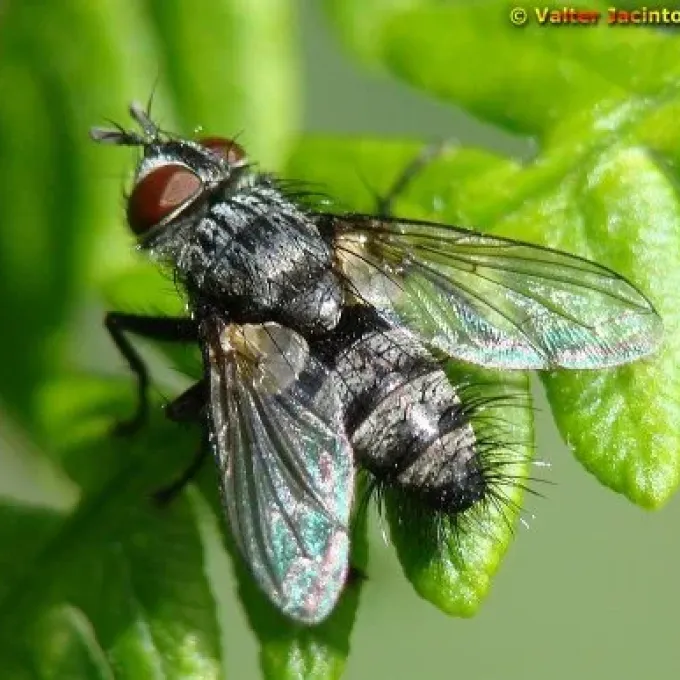
Description
How to identify
Blondelia is a genus of parasitic flies belonging to the family Tachinidae, within the order Diptera. These insects are well-known in entomology for their complex parasitoid life cycles.
Adult flies are typically robust, bristly, and resemble common houseflies, though their body structure is adapted for efficient parasitism.
The larvae are endoparasitoids, meaning they develop inside the body of a host insect, eventually killing it from the inside out.
Identification often requires examining specific bristle patterns on the thorax and abdomen, which distinguishes them from other tachinids.
Their presence in agricultural fields is usually linked to the density of their host populations, specifically caterpillars of various moth species.
What it damages
Blondelia flies do not consume plant tissues, and therefore, do not cause direct mechanical damage to crops or foliage.
Their impact is primarily ecological, as they interact with both harmful pests and occasionally beneficial insects within the agricultural ecosystem.
By parasitizing caterpillars that feed on crops, they act as a biological agent for pest suppression, though their efficiency is not always sufficient for commercial control.
The potential negative impact involves the incidental parasitism of beneficial insect populations, which may disrupt natural balance.
Agronomists generally monitor Blondelia presence as an indicator of the overall health and complexity of the local entomofauna.
When it appears
The adult activity period generally spans from late spring through late summer, coinciding with the peak activity of their moth hosts.
Eggs are laid either on the surface of the host or nearby, allowing the emerging larva to find and penetrate the host's body efficiently.
Depending on the climatic zone, the genus can complete multiple generations per growing season to synchronize with host availability.
Overwintering typically occurs in the pupal stage, often sheltered in the soil or protected under crop residues.
Their population dynamics are strongly influenced by the weather conditions during the early developmental stages of both the fly and its host.
Control measures
There is no standard protocol for chemical control against Blondelia, as they are not considered primary agricultural pests.
Agricultural practices should focus on maintaining a balance by avoiding broad-spectrum insecticides that harm beneficial parasitoids.
Integrated Pest Management (IPM) strategies encourage the preservation of natural habitats to support tachinid fly populations.
Monitoring the population of host caterpillars is essential, as the presence of Blondelia indicates that natural biological control is already occurring.
- Use of selective insecticides to preserve parasitoids.
- Preservation of flowering border plants for adult fly nutrition.
- Balanced assessment of biological control effectiveness.
Taxonomy
- Latin name
- Blondelia
- Order
- Diptera (flies)
- Family
- Tachinidae
- EPPO code
- BLONSP
Discussion
No discussions yet — be the first.