
Blepharipa scutellata
Blepharipa scutellata
Description
How to identify
Blepharipa scutellata is a species of parasitic fly belonging to the family Tachinidae. These flies are widely recognized as significant parasitoids that play a crucial role in maintaining ecological balance in forest and agricultural environments.
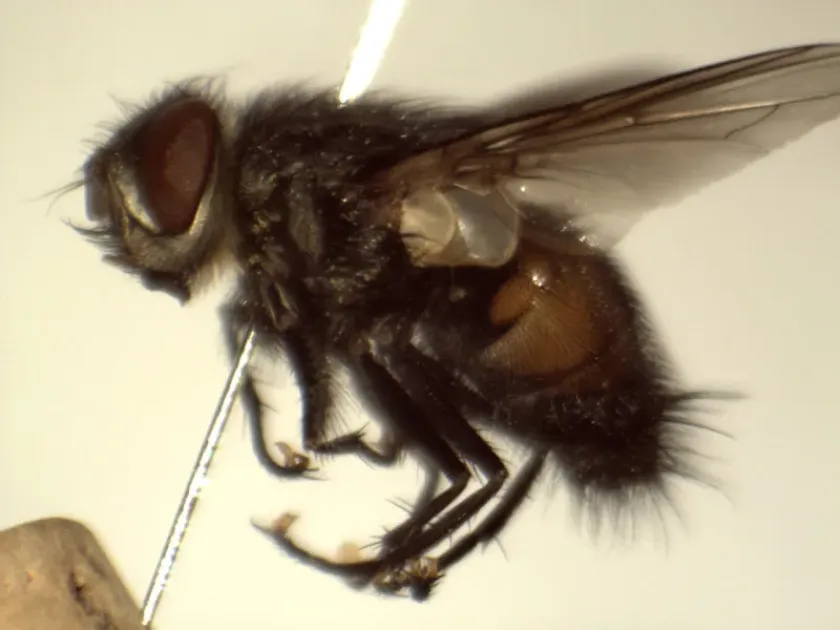
Morphologically, these flies are often dark and bristly, which is a common characteristic of the tachinid family. Adults feed primarily on nectar from various flowers, making them occasional pollinators, although their main ecological role is predatory.
The taxonomic classification places them in the order Diptera. Their physical appearance is robust, designed for active flight in search of their specific hosts, typically larvae of Lepidoptera.
They are specialized to locate hosts using chemical cues released by caterpillars. This ability makes them highly efficient in finding and parasitizing targets in dense vegetation or forest canopies.
Understanding the life stages of this fly is vital for integrated pest management. They act as a silent force, keeping the populations of herbivorous insects under natural regulation.
What it damages
Blepharipa scutellata is not a plant pest; it is a beneficial insect. It does not cause damage to crops, fruit, or foliage. Its entire life cycle is focused on parasitizing harmful caterpillars.
The primary host for this species is the spongy moth (Lymantria dispar), also known as the gypsy moth. By parasitizing these caterpillars, the fly effectively reduces the amount of leaf damage caused to trees and ornamental shrubs.
The presence of this fly in an orchard or forest indicates a healthy, functioning ecosystem. It provides a natural service by preventing outbreaks of defoliating insects that could otherwise devastate plant health.
Because they target specific lepidopteran pests, they are considered valuable allies in agricultural management. They do not consume or attack the host plants in any way throughout their life stages.
Farmers who prioritize biological control value the presence of these flies, as they reduce the need for chemical insecticides. They are essentially a natural, cost-free defense mechanism for orchards and forestry.
When it appears
The adult activity of Blepharipa scutellata is synchronized with the appearance of its host larvae in late spring. This timing ensures that the flies find suitable hosts for their offspring during the peak feeding phase of the caterpillars.
The fly lays its eggs directly onto the host's body. Once the larva hatches, it burrows inside the caterpillar, where it develops while the host continues to feed, eventually causing the host's death before the fly pupates.
The pupal stage occurs in the soil or leaf litter, where the fly remains throughout the winter. This diapause allows the species to survive low temperatures and emerge when environmental conditions improve the following year.
The emergence of adults in spring is closely monitored by entomologists as it marks the beginning of the natural control period. This seasonal rhythm is essential for the fly's continued success and population stability.
Monitoring the flight period can help landowners avoid detrimental agricultural practices. Protecting the environment during the adult emergence phase is key to maintaining high levels of parasitism.
Control measures
No control measures are needed against Blepharipa scutellata, as it is a beneficial organism. Instead, the focus should be on conservation and habitat management to support its population.
The primary strategy for conserving this fly is to avoid the blanket use of broad-spectrum pesticides. Chemical applications often kill beneficial parasitoids more easily than the target pests they control.
Providing food sources such as wildflowers or flowering shrubs helps sustain adult flies. This ensures a consistent population that can immediately respond to any increase in pest numbers in the area.
Maintaining a layer of leaf litter and avoiding deep soil cultivation in orchard floors protects the overwintering pupae. These simple environmental management techniques significantly enhance the survival rate of the flies.
By promoting the presence of this tachinid fly, agricultural managers can leverage biological control to protect their crops. This approach fosters a balanced, self-regulating environment that minimizes long-term reliance on synthetic chemicals.
Taxonomy
- Latin name
- Blepharipa scutellata
- Order
- Diptera (flies)
- Family
- Tachinidae
- EPPO code
- BLEPSU
Discussion
No discussions yet — be the first.