
Blepharipa pratensis
Blepharipa pratensis
Description
How to identify
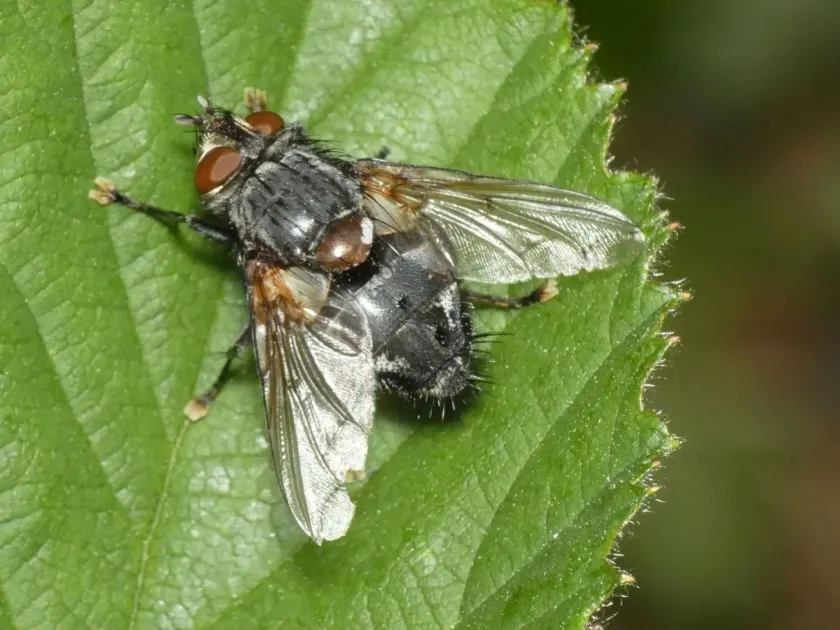
Blepharipa pratensis is a species of large tachinid fly (family Tachinidae) known for its role as a parasitoid in various ecosystems.
Adults typically measure between 10 and 14 mm in length and exhibit the characteristic bristly appearance common to the Tachinidae family.
Their coloration is generally a mix of grey and black, with distinct stripes on the thorax, providing camouflage when resting on tree trunks or foliage.
The head features large, prominent eyes, and the mouthparts are specially adapted for feeding on nectar, making them frequent visitors to flowering plants.
As a member of the order Diptera, this species is highly mobile and well-adapted to tracking the larval stages of its host insects.
What it damages
Unlike true pests, Blepharipa pratensis is highly beneficial to agricultural and forestry sectors as it serves as a natural enemy to defoliating caterpillars.
The larvae primarily parasitize caterpillars of the gypsy moth (Lymantria dispar) and other related Lepidoptera species that cause significant damage to foliage.
By consuming host tissues internally, the larvae effectively neutralize the pest before it can reach the adult stage or cause further damage to crops.
Adult flies do not damage plants; they contribute to the ecosystem by acting as pollinators while visiting flowers for energy-rich nectar.
Their presence is considered a key factor in natural biological control, often reducing the need for extensive chemical interventions in wooded areas.
When it appears
The adult fly's flight period usually spans from late spring through mid-summer, coinciding perfectly with the peak activity of its primary host larvae.
Emergence from the pupal stage occurs as temperatures rise and flowering vegetation becomes abundant, providing the necessary nutrients for the adults.
The female fly searches for host caterpillars to deposit its eggs, ensuring that the offspring have immediate access to food upon hatching.
Once the larval development within the host is complete, the larva exits the dead caterpillar to pupate in the soil or leaf litter.
The species survives the winter in the pupal stage, buried within the soil, awaiting the return of favorable environmental conditions in the spring.
Signs of infestation
Small eggs found on the skin of host caterpillars are the primary indicator of parasitism by this species, signaling the start of the life cycle.
Affected caterpillars often exhibit reduced movement, stunted growth, and altered behavior as the internal parasitic larvae consume their body tissues.
Observing high numbers of these flies around tree canopies or areas with heavy caterpillar infestations indicates successful biological control in progress.
The discovery of mature fly larvae emerging from deceased host larvae is a definitive sign of Blepharipa pratensis presence in the environment.
A decline in the overall pest population density over consecutive seasons is a clear indicator of the effectiveness of the local parasitoid community.
Control measures
As a beneficial parasitoid, no control measures are necessary to suppress Blepharipa pratensis; instead, efforts should focus on conserving the population.
Avoid applying non-selective broad-spectrum insecticides during the flight period to ensure the survival and reproductive success of these flies.
Maintaining diverse flower strips around agricultural fields provides the necessary nectar sources for adult flies to thrive and reproduce.
Implement Integrated Pest Management (IPM) practices that prioritize biological control agents, allowing natural predators to stabilize pest numbers.
Use only selective or biorational pesticides when chemical control is required to prevent unintended harm to these valuable natural allies.
Taxonomy
- Latin name
- Blepharipa pratensis
- Order
- Diptera (flies)
- Family
- Tachinidae
- EPPO code
- BLEPPR
Discussion
No discussions yet — be the first.