
Bistrispinaria
Bistrispinaria
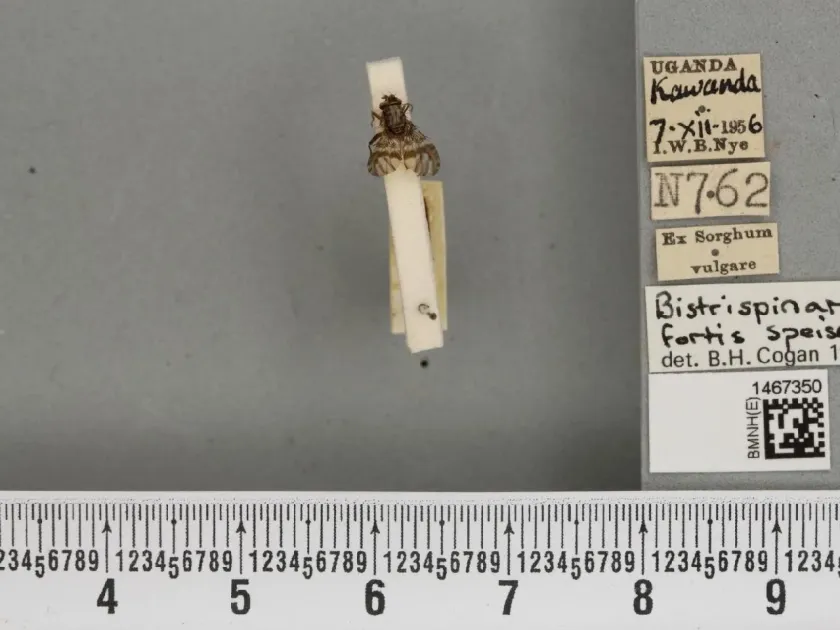
Description
How to identify
Bistrispinaria is a genus belonging to the order Coleoptera and the family Curculionidae (weevils). These insects are recognized by their distinct morphology, particularly the small thorn-like structures on their elytra which distinguish them from other related species.
The adults are generally small, with bodies covered in fine, overlapping scales that act as camouflage against tree bark or soil substrates. This adaptation makes them notoriously difficult to detect during daylight hours.
The life cycle follows complete metamorphosis, passing through the stages of egg, larva, pupa, and imago. The larval stage is typically apodous (legless) and survives by burrowing into plant tissues, which provides both nutrition and shelter.
Systematic classification focuses on the structure of the rostrum and the antennae. Identifying the specific species within this genus often requires microscopic examination of the male and female genitalia to ensure accuracy.
Agronomists identify these insects by observing their feeding patterns and the specific host plants they colonize. Understanding their development stages is crucial for timing any intervention or control measures effectively.
What it damages
Bistrispinaria primarily targets deciduous trees and shrubs, although they occasionally infest neighboring agricultural crops if the population density reaches a critical threshold.
Adult beetles cause damage by feeding on leaves, resulting in irregular or serrated edges. This defoliation reduces the plant's ability to photosynthesize, causing stress and hindering the development of new growth.
The larvae are more destructive in some cases, as they tunnel into stems, shoots, or cambium layers. This internal feeding can disrupt nutrient transport, leading to the wilting and eventual death of branches.
The economic impact is most pronounced in nurseries, where the cosmetic damage to foliage or the physical deformity caused by larval tunneling renders the plants unsellable to commercial markets.
Repeated infestations can significantly weaken young saplings, making them more susceptible to opportunistic pathogens and secondary pest attacks, ultimately leading to poor crop quality.
When it appears
The emergence of adult Bistrispinaria typically begins in the spring, triggered by rising temperatures and the onset of the plant growth cycle, which provides a fresh food source.
Peak activity occurs throughout late spring and early summer, corresponding with the reproductive phase when adult beetles feed intensively to prepare for mating and subsequent oviposition.
Larval development occurs throughout the summer months. Depending on the local climate and temperature, this stage may last for several weeks before the larvae pupate in the soil or protected crevices.
Winter dormancy (diapause) is usually spent in the adult stage, often hidden under leaf litter or within the upper layers of the soil to protect them from extreme freezing temperatures.
Environmental shifts and milder winters are increasingly extending the activity period of these pests, allowing them to remain active for longer periods and potentially increasing the number of generations per year.
Signs of infestation
The most visible sign of infestation is the notched or serrated appearance of leaf margins, often referred to as "leaf-notching." This is a classic symptom of weevil feeding activity.
Internal damage can be detected by the presence of localized wilting or drooping of young shoots, which may be caused by larval galleries blocking the plant's vascular tissue.
Small, circular entrance or exit holes on the bark of young twigs indicate where adults have fed or where larvae have emerged after completing their pupation phase inside the plant.
Fine frass (excrement) may be found on the soil surface under affected plants, serving as a primary indicator for field scouts conducting regular monitoring of orchards or nurseries.
- Serrated, irregular edges on leaf blades.
- Sudden wilting or dieback of terminal shoots.
- Small, circular holes on stems and branches.
- Stunted growth of new foliage in spring.
- Visible presence of adult weevils during night inspections.
Control measures
Integrated Pest Management (IPM) begins with sanitation, such as removing and destroying infested plant material to reduce the reservoir of larvae within the growing area.
Tilling the soil around the base of trees in the autumn is a highly effective cultural practice, as it disrupts overwintering sites and exposes dormant stages to predatory birds and frost.
Biological control, using entomopathogenic fungi or beneficial nematodes applied to the soil, can effectively suppress larval populations without the need for synthetic chemical inputs.
Chemical control should be reserved for high-infestation scenarios. Applying systemic insecticides during the early spring emergence of adults is the most effective window for preventing egg-laying.
Maintaining strong, healthy plants through proper fertilization and watering is essential, as stressed plants provide an easier target and are less capable of recovering from pest damage.
Taxonomy
- Latin name
- Bistrispinaria
- Order
- Diptera (flies)
- Family
- Tephritidae
- EPPO code
- BISRSP
Discussion
No discussions yet — be the first.