
Bessa selecta
Bessa selecta
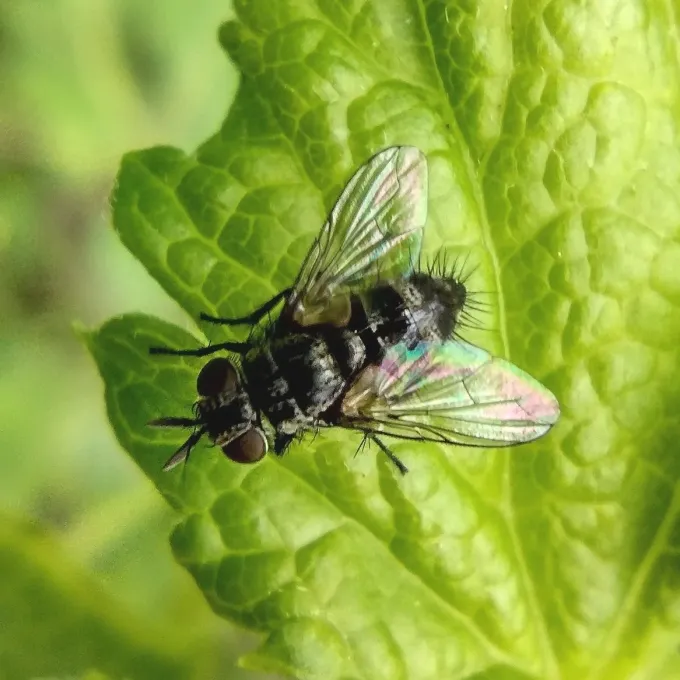
Description
How to identify
Bessa selecta is a dipteran insect belonging to the family Tachinidae. These flies are characterized by a robust body covered in strong bristles, resembling common houseflies but with distinct anatomical features related to their parasitic nature.
The larval stage is internal, living as parasitoids within host insects. Their bodies are adapted for survival in the host's body cavity, where they feed on non-vital tissues before emerging for pupation.
Morphological identification of the adult flies requires an expert eye, focusing on wing venation and the arrangement of setae on the thorax and abdomen. They are highly efficient flyers, often spotted in forest areas.
Systematically, they fall under the order Diptera. These insects are essential components of the ecosystem as they contribute to the natural suppression of various foliage-feeding pest populations.
Their life cycle is highly specialized, relying on the synchrony with the seasonal activity and development of their specific hosts, typically sawfly larvae or lepidopteran caterpillars.
What it damages
Bessa selecta does not damage plants. It is a highly beneficial insect that serves as a natural enemy to several pest species that feed on trees and shrub foliage.
The primary impact of these flies on the environment is the reduction of pest populations. By parasitizing caterpillars, they prevent excessive defoliation in forests and orchards.
In agriculture, their presence is considered a valuable biological asset. They act as natural regulators, reducing the need for chemical interventions and promoting ecosystem health.
Plants benefit indirectly from the activity of Bessa selecta through reduced pressure from leaf-eating insects. This helps maintain the vitality and growth rates of the host plants.
There is no economic damage associated with this species; rather, it provides a free and sustainable ecosystem service by keeping pest numbers in check.
When it appears
The activity of Bessa selecta adults occurs during the growing season, typically starting in late spring and continuing through the summer months, depending on local temperatures.
During this period, female flies seek out hosts to oviposit their eggs. The timing of their life cycle is perfectly tuned to the feeding period of the host larvae.
Overwintering occurs in the pupal stage, typically in the leaf litter or topsoil layer beneath trees. This provides thermal insulation against harsh winter conditions.
The number of generations per year is influenced by climatic factors. In warmer climates, these flies can complete multiple generations, providing sustained pressure on pests throughout the year.
Peak emergence of adults is often observed when host populations reach their most susceptible larval stages, ensuring successful survival of the parasite's next generation.
Signs of infestation
Indications of Bessa selecta presence include the observation of eggs attached to the cuticle of pest larvae. These eggs are often visible upon close inspection of infested foliage.
Heavily parasitized hosts show reduced movement, decreased appetite, and eventually a cessation of feeding as the internal larvae complete their development.
In the field, the discovery of empty pupal cases or dead caterpillars with exit holes in the soil or on leaves is a definitive sign that these parasitoids are active.
Monitoring adult flight patterns using non-lethal traps can also confirm the presence and density of the species within an orchard or forest site.
A noticeable decline in pest populations in a specific area, without the application of insecticides, is often attributed to the successful activity of natural enemies like these tachinid flies.
Control measures
No control measures are needed for Bessa selecta because it is a beneficial species. Instead, the focus should be on conservation and protection of this parasitoid.
To preserve their population, it is critical to limit the use of broad-spectrum insecticides, as these chemicals can be lethal to beneficial insects like tachinids.
Implementing Integrated Pest Management (IPM) strategies is recommended. This involves choosing selective bio-pesticides that target specific pests without harming the parasitic community.
Enhancing habitat diversity by planting nectar-producing flowers provides essential food for adult flies, thereby increasing their reproductive success and overall population density.
Management practices that include maintaining natural buffer zones and minimizing unnecessary chemical applications create a stable environment where natural enemies can effectively regulate pests.
Taxonomy
- Latin name
- Bessa selecta
- Order
- Diptera (flies)
- Family
- Tachinidae
- EPPO code
- BESSSE
Discussion
No discussions yet — be the first.