
Banchus flavescens
Banchus flavescens
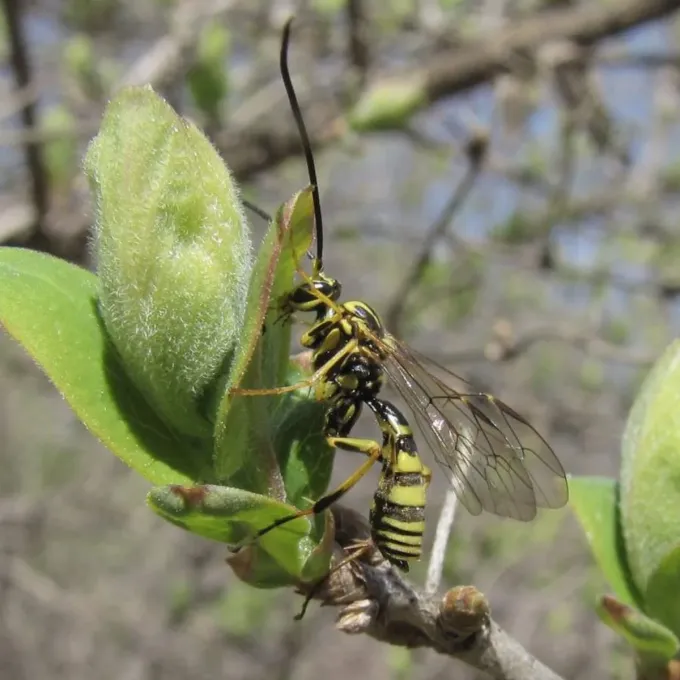
Description
How to identify
Banchus flavescens belongs to the family Ichneumonidae within the order Hymenoptera. It is a specialized parasitoid, often resembling a slender wasp with a characteristic yellowish or reddish coloration.
Adult individuals possess long antennae and a slender abdomen. A key distinguishing feature is their ability to actively search for hosts across various layers of vegetation, making them effective hunters.
As a member of the Ichneumonidae family, this species lives a parasitic lifestyle during its larval stages within other insects. Understanding its morphology helps agronomists distinguish it from pests of similar size.
Females of this species are equipped with a well-developed ovipositor, which allows them to reach hosts hidden inside plant tissues or cocoons. In fields, they are frequently found on flowering plants, feeding on nectar.
It is important to note that Banchus flavescens is not a crop pest. Instead, it plays a vital role in naturally suppressing populations of various caterpillars that threaten agricultural yields.
What it damages
Banchus flavescens does not cause damage to crops. Its biological specialization excludes plant tissues from its diet; adults feed exclusively on floral pollen and nectar.
On the contrary, its activity provides direct benefits to agriculture. It limits the population density of a wide range of destructive moths that damage vegetable, grain, and technical crops.
The larvae of the wasp develop at the expense of the caterpillar's internal organs, leading to the death of the host before it can complete its feeding cycle on the plants. Therefore, the species is considered a valuable natural protector of the harvest.
Because it causes no harm to the agro-ecosystem, this species is classified as a beneficial biological agent. Agronomists should prioritize the conservation of such parasitoids in field environments.
The use of broad-spectrum insecticides often harms Banchus flavescens populations, reducing natural biological control over leaf-eating pests.
When it appears
The activity of adult Banchus flavescens is observed during the vegetative period of most agricultural crops, typically from late spring to mid-summer. This coincides with the period of peak development for their host caterpillars.
The emergence of these insects is directly dependent on temperature and the availability of food sources, such as flowering weeds or nectar plants along field borders. Optimal conditions for host searching occur on warm, dry days.
The development cycle of the species is synchronized with the biological rhythms of its hosts, providing the parasitoid with a stable food supply for oviposition.
Depending on the climatic zone, one or two generations of this insect can develop per season, ensuring a prolonged period of control over harmful Lepidoptera populations.
Monitoring adult emergence using yellow sticky traps or visual observations allows for an indirect assessment of the level of natural parasitism present in the field.
Control measures
No specific control measures are required for Banchus flavescens, as it is a beneficial parasitoid. Conversely, agronomic practices should focus on creating favorable conditions for its survival.
To conserve parasitoid populations, it is recommended to limit the use of highly toxic insecticides, especially during flowering periods when wasps are most active.
- Leave strips of wild nectar plants along field borders to support adult wasps.
- Implement Integrated Pest Management (IPM) strategies where pesticides are selected based on their impact on beneficial fauna.
- Avoid blanket insecticide treatments during peak parasitoid activity.
- Maintain landscape mosaicism to provide overwintering sites for insects.
When chemical protection is necessary, prioritize the use of biological agents or selective insecticides that have minimal negative effects on Hymenoptera.
Supporting natural enemies of pests can significantly reduce the costs of chemical plant protection in the long term.
Taxonomy
- Latin name
- Banchus flavescens
- Order
- Hymenoptera
- Family
- Ichneumonidae
- EPPO code
- BANCFL
Discussion
No discussions yet — be the first.