
Balanus balanus
Balanus balanus
Description
How to identify
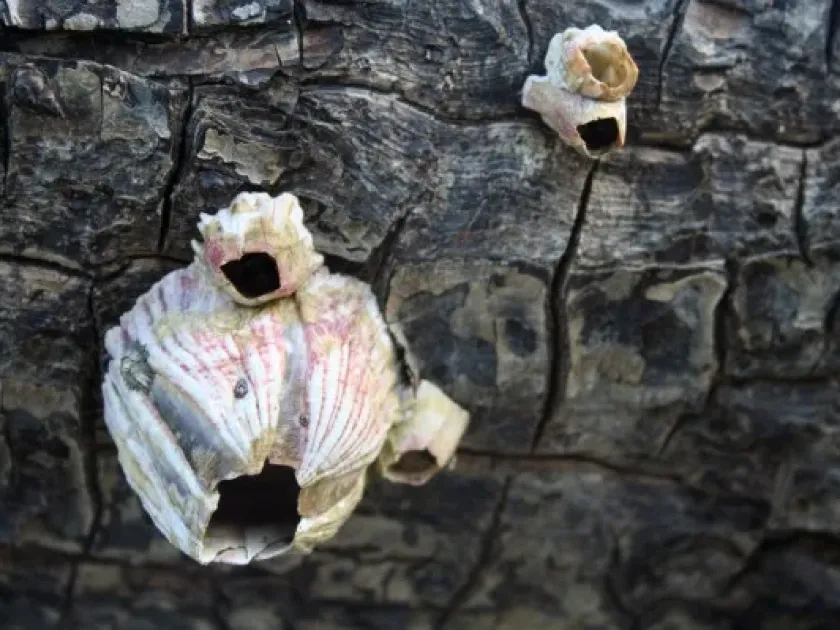
Balanus balanus, commonly known as a barnacle, is a species of sessile crustacean belonging to the family Balanidae within the order Sessilia.
Adult individuals are characterized by a calcareous shell consisting of several rigid plates, which protect the soft body of the organism from environmental stress.
The life cycle initiates from free-swimming larvae, which eventually undergo a metamorphosis, attaching themselves permanently to solid surfaces using a biological cement.
Once attached, they filter nutrients from the water using specialized appendages called cirri. This sedentary lifestyle makes them a significant challenge for industrial and agricultural infrastructure.
Their distribution is primarily limited to cold and temperate marine environments, where they thrive by colonizing submerged structures and natural substrates.
What it damages
Balanus balanus causes substantial damage to the agricultural industry by colonizing water intake systems, pumps, and irrigation piping used in farming operations.
The accumulation of calcified barnacle shells restricts water flow, leading to increased pressure and potential failure of mechanical pumping components in irrigation setups.
In aquaculture, barnacle growth on net cages increases structural weight and blocks water exchange, which negatively impacts the health and growth rates of fish stocks.
Biofouling on boat hulls and underwater machinery causes an increase in drag, which leads to significantly higher fuel consumption and maintenance costs for farm equipment.
The acidic secretions and physical pressure exerted by the barnacle shells can accelerate the corrosion process of metal pipes, leading to leaks and infrastructure degradation.
When it appears
Reproductive activity in Balanus balanus populations is typically synchronized with seasonal water temperature increases in the spring and early summer months.
During these peak seasons, massive releases of larvae occur, leading to the rapid colonization of any exposed surfaces available within the aquatic environment.
The colonization period can extend throughout the warmer months, depending on local currents and nutrient availability that influence the larvae's developmental rate.
Winter periods usually mark a slowdown in growth, but established colonies remain firmly attached and continue to pose a threat to infrastructure throughout the year.
Monitoring seasonal patterns is crucial for agricultural managers to schedule maintenance and apply preventative measures before the next settlement cycle begins.
Signs of infestation
Early signs of infestation include the appearance of small, white, cone-shaped spots on submerged equipment, which gradually expand into dense colonies.
A noticeable decrease in the efficiency of water intake pumps and a reduction in flow rate through irrigation channels are primary indicators of significant fouling.
Abnormal vibrations or noise in submerged motor equipment suggest that barnacle accumulation has affected the hydrodynamic balance of the system.
Visual inspection of intake filters and cages often reveals a hard, stony surface texture that is distinct from the original material of the equipment.
Increased energy consumption by irrigation pumps is a common symptom of the extra workload required to overcome the obstruction caused by barnacle encrustation.
Control measures
The most effective strategy involves the use of antifouling paints and coatings specifically designed to inhibit the settlement of larvae on submerged structures.
High-pressure water jetting is frequently employed to mechanically remove barnacle populations during maintenance shutdowns of irrigation and water supply systems.
Electrolytic protection systems can be installed to create an electrochemical environment that discourages the attachment of barnacle larvae to critical infrastructure.
Maintaining high flow velocities within intake pipes can sometimes discourage larvae from settling, although this is rarely sufficient as a stand-alone solution.
- Application of non-toxic, smooth-surfaced epoxy coatings.
- Regular underwater inspections during the peak larval settlement season.
- Thermal treatment or chemical cleaning of filtration units.
Taxonomy
- Latin name
- Balanus balanus
- Family
- Balanidae
- EPPO code
- BALSBL
Discussion
No discussions yet — be the first.