
Peach fruit fly
Bactrocera zonata
Description
How to identify
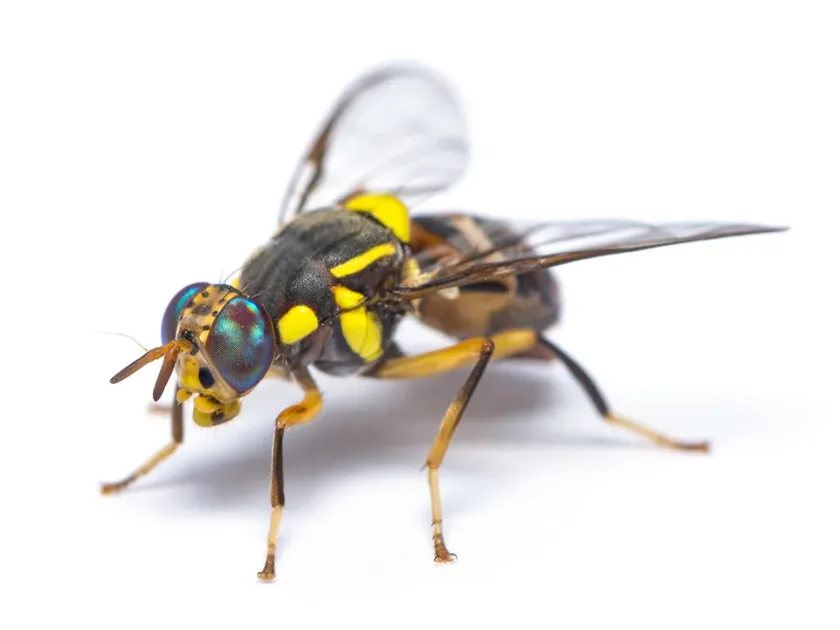
The peach fruit fly, Bactrocera zonata, belongs to the order Diptera, family Tephritidae. Adult flies are approximately 6–7 mm long and have a reddish-brown body with characteristic yellow stripes on the abdomen.
The wings are hyaline with a narrow dark band along the costal margin and a distinct dark spot at the apex. Although they resemble common house flies, specific patterns on the thoracic scutum distinguish them from other species.
The life cycle encompasses four stages: egg, larva, pupa, and adult. In optimal warm climates, a single generation can develop in just 20 to 25 days, leading to up to 12 generations per year.
Females possess a sharp ovipositor, which they use to pierce the skin of fruits and deposit eggs directly into the pulp. A single female can lay up to 1,000 eggs during her lifespan, ensuring high reproductive success.
Overwintering usually occurs as pupae in the soil under host trees or within infested fruit; in storage facilities, development can continue year-round if food sources remain available.
What it damages
This pest is a major polyphage, attacking over 50 different cultivated and wild plant species. It causes catastrophic losses in stone and pome fruit production worldwide.
Host plants include peaches, apricots, nectarines, plums, apples, pears, as well as citrus, mangoes, guavas, and tomatoes. In the absence of primary fruit hosts, the fly can adapt to vegetable crops.
Larvae feed within the fruit pulp, causing internal breakdown and liquefaction. Infested fruit is frequently subject to secondary bacterial and fungal infections, leading to rapid rotting on the branch.
In cases of severe infestation, crop damage can reach 100%, rendering the produce entirely unsellable and unfit for export or local markets.
Due to its high invasive potential, the peach fruit fly spreads easily through international fruit trade, making it a priority quarantine organism in many countries.
When it appears
Adult activity typically begins when mean daily temperatures exceed +15...+18°C. The seasonal emergence of flies is synchronized with the fruit set and maturation stages of host plants.
Population peaks usually occur during the period of maximum fruit ripening, when the combination of fruit availability and high sugar content provides ideal conditions for oviposition.
In subtropical climates, the fly remains active throughout the year, with life cycles slowing down only during cooler temperatures. It effectively survives short periods of adversity by seeking microclimatic shelter.
The longevity of adult flies depends on food availability and humidity levels. While drought may limit activity, the species is resilient and quickly recovers when conditions improve.
During autumn, pupae enter diapause in the soil, providing a safeguard against cold temperatures until the return of spring warmth allows the cycle to resume.
Signs of infestation
The first signs of infestation are minute puncture marks on the fruit skin, often accompanied by "weeping" spots where fruit juice leaks through the entry wound.
Cutting open an infested fruit reveals white or yellowish cylindrical larvae feeding inside. The tissue typically turns brown and begins to emit a distinct fermented or rotting odor.
Premature fruit drop is a common diagnostic indicator. If fruit falls from the tree while still immature, it is often a sign that larvae have compromised its internal integrity.
Adult flies can be observed resting on leaves or fruits during early morning or late afternoon hours. They are highly alert and will fly away if disturbed.
Infested fruit loses all commercial value; the extensive tunneling and tunneling-related decay make the produce completely unacceptable for consumption.
Control measures
Strict quarantine measures are the primary defense, as they prevent the introduction of infested fruit into non-infested regions or countries.
Monitoring and management are often conducted using traps baited with synthetic pheromones or food-based attractants, which help detect early arrivals and mass-trap adult flies.
Cultural control is essential: growers must collect and deeply bury or destroy fallen fruit to prevent larvae from entering the soil to pupate.
Chemical control involving systemic or contact insecticides may be necessary during peak flight periods, provided that labels and pre-harvest intervals are strictly followed.
Biological control methods, such as the release of parasitoid wasps (e.g., Braconidae), have shown success in reducing larval populations in various orchard ecosystems, offering a more sustainable approach.
Taxonomy
- Latin name
- Bactrocera zonata
- Order
- Diptera (flies)
- Family
- Tephritidae
- EPPO code
- DACUZO
Discussion
No discussions yet — be the first.