
Pacific fruit fly
Bactrocera xanthodes
Description
How to identify
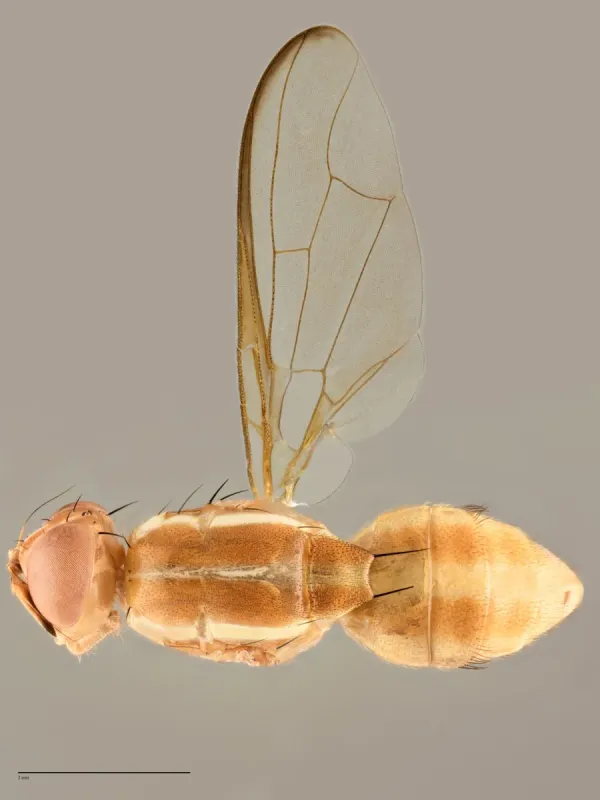
The Pacific fruit fly, Bactrocera xanthodes, is a significant insect pest belonging to the Tephritidae family, also known as the fruit fly family. Adults are medium-sized, generally yellow to light brown in color, with distinctive dark patterns on their wings.
The adult fly typically measures between 7 and 9 millimeters. The female is equipped with a sharp, piercing ovipositor, which is a specialized organ used to lay eggs beneath the skin of ripening fruits, thereby protecting them from external environment.
The life cycle consists of four distinct stages: egg, larva, pupa, and adult. The developmental speed is highly dependent on ambient temperature, meaning that in tropical environments, generations can overlap continuously throughout the year.
Larvae are typically white or cream-colored, legless, and vermiform in shape. After hatching, they burrow into the fruit, where they feed on the internal flesh for the duration of their larval stage, which is the most destructive phase of the cycle.
Pupation primarily occurs in the soil beneath the host plant. The emergence of new adults is synchronized with the availability of suitable host fruits, allowing the population to reach extremely high levels if left unmanaged.
What it damages
This species is a highly polyphagous pest, attacking a vast array of tropical and subtropical fruits. Preferred hosts include breadfruit, papaya, mango, avocado, guava, and various citrus species, causing immense agricultural losses.
The primary damage is inflicted by larvae tunneling through the fruit pulp. As they consume the tissue, they introduce bacteria and fungi, leading to rapid decay and complete degradation of the fruit structure from the inside out.
Infested fruits frequently suffer from premature ripening and premature abscission (dropping from the tree). This renders the harvest completely unsuitable for market sale, resulting in direct revenue losses for farmers.
International trade is heavily impacted by the presence of Bactrocera xanthodes. Because it is a regulated quarantine pest, countries often impose strict bans on the import of fresh produce from regions where the fly is endemic.
Even small-scale infestations can cause total rejection of produce shipments during phytosanitary inspections. The presence of just a few larvae can lead to the destruction of entire consignments, posing a severe threat to export economies.
Signs of infestation
One of the earliest signs of infestation is the presence of tiny, pin-prick punctures on the skin of the fruit, marking the site where the female has inserted her ovipositor to deposit eggs into the pulp.
As the larvae mature, the damaged fruit often displays symptoms of localized softening and tissue darkening. These areas frequently become sunken or indented as the pulp beneath is consumed and liquefied.
Another indicator is the presence of premature color changes in the fruit. Fruits that should still be green may show signs of ripening, or the skin may take on a dull appearance, signaling that the interior has been compromised.
A foul, fermented odor often emanates from heavily infested fruits, particularly as secondary rot sets in. In severe cases, the fruit might break open, revealing a cavity filled with decomposing plant matter and numerous larvae.
The use of monitoring traps is the most reliable way to confirm the presence of adults in the orchard. These traps, utilizing synthetic attractants or food-based lures, are essential for detecting the pest before visual signs appear on the fruits.
Control measures
Phytosanitary measures are paramount for controlling this pest. Strict quarantine regulations help prevent the accidental introduction of the fly into uninfested geographical areas through the movement of contaminated fruit.
Sanitation practices involve the rigorous collection and destruction of all fallen and damaged fruits. By removing this material from the orchard floor, growers can prevent larvae from pupating in the soil, effectively breaking the pest's reproductive cycle.
Monitoring using specialized lures (such as protein baits or synthetic pheromones) is critical for early detection. These tools allow for precision-based control, enabling farmers to target treatments only when and where they are necessary.
Chemical control usually employs the use of bait sprays. By mixing a small quantity of insecticide with a food attractant, the target pest is attracted to the spray, significantly reducing the amount of chemical required and protecting beneficial insects.
Biological control, including the release of specific parasitoid wasps (e.g., Braconidae), offers a sustainable long-term solution. These natural enemies attack the larvae or pupae of the fly, keeping population levels well below the threshold of economic damage.
Taxonomy
- Latin name
- Bactrocera xanthodes
- Order
- Diptera (flies)
- Family
- Tephritidae
- EPPO code
- BCTRXA
Discussion
No discussions yet — be the first.