
Fruit fly Bactrocera tuberculata
Bactrocera tuberculata
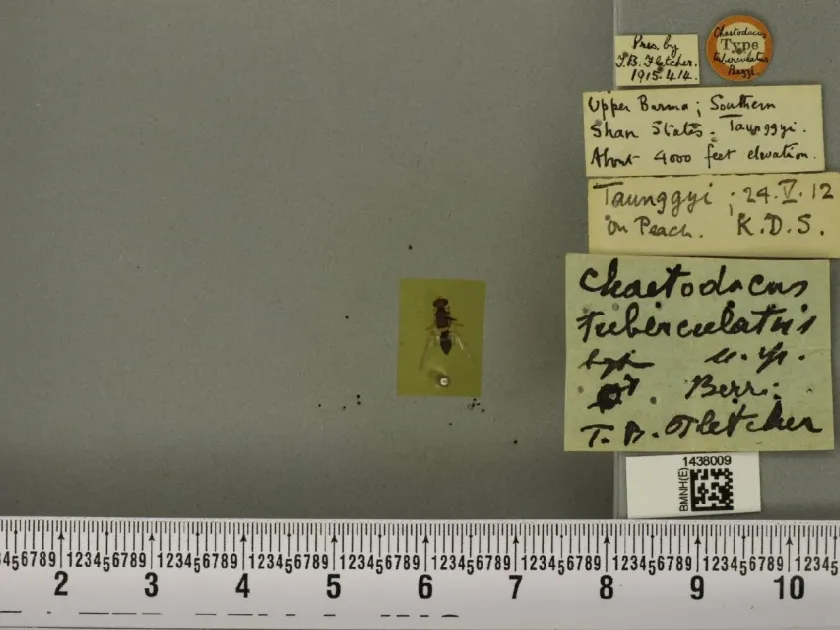
Description
How to identify
Bactrocera tuberculata belongs to the order Diptera, family Tephritidae. This insect is a significant agricultural pest, closely related to other species within the Bactrocera genus, which are notorious for causing extensive damage to global horticulture.
Adult flies possess the typical morphology of fruit flies, featuring transparent wings with characteristic patterns. Their bodies are usually dark or brownish, providing camouflage on tree bark and foliage.
A distinctive feature of females in this genus is the specialized ovipositor, which allows them to penetrate deeply into the skin of fruit. Taxonomic identification typically requires professional entomological expertise and microscopic examination of genitalia structures.
Larvae are legless maggots, tapering towards the anterior end, which is characteristic of the family. They undergo several instars while feeding internally, which makes them highly elusive during the early stages of infestation.
Eggs are deposited beneath the skin of healthy fruit, shielding them from environmental stresses and predators. The insect's life cycle is strictly dependent on the availability of ripening fruit within the agroecosystem.
What it damages
This pest is a polyphage, capable of damaging a wide range of fruit and vegetable crops. While primarily a concern in tropical and subtropical regions, its potential range could expand into temperate zones depending on climatic adaptation.
Key host crops include various stone and pome fruits. The pest poses a severe threat to commercial agriculture, particularly citrus, mango, guava, and other high-value crops grown in endemic regions.
Economic damage is caused by the loss of fruit marketability. As larvae tunnel through the pulp, they introduce secondary pathogens, including various fungal and bacterial rots, leading to complete fruit decay.
Severe infestations frequently result in premature fruit drop. Affected produce becomes unsuitable for both fresh market sale and industrial processing due to tissue degradation and compromised quality.
In outbreaks, Bactrocera tuberculata populations can cause yield losses ranging from 80% to 100%, making it a primary target for international phytosanitary regulations and monitoring programs.
When it appears
The activity of Bactrocera tuberculata is highly correlated with temperature and humidity. Optimal conditions for adult flight and reproduction generally occur when daily temperatures remain consistently above 15-20 degrees Celsius.
Reproduction cycles are tightly synced with the fruit ripening phases of host crops. Throughout a single growing season, the fly can produce multiple generations if climatic conditions remain favorable for development.
Overwintering typically occurs in the puparial stage, either in the soil beneath tree canopies or within discarded fruit debris. Early in the spring, rising temperatures trigger the emergence of the first generation of adults, which immediately seek fruit for oviposition.
The presence of a "food bridge"—the sequential ripening of different host crops—is critical in maintaining fly populations on a farm throughout the season.
Monitoring programs often employ pheromone traps to track adult flight patterns, allowing agronomists to time pest control interventions effectively before mass egg-laying begins.
Signs of infestation
The primary indicator of infestation is the presence of minute puncture marks on the fruit skin, left by the female during oviposition. Surrounding tissues may show color changes or subtle softening.
Internally, fruit exhibits winding tunnels filled with larval excrement and decaying pulp. The affected fruit often turns into a mushy, malodorous mass due to secondary microbial infections.
Premature yellowing and fruit drop, despite the fruit looking healthy externally, are significant warning signs of internal larval activity.
Exit holes may appear on the fruit skin when mature larvae leave the pulp to pupate in the soil. Adults can often be spotted on branches or leaves during the early morning or evening hours.
- Appearance of unusual spots or discoloration on fruit.
- Unexpected early drop of unripe fruit in the orchard.
- Internal degradation and larval galleries found in harvested fruit.
- Foul, rotting odor emanating from intact-looking fruit.
Control measures
Integrated Pest Management (IPM) for this species relies heavily on strict phytosanitary measures to prevent the spread of the fly into non-infested regions. Strict movement control of fresh produce is mandatory.
Cultural practices include the regular collection and disposal of fallen fruit (orchard sanitation). Burying affected fruit deep in the soil or chemical treatment prevents larvae from pupating, effectively breaking the cycle.
Pheromone traps and attractants are used both for population monitoring and for "male annihilation" techniques, significantly reducing the density of adult males in the field.
Chemical control involves the application of insecticides during peak flight periods, often using bait sprays. This approach targets adult flies while minimizing the impact on beneficial insects and pollinators.
Biological control methods involve the release or preservation of natural enemies, such as parasitoid wasps, which prey on the larvae and help regulate population spikes in natural conditions.
Taxonomy
- Latin name
- Bactrocera tuberculata
- Order
- Diptera (flies)
- Family
- Tephritidae
- EPPO code
- BCTRTU
Discussion
No discussions yet — be the first.