
Fruit fly Bactrocera pyrifoliae
Bactrocera pyrifoliae
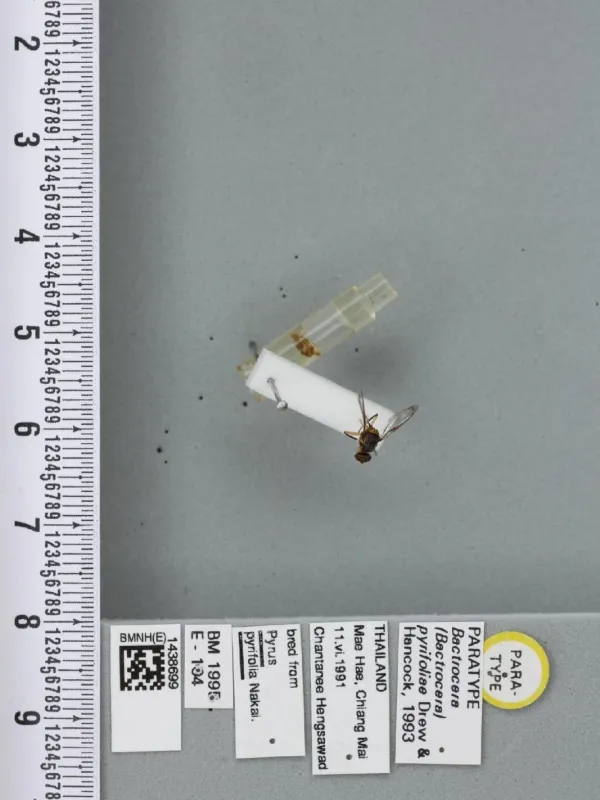
Description
How to identify
Bactrocera pyrifoliae is a dangerous insect species belonging to the family Tephritidae (fruit flies). Adults resemble small flies, often displaying characteristic dark patterns on their wings.
This pest is part of the fruit fly group, which is a major object of external quarantine for many countries worldwide. Morphological features include the female ovipositor, which is adapted for piercing fruit skin.
Larvae develop inside plant tissues, making early detection difficult. Adults are highly mobile and capable of spreading over long distances via wind or human transport.
Species identification in laboratories is carried out by entomologists based on genital structure analysis and specific wing venation patterns.
It is crucial to distinguish this species from related organisms, as many Bactrocera members are serious agricultural pests with similar biology.
What it damages
The primary food source for the larvae of this pest is the fruit of various horticultural crops, especially those in the Rosaceae family.
Major damage is recorded on crops such as pear (Pyrus), which is reflected in the specific epithet pyrifoliae, indicating a trophic link to this genus.
In addition to pears, peaches, apples, and other stone or pome fruits grown in the pest's range may also be threatened.
Damage affects not only mature fruits but also young ovaries, leading to premature fruit drop and significant economic losses.
In infested regions, this species can destroy 50–80% of potential fruit yields if proper control measures and orchard management are lacking.
When it appears
The pest's life cycle is closely tied to host phenology and local temperature regimes. Adult activity peaks typically coincide with the fruit ripening period.
The female lays eggs directly into the fruit pulp by piercing the skin. The incubation period for eggs is relatively short and depends on humidity and temperature.
Larvae pass through several developmental stages inside the fruit, feeding on the pulp, which causes rapid rotting and tissue destruction.
After feeding, larvae exit the fruit and pupate in the top layer of soil, where they survive unfavorable conditions in the puparium stage.
The number of generations per season varies depending on the climate, but in favorable conditions, the species can produce multiple generations per year.
Signs of infestation
The main sign of infestation is the presence of puncture marks on the fruit surface, often surrounded by rot spots or dark depressions.
Cutting open an infested fruit reveals tunnels eaten by the larvae, along with the white or cream-colored larvae themselves.
Externally, the fruit may appear healthy until active rot begins due to secondary fungal or bacterial infections introduced by the larvae.
- Premature yellowing and fruit drop.
- Presence of entry holes on the fruit skin.
- Specific rot smell from seemingly healthy fruit.
- Detection of larvae when cutting the flesh.
Adult activity can be monitored using specialized pheromone or food-based traps hung in tree canopies during the ripening season.
Control measures
Managing Bactrocera pyrifoliae requires a comprehensive approach, as larvae are protected inside the fruit and inaccessible to contact insecticides.
The key method is strict adherence to quarantine measures, including bans on moving fresh produce from infested zones without mandatory treatment.
Agrotechnical methods include regular collection and deep burial of fallen fruit, preventing larvae from completing their pupation cycle in the soil.
Insecticide applications are targeted at adults before they lay eggs. Bait stations containing attractants and slow-acting toxins are commonly used.
The use of biological control agents, including parasitoids or entomopathogenic fungi, is currently a promising area for reducing population density in orchards.
Taxonomy
- Latin name
- Bactrocera pyrifoliae
- Order
- Diptera (flies)
- Family
- Tephritidae
- EPPO code
- BCTRPY
Discussion
No discussions yet — be the first.