
Fijian fruit fly
Bactrocera passiflorae
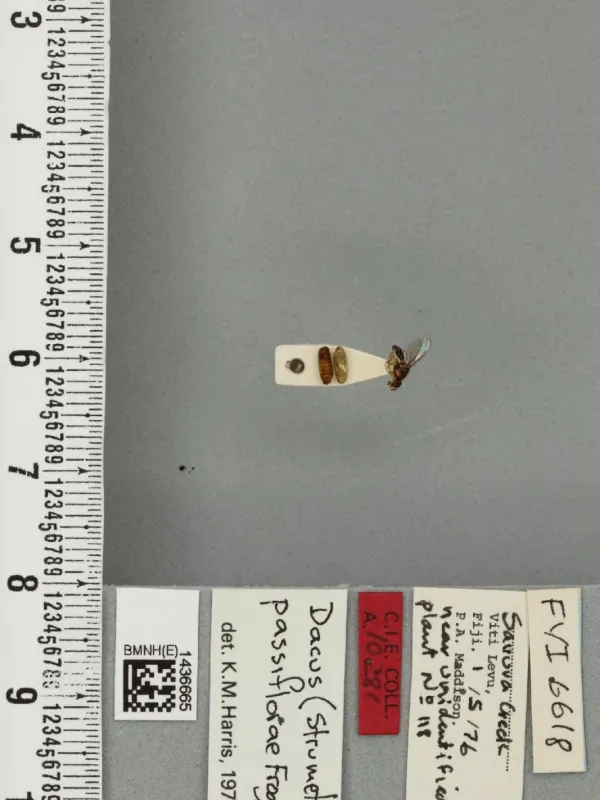
Description
How to identify
The Fijian fruit fly (Bactrocera passiflorae) belongs to the order Diptera and the family Tephritidae, which are widely known as tephritid fruit flies.
Adult flies are typically 6–8 mm in length, characterized by a dark-colored body with distinct yellow markings on the thorax and abdomen, typical of the genus.
The wings are mostly transparent but feature specific dark patterns, including a dark costal band and anal streak, essential for species-level identification.
The larvae are creamy-white, cylindrical, and tapered at the front, possessing the classic maggot appearance common to the family Tephritidae.
Accurate identification is crucial for quarantine purposes and relies on observing specific morphological characters often requiring expert taxonomic verification.
What it damages
The larvae of the Fijian fruit fly are major agricultural pests that infest and destroy the fruit of a wide variety of tropical and subtropical plants.
Host crops include passion fruit, mango, papaya, guava, various citrus species, and certain vegetables such as bell peppers and tomatoes.
Damage occurs when the female fly punctures the fruit's skin to deposit eggs; the hatching larvae then tunnel through the pulp, causing rapid tissue breakdown.
Infected fruits exhibit premature ripening, softening, and subsequent rotting, which renders them commercially worthless and unsuitable for local consumption.
Severe infestations can result in total crop failure if management interventions are not implemented effectively within the production area.
When it appears
In the tropical environments of Fiji and surrounding regions, the life cycle of the fly can continue throughout the year if host fruit is available.
Reproduction is fastest during warmer periods, and populations often surge in correlation with the fruiting seasons of the primary host plants.
The duration of the life cycle from egg to adult is short, allowing for multiple overlapping generations within a single season, leading to high population densities.
Climatic factors such as high humidity and consistent temperatures favor the development of both the immature stages in the soil and the adult flies.
Monitoring programs typically employ pheromone-based traps to detect the presence and activity levels of adult flies throughout the year.
Signs of infestation
The presence of the pest is first indicated by small pinprick-like punctures on the surface of developing or ripening fruits, caused by the female's ovipositor.
Localized softening or discoloration of the fruit skin around the oviposition site is a frequent indicator of successful egg-laying and larval development.
If a suspected fruit is sliced open, larvae or signs of internal tunneling and decomposition are definitive indicators of an infestation.
Premature fruit drop is a common symptom; fruits may fall while still looking outwardly healthy, containing active larvae inside.
Secondary infections by fungi and bacteria often follow the damage, causing the fruit to collapse into a soft, mushy mass before it can be harvested.
Control measures
Effective management of the Fijian fruit fly utilizes an Integrated Pest Management (IPM) approach to minimize crop loss and chemical reliance.
Sanitation is a critical control measure; regularly collecting and properly disposing of fallen, infested fruit prevents larvae from pupating in the soil.
Protein-based bait sprays applied in spot treatments have proven effective in reducing adult populations by attracting them to consume the toxicant.
Biological control options, such as the introduction of parasitoid wasps, are studied as part of sustainable management strategies in diverse agroecosystems.
For international trade, post-harvest disinfestation protocols, including heat treatment or vapor heat, are used to meet strict phytosanitary requirements.
Taxonomy
- Latin name
- Bactrocera passiflorae
- Order
- Diptera (flies)
- Family
- Tephritidae
- EPPO code
- BCTRPA
Discussion
No discussions yet — be the first.