
Fruit fly Bactrocera parvula
Bactrocera parvula
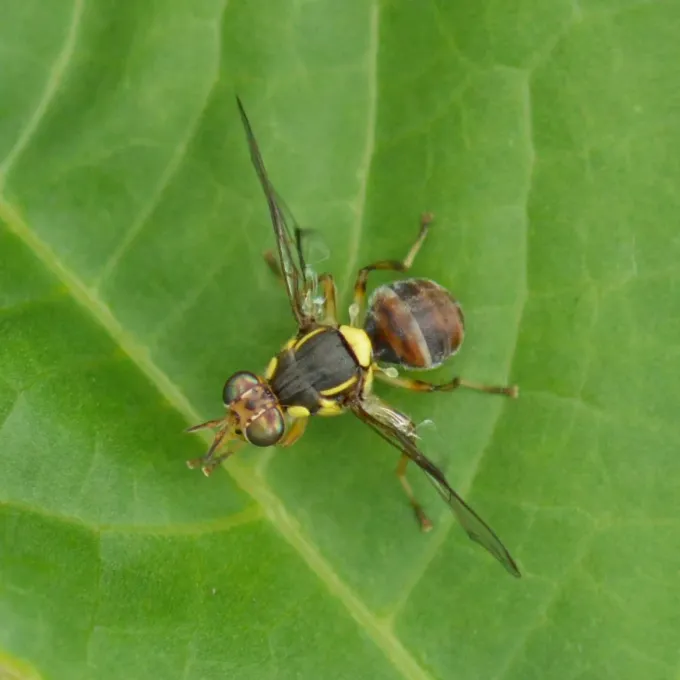
Description
How to identify
Bactrocera parvula is a species of fruit fly belonging to the family Tephritidae. It is a small insect characterized by specific wing patterns and body coloration that are essential for distinguishing it from other closely related species within the Bactrocera genus.
Adult flies possess clear wings with distinct dark markings, which are typical for many members of this family. The body is often patterned with yellow and black, providing camouflage against the backdrop of leaves and stems.
The life cycle encompasses four distinct stages: egg, larva, pupa, and adult. Females are equipped with a well-developed ovipositor used to pierce fruit skin and deposit eggs into the flesh.
Larvae are small, white, legless maggots that are highly specialized for feeding on decaying or ripening fruit tissues. They possess specialized mouth hooks that allow them to scrape and digest the fruit pulp effectively.
Pupation typically occurs in the soil beneath the host plant, where the larvae migrate after exiting the fruit to complete their metamorphosis into the adult stage.
What it damages
This species is a significant horticultural pest that targets a wide variety of fruit-bearing plants within its natural range, causing substantial losses in agricultural production.
The primary damage is caused by larvae feeding internally, which destroys the fruit's integrity, makes it mushy, and often leads to the premature dropping of the entire fruit.
Damage can be extensive; even a single larva can render a fruit unmarketable due to the tunnels and subsequent rot caused by microbial infections introduced during feeding.
The oviposition sites (the tiny punctures made by the female) serve as entry points for secondary pathogens, such as bacteria and fungi, which cause rapid decay of the fruit tissue.
Economic losses are compounded by the necessity of culling infected fruits and the high costs associated with implementing intensive pest control programs in infested areas.
When it appears
Bactrocera parvula activity is strongly correlated with warm, humid climatic conditions, which are ideal for its reproduction and the rapid development of its life cycle stages.
Populations tend to peak during the fruit maturation period, as the availability of suitable hosts encourages females to lay eggs, leading to high infestation rates.
In regions with distinct seasons, the pest may survive cold winters in the pupal stage, buried within the soil, awaiting favorable conditions to emerge as adults in the spring.
The emergence of adults is often synchronized with the development of fruit sets, making the early part of the growing season a critical period for monitoring activities.
Under tropical or greenhouse conditions, the fly can reproduce continuously, potentially producing multiple overlapping generations within a single year if food sources are available.
Signs of infestation
The most subtle sign of infestation is the presence of tiny, pin-prick punctures on the surface of the fruit, often accompanied by a small amount of leaking sap or discoloration.
As larvae begin to consume the interior, dark or soft patches may appear on the skin, indicating that the flesh beneath has begun to liquefy or rot.
When an infested fruit is cut open, one can typically find internal tunnels or cavities filled with larval frass and decay, frequently housing the larvae themselves.
A sudden, large-scale drop of seemingly healthy or slightly immature fruit is a strong indicator of an active infestation within the orchard canopy.
Infested fruits may also emit a distinct, sweet-sour fermented odor, which attracts other scavenger insects to the already damaged and decomposing fruit.
Control measures
Integrated Pest Management (IPM) for Bactrocera parvula relies heavily on monitoring using pheromone or food-based traps to detect adult fly presence and population spikes.
Sanitation is a cornerstone of control; growers should consistently collect and properly dispose of all fallen or damaged fruits to prevent larvae from completing their life cycle in the soil.
Physical exclusion methods, such as bagging individual fruits with paper or fine mesh, are highly effective in smaller settings for preventing female flies from laying eggs.
Chemical control programs often involve the application of systemic or contact insecticides targeted at adult flies during critical windows of fruit development to prevent egg-laying.
Biological control, including the release of specific parasitoid wasps that target fly larvae, is a sustainable approach to reducing population levels without heavy reliance on synthetic pesticides.
Taxonomy
- Latin name
- Bactrocera parvula
- Order
- Diptera (flies)
- Family
- Tephritidae
- EPPO code
- BCTRPV
Discussion
No discussions yet — be the first.