
Opilia Fruit Fly
Bactrocera opiliae
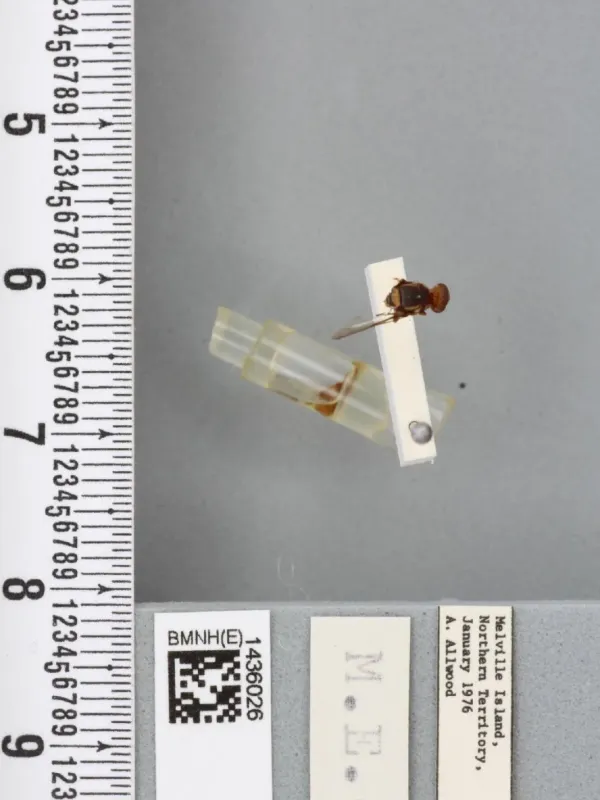
Description
How to identify
The Opilia fruit fly (Bactrocera opiliae) is a member of the Tephritidae family, order Diptera. This species is part of a complex group of fruit flies that are widely distributed in tropical and subtropical regions.
Adult flies are typically small, characterized by a yellowish-brown body with distinct dark markings on the thorax and abdomen. Their wings are transparent, featuring a thin dark costal band along the leading edge.
Identification of B. opiliae is challenging due to the morphological similarity with other related species in the Bactrocera dorsalis complex. Accurate identification often requires expert analysis of adult male genitalia.
Larvae are typical dipteran maggots, whitish and cylindrical, tapering towards the anterior end. They possess specialized mouth hooks for rasping the flesh of the fruit during feeding.
Pupae are enclosed in a barrel-shaped puparium, which varies in color from pale yellow to dark brown. These are typically found in the soil beneath the host plant, providing protection against environmental fluctuations.
What it damages
Bactrocera opiliae is primarily associated with plants of the Opiliaceae family, specifically the Opilia genus. While it is a specialist feeder, it can be a significant pest when agricultural crops are grown near its native host plants.
The female fly uses her sharp ovipositor to puncture the skin of the host fruit, depositing eggs directly into the pulp. This action damages the fruit skin and initiates the degradation process.
Larvae feeding inside the fruit cause the breakdown of the internal tissue. As they consume the fruit, they destroy its marketability and nutritional value, eventually causing the fruit to rot from the inside out.
Infested fruits often drop from the tree prematurely. This premature fruit drop is a common indicator of infestation and can lead to significant yield losses if not managed promptly.
Furthermore, the physical wounds and rotting tissues create entry points for secondary bacterial and fungal pathogens, which can spread to healthy neighboring fruits on the same tree.
When it appears
The life cycle of the Opilia fruit fly is synchronized with the fruiting season of its host plants. In tropical climates, the fly can remain active throughout the year if host fruits are continuously available.
The fly passes through four life stages: egg, larva (three instars), pupa, and adult. The entire life cycle, from egg to adult, typically takes between 3 to 5 weeks depending on ambient temperatures.
Adult flies are most active during the warmer parts of the day. They use their keen sense of smell to locate ripening fruits, which release specific volatile compounds that attract the females for egg-laying.
After reaching maturity, the larvae emerge from the fruit and drop to the soil to pupate. The duration of the pupal stage is highly dependent on soil temperature and moisture levels.
Populations tend to peak during the peak fruiting season of host plants, leading to higher infestation rates in orchards located near native habitats of Opilia species.
Signs of infestation
The most visible sign of infestation is the presence of "sting" marks or small punctures on the fruit surface. These are the entry sites where the female has inserted her ovipositor to lay eggs.
Soft spots or discoloration around the puncture marks indicate that the larvae have begun feeding. In many cases, the fruit skin may appear sunken or distorted in the affected area.
If an infested fruit is cut open, one can observe larval tunnels and the larvae themselves within the pulp. Advanced infestations are characterized by a watery, decaying consistency of the fruit flesh.
Excessive premature fruit drop is a critical field observation. Finding fallen fruit that shows signs of decomposition and larvae is a strong indicator of an active pest population.
- Puncture marks (stings) on the fruit rind.
- Soft, decaying tissue surrounding the entry points.
- Premature fruit drop of immature or ripening fruit.
- Presence of maggots within the fruit tissue.
Control measures
Effective management begins with monitoring. The use of traps baited with methyl eugenol or other specific male attractants helps in tracking population levels and determining the need for intervention.
Strict sanitation is vital for control. Regularly collecting and disposing of fallen fruit prevents larvae from completing their life cycle in the soil, effectively reducing future generations.
Physical exclusion methods, such as bagging individual fruits on the tree with mesh or paper bags, are highly effective in preventing females from accessing the fruit to lay eggs.
Chemical control strategies often involve the application of "bait sprays" which are spot-applied to branches. This method uses a mixture of insecticide and food attractants to kill the flies while sparing beneficial insects.
Regulatory measures, including phytosanitary certification and movement restrictions of fresh produce, are essential to prevent the introduction of this pest into non-infested regions.
Taxonomy
- Latin name
- Bactrocera opiliae
- Order
- Diptera (flies)
- Family
- Tephritidae
- EPPO code
- BCTROP
Discussion
No discussions yet — be the first.