
Olive fruit fly
Bactrocera oleae
Description
How to identify
The olive fruit fly (Bactrocera oleae) is a small dipteran insect belonging to the Tephritidae family. It is considered the most significant pest of olive trees worldwide.
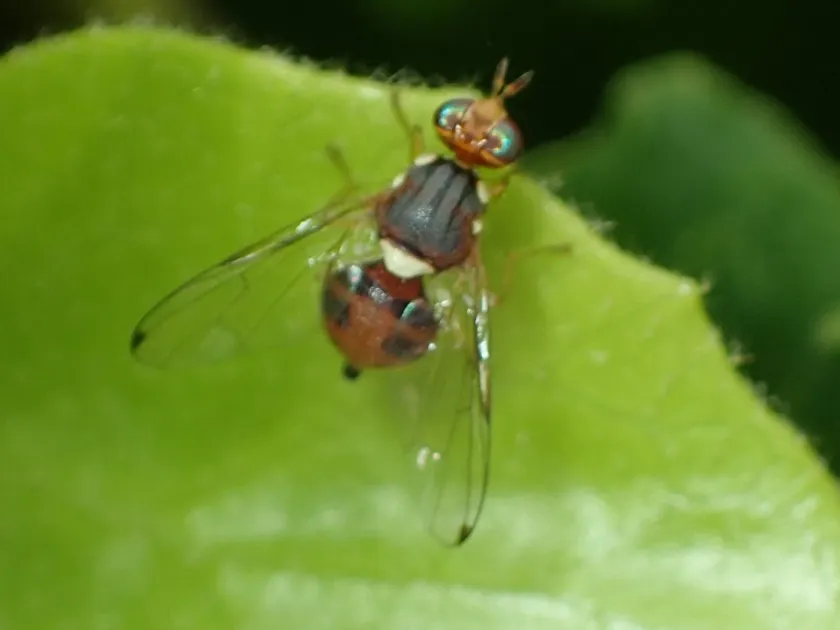
Adult flies are approximately 4–5 mm long, with a distinct yellowish-brown body and transparent wings featuring a small dark spot at the tip.
The life cycle encompasses four distinct stages: egg, larva, pupa, and adult. The larval stage is exclusively spent feeding inside the olive fruit.
Environmental factors such as humidity and mild temperatures are critical for their survival and reproductive success in the orchard environment.
In temperate climates, the pest overwinters as a pupa in the soil or as an adult in sheltered locations, waiting for favorable conditions.
What it damages
This species exclusively attacks olives (Olea europaea). Both table olives and those intended for oil production are highly susceptible to infestation.
Larval feeding causes significant structural damage to the fruit pulp, creating extensive tunnels that expose the fruit to oxidative processes and pathogens.
The infestation leads to increased acidity and poor flavor profiles in olive oil, rendering it unfit for commercial bottling and consumption.
Furthermore, the damage creates entry points for secondary infections like fungi and bacteria, which cause the fruit to rot prematurely on the tree.
When uncontrolled, olive fruit fly populations can destroy nearly the entire annual crop, causing devastating economic impacts on olive farmers.
When it appears
The activity period typically begins in late spring, as soon as the fruit begins to form and reaches a size suitable for oviposition.
Depending on the region, the olive fruit fly can complete several generations per year, with population numbers peaking during late summer and autumn.
High summer temperatures can suppress population growth, as eggs and young larvae are sensitive to extreme heat and lack of moisture.
During the cooler, humid months, the pest activity often surges, creating a high-pressure period right before the main harvesting season.
Successful pest management strategies rely on timing interventions during these specific windows of increased population activity.
Signs of infestation
The primary symptom of infestation is the presence of small puncture marks on the fruit epidermis, caused by the female's ovipositor.
As the larva develops inside, dark, softened spots appear on the skin, indicating internal pulp destruction and decay.
- Surface skin stippling or small darkened spots on green or ripening olives.
- Presence of larval galleries (tunnels) visible when the fruit is cut open.
- Premature ripening and subsequent dropping of infected fruits.
- Small exit holes appearing on the skin when the larva emerges for pupation.
Control measures
Integrated Pest Management (IPM) is essential, incorporating pheromone traps for monitoring and mass trapping to reduce adult populations.
Bait sprays containing protein hydrolysates and low-toxicity insecticides are frequently applied to attract and kill adult flies before they lay eggs.
Biological control agents, such as parasitoid wasps or entomopathogenic fungi, are used in organic orchards to manage pest density naturally.
Good agricultural practices, such as early harvesting, help prevent the fly from completing its life cycle within the fruit.
Orchard sanitation, including the prompt removal of fallen or mummified fruits, is a crucial step in breaking the pest's reproductive cycle.
Taxonomy
- Latin name
- Bactrocera oleae
- Order
- Diptera (flies)
- Family
- Tephritidae
- EPPO code
- DACUOL
Discussion
No discussions yet — be the first.