
Ochrosia fruit fly
Bactrocera ochrosiae
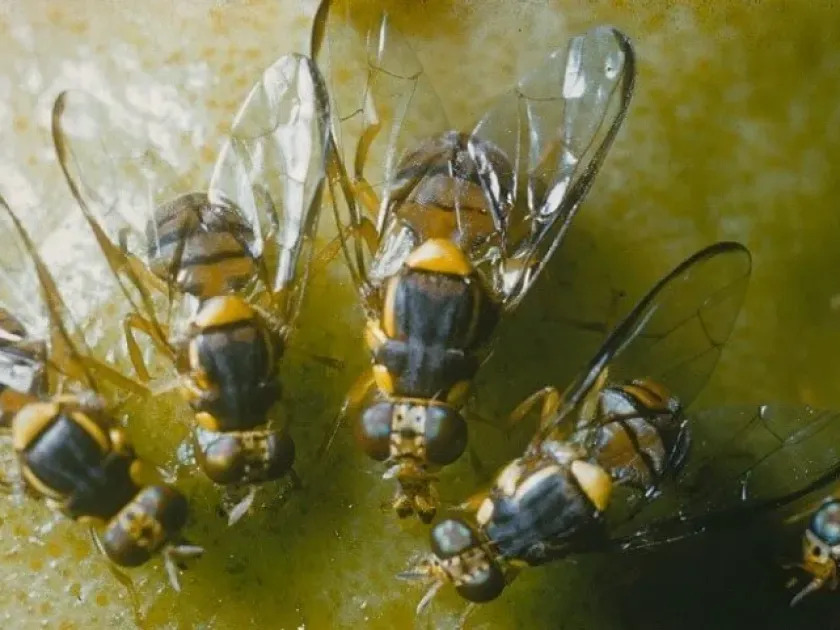
Description
How to identify
The Ochrosia fruit fly (Bactrocera ochrosiae) is a member of the Tephritidae family, also known as fruit flies or picture-winged flies, belonging to the order Diptera. This species is recognized as a serious agricultural pest in various regions.
The adult fly has a medium-sized body, often exhibiting yellowish-brown coloration, which is a common trait among many species of the Bactrocera genus. Their wings are transparent and characterized by specific vein patterns that serve as a primary taxonomic feature.
The larvae, which are the main destructive stage, have a typical cylindrical shape with a pointed anterior end, equipped with mouth hooks for effective feeding. They undergo three distinct larval instars before reaching the pupal stage.
Identifying this species is challenging due to the morphological similarity to other related members of the Bactrocera complex. Definitive identification usually requires a specialized laboratory examination of the male genitalia and other microscopic structures.
As an agricultural pest, it is heavily regulated in many territories. Its classification as a quarantine pest underscores the necessity for accurate detection and proactive management in fruit-growing industries across the globe.
What it damages
Bactrocera ochrosiae is known to be a polyphagous pest, meaning it attacks a wide range of fruit crops. Important hosts include various tropical fruits, citrus, and a variety of wild plant species found in its native habitats.
The primary damage is caused by the larvae feeding inside the fruit tissue. The female fly uses its ovipositor to pierce the skin of the fruit and deposit eggs, which subsequently hatch into larvae that bore through the flesh.
This feeding activity causes significant structural damage to the fruit, leading to premature ripening and dropping. In many cases, the internal tissue turns into a decayed, liquid mass, rendering the fruit entirely unsuitable for market.
Secondary infections caused by opportunistic bacteria and fungi often follow the physical damage, accelerating the rot. This contamination affects not only the infested fruit but can spread quickly through storage containers.
The economic impact is profound, as infestations lead to direct yield loss and strict international trade restrictions. Exporting fruit from infested areas often requires expensive disinfestation treatments or is prohibited altogether to prevent further spread.
When it appears
The biological cycle of the Ochrosia fruit fly is heavily influenced by local climate factors, particularly temperature and humidity. In warm, tropical environments, the fly can remain active and reproduce throughout the year.
After the female deposits eggs into a host fruit, the incubation period is generally short, allowing for rapid generation turnover. The larvae complete their development within the fruit before emerging to pupate in the soil.
The pupal stage is spent in the soil under the canopy of the host tree. This life stage provides a survival mechanism, as it allows the pest to withstand unfavorable weather conditions by remaining dormant in the ground.
Adult emergence typically coincides with the presence of susceptible, ripening fruit. This synchronization ensures that the next generation has immediate access to food sources and suitable sites for oviposition, sustaining the population.
Monitoring for adult activity is essential for timely intervention. Professionals utilize a combination of pheromone traps and food-based attractants to detect the presence of the fly before it reaches infestation levels.
Signs of infestation
Early symptoms of an infestation often appear as tiny, faint puncture marks on the skin of the fruit, where the female has laid her eggs. Sometimes, a small amount of sap or liquid may exude from these points.
As the larvae develop, the area around the puncture marks often begins to soften and show signs of tissue discoloration. This damage usually spreads outward, causing the fruit to lose its firmness and change color prematurely.
A tell-tale sign is the premature fruit drop from the tree. When such fruit is opened, the internal flesh shows distinct galleries and larvae feeding, often accompanied by an unpleasant, fermented, or sour smell.
In later stages of the lifecycle, one may observe small exit holes in the skin of the fruit, which indicate that the larvae have left the fruit to enter the soil for pupation.
Another sign is the presence of adult flies around the canopy, particularly during early morning or late afternoon hours. Regular visual inspection of the fruit and the use of monitoring traps are the most reliable ways to detect an active infestation.
Control measures
Management of Bactrocera ochrosiae relies on an Integrated Pest Management (IPM) approach that combines quarantine, cultural, and chemical tactics to maintain low population levels.
Strict quarantine measures are the first line of defense to prevent the spread of infested produce. This includes rigorous inspection of all fruit moving across international and regional borders to minimize the risk of introducing the pest.
Cultural control is focused on sanitation; removing and destroying fallen fruit is critical. Burying these fruits deeply or processing them ensures that the larvae inside are killed before they can complete their life cycle in the soil.
Chemical control usually involves bait sprays, which contain an insecticide mixed with a food attractant to target the adult flies. This method is highly effective and minimizes the amount of chemicals applied to the entire plant.
- Regular use of monitoring traps
- Sanitation by disposing of fallen fruit
- Applying bait sprays to target adults
- Using exclusion netting for high-value crops
- Adhering to strict phytosanitary regulations
Taxonomy
- Latin name
- Bactrocera ochrosiae
- Order
- Diptera (flies)
- Family
- Tephritidae
- EPPO code
- BCTROH
Discussion
No discussions yet — be the first.