
Bactrocera occipitalis
Bactrocera occipitalis
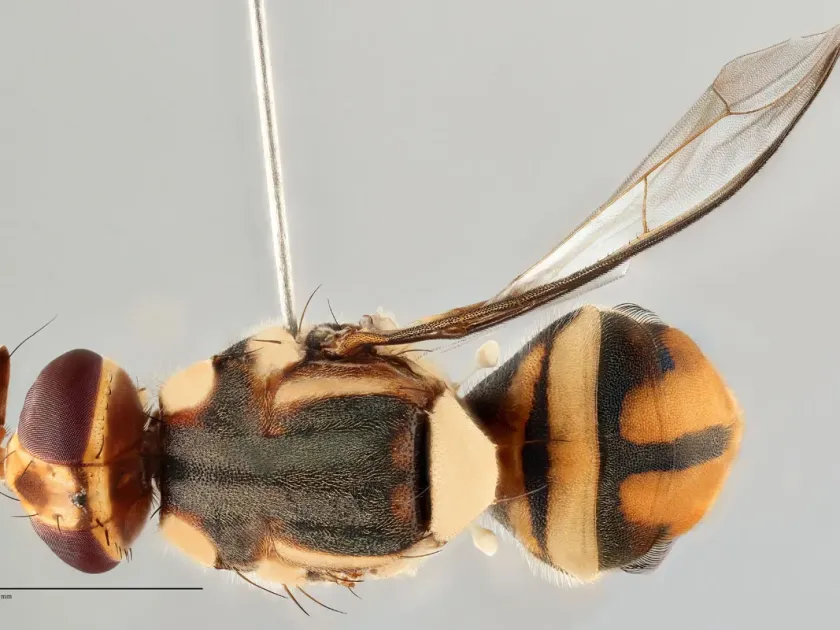
Description
How to identify
Bactrocera occipitalis belongs to the Tephritidae family, also known as fruit flies. It is a significant agricultural pest that presents challenges for identification due to its similarity to other species.
The adult insect is characterized by a specific pattern on the thorax and transparent wings with dark edges. These features are typical for many members of the genus, necessitating expert examination for accurate classification.
The larvae are cream-colored, maggot-like creatures that develop inside the host fruit. They possess specialized mouthparts used for feeding on the pulp, which leads to rapid decay.
Accurate identification is crucial for quarantine purposes. Specialists often use microscopic examination of genital structures or molecular analysis to distinguish this species from local fruit fly populations.
The life cycle encompasses four main stages: egg, larva, pupa, and adult. The total development time is heavily influenced by environmental temperature and moisture availability in the habitat.
What it damages
This species is a notorious polyphagous pest, meaning it attacks a wide variety of fruit crops. It is particularly destructive in tropical and subtropical orchard systems.
Primary host crops include mango, guava, citrus, papaya, and carambola. Its ability to infest various fruits makes it a persistent threat to year-round production cycles.
The larvae bore into the fruit, feeding on the fleshy interior. This feeding activity not only destroys the fruit but also introduces bacteria and fungi, causing rapid decomposition.
Economic impact is severe, resulting in direct crop loss and substantial costs associated with quarantine compliance and export restrictions in infested areas.
If left unmanaged, the infestation rate can escalate rapidly, leading to major yield losses and the potential loss of market access for international trade.
Signs of infestation
The first external sign of infestation is the presence of small puncture marks on the fruit skin, created by the female ovipositor during egg-laying. These points may show slight necrosis.
As the larvae feed internally, the fruit loses its firmness and may show signs of bruising or uneven ripening. Often, the fruit exhibits a sunken or deformed appearance.
Opening an infested fruit typically reveals internal tunnels or cavities filled with larvae. The flesh may show signs of fermentation, with a distinctive odor often present.
Premature fruit drop is a common field indicator. When fruits fall off the tree before ripening, they should be inspected for the presence of larvae to confirm the cause.
Monitoring using pheromone traps is highly recommended to detect the arrival of adult flies. Regular trap checks are vital for early warning and identifying the population density in the orchard.
Control measures
Quarantine and phytosanitary measures are the frontline defense against the spread of this pest. Strict regulations on the movement of fresh produce are necessary.
Orchard sanitation is a critical cultural practice. Regularly collecting and disposing of fallen fruit by burying or burning destroys the larvae before they can enter the soil to pupate.
Male annihilation technique (MAT) involves using traps with attractants to significantly reduce the male population, thereby interrupting the mating cycle of the flies.
Chemical control involving targeted insecticide applications can be effective when timed with adult activity. Integrated Pest Management (IPM) strategies emphasize minimizing chemical use to preserve beneficial insects.
Physical protection of fruit, such as bagging individual fruits on trees, is a highly effective method for small-scale farming and high-value crop protection to ensure clean yields.
Taxonomy
- Latin name
- Bactrocera occipitalis
- Order
- Diptera (flies)
- Family
- Tephritidae
- EPPO code
- BCTROC
Discussion
No discussions yet — be the first.