
Bactrocera obliqua
Bactrocera obliqua
Description
How to identify
Bactrocera obliqua is a member of the Tephritidae family, also known as fruit flies. It is a highly significant agricultural pest that causes substantial economic losses in various tropical regions of the world.
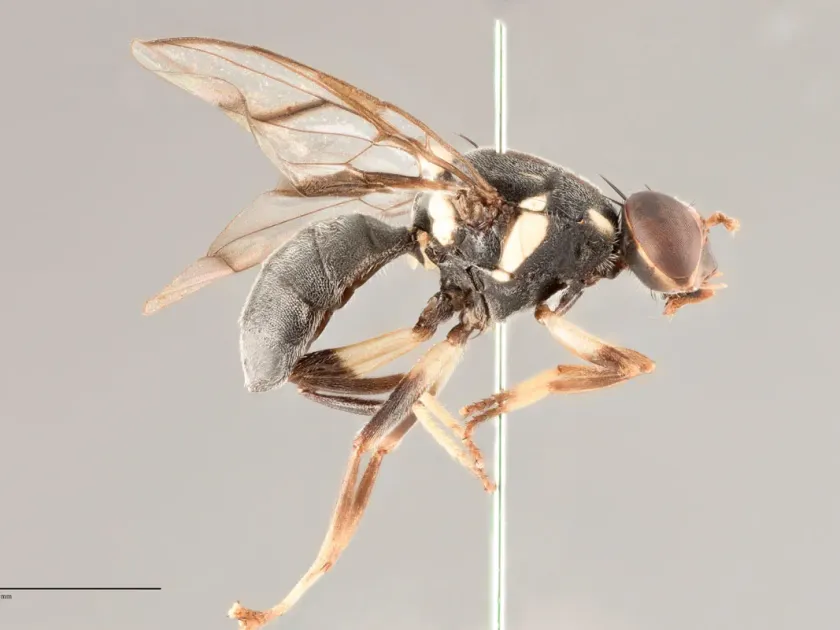
The adult fly typically measures about 6–8 mm in length. It is easily recognizable by its yellowish-brown body, black markings on the thorax, and the specific dark patterns on its wings, which are vital for taxonomic identification.
The larvae are creamy-white, legless, and reach up to 10 mm in length. They possess a worm-like structure with specialized mouth hooks, allowing them to penetrate and feed on the internal tissues of host fruits.
Eggs are minute and oblong, deposited by the female beneath the epidermis of the fruit. Development from egg to adult occurs through complete metamorphosis, influenced significantly by environmental temperature and humidity.
Pupation typically takes place in the soil under the host tree. After emerging from the soil, the adult flies mate and begin the cycle again, posing a continuous threat to susceptible crops throughout the season.
What it damages
This species is a polyphagous pest with a wide host range. It primarily attacks tropical fruits such as mango, guava, and papaya, making it a critical threat to the fruit production industry globally.
In infested orchards, Bactrocera obliqua can cause damage levels exceeding 50% of the total harvest if no active management strategies are implemented, leading to massive financial losses for growers.
The larvae feed internally, turning the fruit pulp into a decaying mass. This feeding damage makes the fruit unmarketable and unsuitable for human consumption, often leading to rapid fruit drop.
Secondary fungal and bacterial infections frequently follow the larval feeding, accelerating the rotting process and further compromising the quality of the surrounding harvest on the tree.
Due to its high invasive potential and the severity of the damage it inflicts, this fruit fly is strictly monitored by quarantine authorities to prevent its spread into uninfested agricultural areas.
Signs of infestation
The primary symptom of an infestation is the presence of small puncture marks on the fruit skin, which are the sites where the female fly has inserted her eggs into the flesh.
As larvae develop inside, the area around the puncture often becomes discolored, showing dark, water-soaked spots. The internal fruit flesh begins to soften and liquefy, resulting in a distinct smell of fermentation.
Visible exit holes on the fruit surface indicate that the mature larvae have left the fruit to pupate in the ground. By the time these holes appear, the internal damage is already severe.
Premature fruit drop is a common indicator of infestation. If fruits fall from the tree before reaching maturity, they should be inspected for the presence of larvae inside the flesh.
- Visible egg-laying punctures.
- Dark, water-soaked tissue around punctures.
- Soft, decaying pulp inside the fruit.
- Larval exit holes on the skin.
- Excessive premature fruit drop.
Control measures
Integrated Pest Management (IPM) is essential. Male annihilation techniques using pheromone traps are highly effective in reducing the male population and disrupting the mating process.
Sanitation is a cornerstone of control. Regularly collecting and destroying infested fallen fruit prevents the larvae from reaching the soil and pupating, effectively breaking the pest's reproductive cycle.
Tilling the soil beneath the canopy of host trees helps to disturb pupae, exposing them to environmental stress and natural predators like birds or beneficial insects, which helps lower the population density.
Chemical control can be utilized through the application of localized insecticidal baits or sprays. However, timing is crucial, and growers must adhere to pre-harvest intervals to ensure safety.
Biological control methods involve the release of parasitoid wasps that target the larval stage of the fly. These natural enemies are an integral part of sustainable and eco-friendly pest management programs.
Taxonomy
- Latin name
- Bactrocera obliqua
- Order
- Diptera (flies)
- Family
- Tephritidae
- EPPO code
- BCTROB
Discussion
No discussions yet — be the first.