
Lesser Queensland fruit fly
Bactrocera neohumeralis
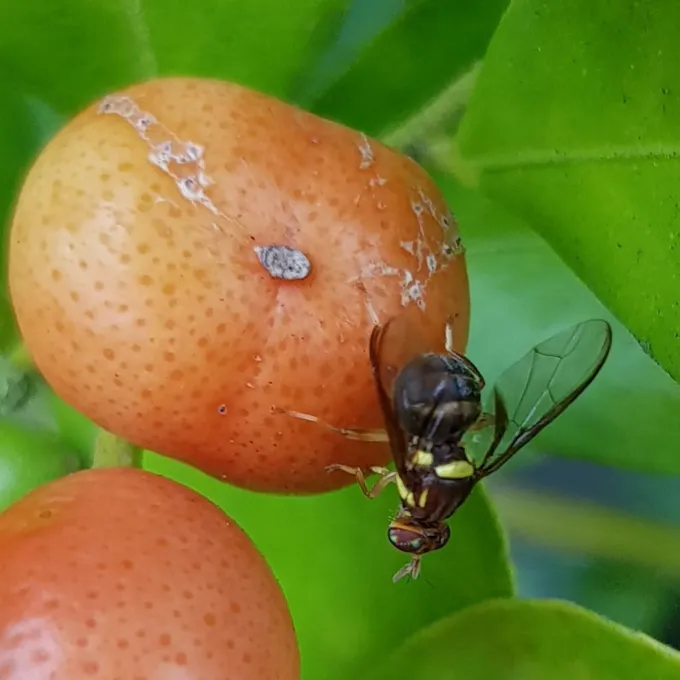
Description
How to identify
The Lesser Queensland fruit fly (Bactrocera neohumeralis) is a significant horticultural pest belonging to the Tephritidae family. It is morphologically similar to the more common Queensland fruit fly, but can be distinguished by the yellow markings on its humeri (shoulders).
Adult flies measure approximately 6–8 mm in length. Their bodies display a reddish-brown coloration with distinctive black and yellow patterns on the thorax, which is a key identification feature for entomologists.
The insect follows a complete metamorphosis cycle, passing through egg, larval (three instars), pupal, and adult stages. Under favorable warm conditions, the life cycle is rapid, allowing for continuous generations throughout the year.
Females are equipped with a sharp ovipositor used to puncture the skin of ripening fruit. A single oviposition event can result in a cluster of eggs deposited deep into the fruit flesh, ensuring immediate access to nutrients for emerging larvae.
Pupation primarily occurs in the soil beneath the host plant. The moisture content and soil structure play a critical role in the successful development of pupae into adult flies, which is vital for monitoring programs.
What it damages
This species is highly polyphagous, meaning it has a wide range of host plants, which increases its destructive potential in both commercial orchards and home gardens.
Stone fruits, such as peaches, nectarines, apricots, and plums, are among the most frequently attacked crops due to their soft flesh and early availability during the season.
Pome fruits, including apples and pears, are also highly susceptible. The flies target these fruits as they begin to ripen, often causing substantial damage before the harvest window.
Tropical and subtropical fruits like mangoes, guavas, and avocados are frequently colonized by this pest. In the absence of primary fruit hosts, the fly can also survive on various wild fruits found in surrounding areas.
The economic impact is severe, as infestation not only leads to direct fruit loss but also reduces the shelf life and overall quality of the harvest, rendering the fruit unfit for market.
Signs of infestation
Initial signs of infestation appear as minute puncture marks on the skin of the fruit, often surrounded by slight discoloration or small dimples where the eggs were laid.
As the larvae hatch and feed, they create extensive galleries throughout the internal pulp. This activity leads to rapid tissue breakdown, causing the fruit to turn into a fermented, decaying mass.
A foul, sweetish odor of fermentation is a common secondary symptom of heavily infested fruit. This scent often attracts further secondary infections from bacteria and molds.
Inside the damaged fruit, one can find whitish or cream-colored, legless larvae. These larvae are highly active and will leave the fruit to pupate once they have completed their development.
The premature drop of fruit, which is often soft to the touch and contains exit holes, is a primary field observation that indicates an established population of the pest.
Control measures
Rigorous orchard sanitation is the cornerstone of control. All fallen or damaged fruit must be collected and destroyed immediately to prevent larvae from completing their development in the soil.
The deployment of monitoring traps using male attractants is essential. This not only allows for accurate population tracking but can also effectively reduce male numbers and disrupt breeding.
Physical protection, such as fruit bagging or the installation of fine-mesh exclusion nets over trees, provides an effective barrier that prevents females from accessing the fruit for egg-laying.
In larger-scale operations, spot spraying with bait stations—which combine an insecticide with a food attractant—is used. This method minimizes chemical exposure while targeting the flies effectively.
Integrated Pest Management (IPM) strategies, including the release of beneficial parasitoids like Braconid wasps, are recommended to maintain lower fly populations through natural predation.
Taxonomy
- Latin name
- Bactrocera neohumeralis
- Order
- Diptera (flies)
- Family
- Tephritidae
- EPPO code
- BCTRNE
Discussion
No discussions yet — be the first.