
Banana fruit fly
Bactrocera musae
Description
How to identify
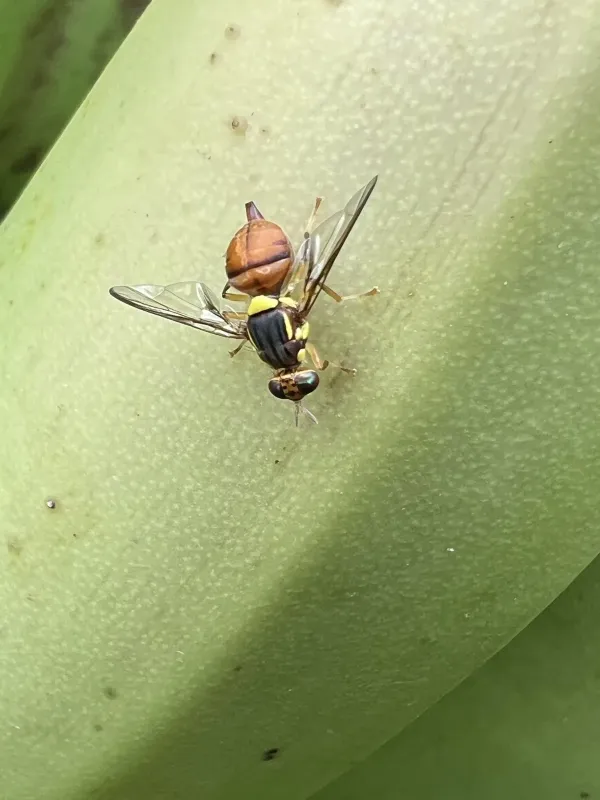
The banana fruit fly (Bactrocera musae) belongs to the Tephritidae family, order Diptera. Adult flies are approximately 6–7 mm long, characterized by a yellow and black body with distinct abdominal bands and clear wings.
The head features prominent compound eyes and short antennae, which are essential sensory organs for detecting suitable fruit hosts. These insects are highly mobile and exhibit specific flight patterns when scouting for oviposition sites.
Larvae are legless, creamy-white in color, and possess specialized mouthparts for tunneling through fruit flesh. As they develop through three larval instars, they grow significantly in size, causing extensive internal damage.
Pupation typically occurs in the soil or within fruit debris. The puparium is hard, cylindrical, and brownish, providing a protective shell that enables the insect to survive unfavorable environmental conditions.
Accurate identification of Bactrocera musae requires expert examination of thoracic markings and wing venation patterns. This is crucial for agricultural authorities to differentiate this species from other related fruit fly pests in the same genus.
What it damages
The primary host for this pest is the banana (Musa spp.). Both green and ripening fruits are susceptible to infestation, making it a major concern for commercial banana plantations worldwide.
Besides bananas, the fly is known to infest a variety of other tropical fruits, including mangoes, papayas, and citrus. The broad host range complicates management efforts in regions where diverse fruit crops are grown in close proximity.
The larvae cause direct damage by feeding on the fruit pulp. This feeding behavior creates tunnels that disrupt the internal structure of the banana, leading to rapid tissue breakdown and degradation of fruit quality.
Secondary infections by bacteria and fungi frequently follow larval infestation. These pathogens accelerate the rotting process, causing the fruit to become mushy, discolored, and ultimately unsalable for domestic or export markets.
Economically, the presence of Bactrocera musae leads to severe trade restrictions. Many importing countries maintain strict quarantine protocols, rejecting any shipments that show signs of infestation, which results in significant financial losses for producers.
When it appears
The life cycle of the banana fruit fly is heavily influenced by temperature and humidity. Warm, humid conditions (above +25°C) are ideal for rapid development and high reproductive rates, allowing for continuous cycles throughout the year in tropical zones.
Females insert eggs into the fruit tissue using a sharp ovipositor. A single female can produce a large number of eggs over her lifespan, ensuring high population pressure during peak fruiting seasons of the host plants.
Adult activity peaks during the ripening phase of the fruit. They are most active during early morning and late afternoon hours, seeking shelter in the foliage during the heat of the day to avoid desiccation.
During cooler or drier periods, the insect may enter a dormant phase as a pupa in the soil. This ability to survive fluctuations allows them to persist and re-emerge as soon as environmental conditions improve.
Agricultural managers utilize pheromone-based monitoring traps to track population trends. These data are vital for timing intervention strategies, ensuring that control measures are implemented precisely when the pest is most vulnerable.
Signs of infestation
The earliest sign of infestation is the presence of tiny, pin-prick marks on the fruit skin, which are the entry points where the female deposited her eggs. Discoloration often develops around these punctures as the fruit tissue reacts to the injury.
Internally, the presence of larvae is evidenced by soft, decaying pulp and a mushy texture. When a banana is broken open, the tunnel-like paths created by the larvae, along with the maggots themselves, are typically visible.
Premature fruit drop is a common indicator of a serious infestation. Infected bananas often ripen unevenly or fall from the plant before they reach full maturity due to the internal damage sustained by the larvae.
Adult flies are often observed resting on the underside of leaves or on the surface of the fruit, especially in humid and sheltered conditions. Their presence in orchards is a clear indication that a breeding population is established.
- Pin-prick marks on the fruit skin.
- Soft, mushy areas and internal tissue breakdown.
- Visible larval galleries within the pulp.
- Premature yellowing and fruit drop.
- Capture of adult flies in monitoring traps.
Control measures
Strict quarantine measures are the first line of defense. Restricting the movement of fresh fruit from infested regions into clean zones is essential to prevent the spread of Bactrocera musae across borders.
Good agricultural practices, such as the systematic collection and destruction of fallen or infested fruit, are highly effective. This interrupts the lifecycle by preventing larvae from successfully pupating in the soil.
Chemical control involving targeted insecticide applications is used when monitoring indicates high pest density. These applications should be conducted using integrated pest management principles to minimize impacts on beneficial organisms.
Biological control methods, such as releasing parasitoid wasps that prey on fly larvae, offer a sustainable and environmentally friendly solution. These natural enemies help regulate pest populations naturally within the orchard ecosystem.
Male annihilation techniques, using traps loaded with attractants and insecticides, help reduce the overall male population density. By lowering the fertilization rate of the females, this strategy effectively suppresses the long-term reproductive potential of the colony.
Taxonomy
- Latin name
- Bactrocera musae
- Order
- Diptera (flies)
- Family
- Tephritidae
- EPPO code
- DACUMU
Discussion
No discussions yet — be the first.