
Fruit fly Bactrocera mucronis
Bactrocera mucronis
Description
How to identify
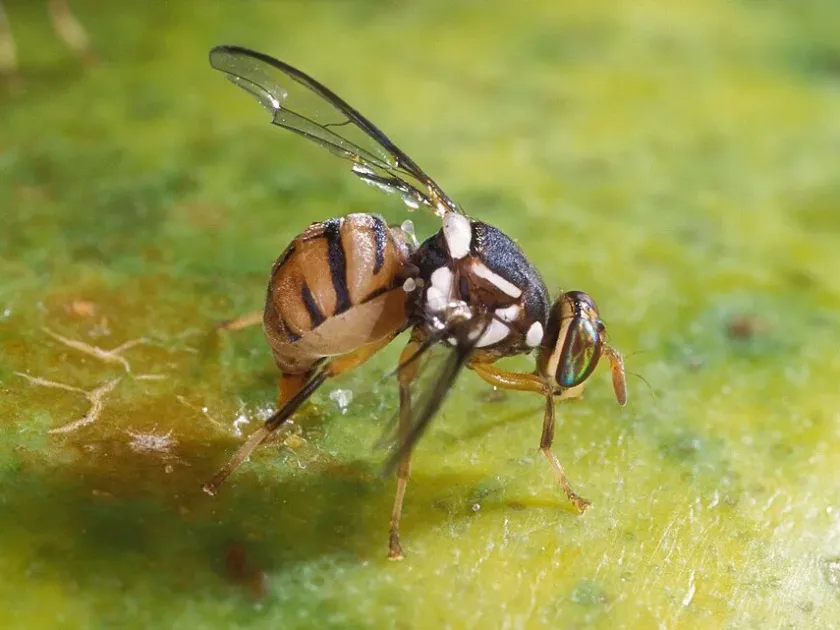
Bactrocera mucronis belongs to the Tephritidae family, within the order Diptera. This species displays the typical morphology of the Bactrocera genus, characterized by a dark body with distinctive yellow markings on the thorax and abdomen.
Adult flies are identified by their clear wings, which feature a narrow dark stripe along the leading edge. This specific wing pattern is a primary diagnostic feature used by entomologists during species verification.
The average body length of an adult specimen ranges from 5 to 8 millimeters. Females are generally larger than males, a size difference primarily due to the presence of a well-developed, sclerotized ovipositor used for puncturing fruit skin.
Microscopic examination of the wing venation and the arrangement of setae on the body is required for accurate taxonomic identification. In the field, male-attractant traps are deployed to detect the presence of the population.
The life cycle encompasses four distinct stages: egg, three larval instars, pupa, and adult. The larvae are typical fruit fly maggots: creamy-white, legless, and conical in shape, reaching up to 10 mm when fully developed.
What it damages
The primary economic damage is caused by the larval stage of Bactrocera mucronis, which feeds internally within the host fruit. This destructive behavior renders the produce completely unmarketable.
The pest has a wide host range, primarily targeting soft-fleshed fruit. The female uses her ovipositor to penetrate the fruit skin and deposit eggs into the tissue beneath, creating an entry point for both larvae and pathogens.
Once the eggs hatch, the larvae begin to feed, creating internal tunnels. This feeding activity causes rapid softening, discoloration, and decay of the fruit tissue. Secondary bacterial and fungal infections usually follow, leading to total rot.
Premature fruit drop is a common consequence of infestation. Often, fruit that looks healthy from the outside contains a network of larval galleries inside, leading to significant post-harvest losses and reduced yield.
In highly susceptible orchards, infestation rates can escalate rapidly, causing severe losses of up to 90% of the crop if left unmanaged, necessitating strict adherence to quarantine and control measures.
When it appears
The seasonal activity of Bactrocera mucronis is dictated by ambient temperature, humidity, and the availability of host fruit. The pest is most active during the warmer months when fruits are ripening.
Developmental speed is highly temperature-dependent. Under optimal tropical or subtropical conditions, the entire life cycle can be completed in just a few weeks, allowing for multiple overlapping generations per year.
Pupation typically occurs in the soil beneath the host plant or among decomposing fruit debris, serving as the overwintering stage. Adults emerge when conditions improve, immediately beginning the search for suitable egg-laying sites.
The peak population density usually correlates with the sugar accumulation phase of the fruit. This timing ensures the larvae have sufficient nutrition for rapid development upon hatching.
Agricultural monitoring programs utilize pheromone or food-based traps to track population fluctuations, allowing farmers to apply control measures precisely when the flight activity of the adults is highest.
Signs of infestation
The first sign of an infestation is the presence of minute puncture marks on the skin of the fruit. In some cases, tiny droplets of sap or fruit juice may leak from these oviposition wounds.
As the larvae feed internally, the skin around the puncture site begins to darken and soften. This is often followed by sunken spots, which indicate that the internal fruit structure is decomposing.
If an infested fruit is opened, the internal flesh will be found to be riddled with irregular tunnels. The larvae themselves, or their frass, may be visible within the damaged tissue.
Premature ripening and the sudden drop of fruits from the branches are strong indicators of larval presence. Even if the fruit appears normal on the surface, internal softening confirms damage.
- Tiny puncture marks on the fruit skin.
- Sunken, discolored spots on the fruit surface.
- Premature dropping of underdeveloped fruit.
- Internal galleries and tunnels in the fruit flesh.
- Unpleasant smell due to secondary bacterial rot.
Control measures
Management of Bactrocera mucronis requires an Integrated Pest Management (IPM) approach. This includes a combination of cultural practices, biological control, and targeted insecticide application.
Sanitation is the most critical cultural practice. All fallen fruit must be collected and disposed of immediately, either by deep burial or by burning, to eliminate the larval habitat and break the reproductive cycle.
The use of protein-baited traps or bait stations containing attractants and minimal doses of insecticides is highly effective. This technique targets adult flies while preserving beneficial insect populations in the orchard.
Biological control, involving the release of parasitoid wasps that specifically attack fruit fly larvae, has shown potential in reducing population levels in several regions, offering a sustainable alternative to chemicals.
Strict quarantine regulations are essential to prevent the human-aided movement of infested fruit between regions, which is the primary driver of the spread of this invasive and highly destructive species.
Taxonomy
- Latin name
- Bactrocera mucronis
- Order
- Diptera (flies)
- Family
- Tephritidae
- EPPO code
- BCTRMR
Discussion
No discussions yet — be the first.