
Bactrocera montyana fruit fly
Bactrocera montyana
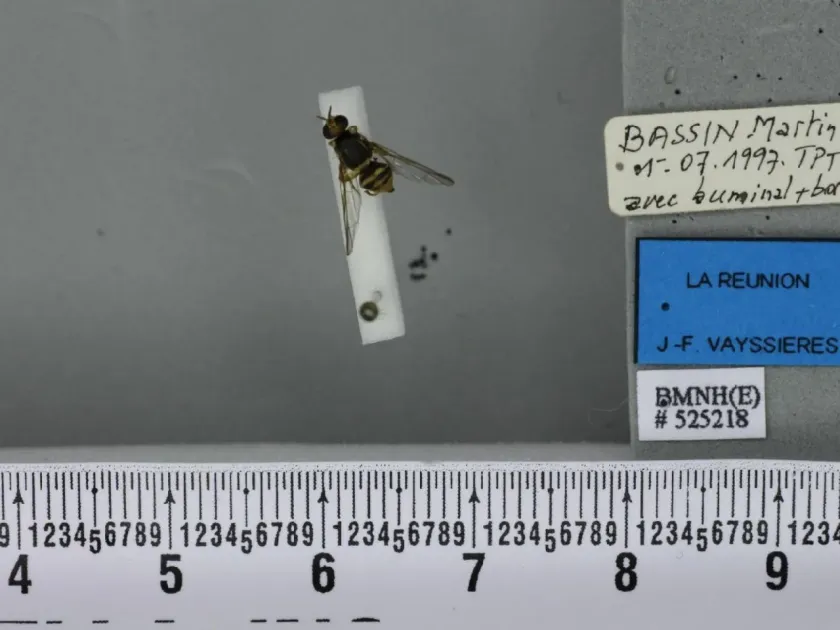
Description
How to identify
Bactrocera montyana is a member of the Tephritidae family, commonly known as fruit flies or picture-winged flies. It is a highly specialized pest that belongs to the extensive and damaging genus Bactrocera.
Adult flies typically measure between 6 to 8 mm. They are characterized by distinct thoracic and abdominal patterns that are vital for diagnostic purposes. Females are equipped with a strong, sharp ovipositor designed to penetrate fruit skin.
Larvae are apodous (legless) and exhibit a cylindrical body shape typical for dacine fruit flies. They thrive within the moist environment of the fruit pulp, shielded from environmental hazards and direct pesticide application.
The life cycle encompasses four stages: egg, larva, pupa, and adult. The pupal stage occurs primarily in the soil beneath the host plant, a critical aspect of their biology that dictates ground-based control measures.
Correct identification is often challenging due to the morphological similarity with other related species. Therefore, molecular tools and expert entomological inspection are frequently required for accurate classification.
What it damages
This species is a highly destructive polyphagous pest, capable of infesting a wide range of fruit crops. In regions where it is endemic, it poses a severe threat to both commercial orchards and backyard gardens.
The primary damage is caused by larvae feeding inside the fruit. This destroys the pulp, leading to fruit breakdown and decay. Infested fruit usually becomes completely unmarketable and unsuitable for human consumption.
The punctures made by females during oviposition serve as entry points for secondary pathogens, including various fungi and bacteria. This frequently results in rapid fruit rot and total crop loss if untreated.
Economic losses are significant, involving not only direct yield reduction but also strict quarantine restrictions. Infested areas may be prohibited from exporting produce to international markets.
Secondary damage includes premature fruit drop, which not only removes the crop from the potential harvest but also seeds the soil with the next generation of larvae, perpetuating the infestation cycle.
Signs of infestation
Early symptoms of infestation include tiny punctures or sting marks on the fruit epidermis. These marks are often accompanied by subtle skin discoloration and localized softening of the surrounding area.
Internally, the presence of larvae is marked by tunneling within the fruit flesh. As the infestation progresses, the internal structure of the fruit begins to liquefy, leading to a characteristic pungent odor of fermentation.
Premature ripening and dropping are classic signs of heavy infestation. Orchard managers should monitor the ground for fallen fruit as it often contains developing larvae ready to pupate in the soil.
Adult populations can be detected using traps baited with male attractants (like methyl eugenol) or synthetic pheromones. These tools are essential for monitoring the activity and density of the pest.
In advanced stages of damage, fluid leakage from the sting site or the entrance of larvae may be observed, making the infestation clearly visible to even untrained observers.
Control measures
Integrated Pest Management (IPM) is the most effective approach for controlling Bactrocera montyana. The strategy combines monitoring, cultural practices, and targeted chemical or biological treatments.
Sanitation is a cornerstone of control: all fallen and infested fruit must be collected regularly and destroyed (e.g., deep burial or incineration) to break the life cycle by killing the larvae before they pupate.
Chemical control focuses on the adult stage using protein bait sprays or localized spot treatments. The objective is to kill the adult females before they can deposit eggs into the fruit.
Biological control methods involve the release of parasitoid wasps that specifically target fruit fly larvae and pupae. This reduces the population pressure in a sustainable and environmentally friendly manner.
Quarantine and phytosanitary measures are critical for preventing the spread of this pest to new regions. Strict regulations regarding the movement of fruit are essential to protect unaffected agricultural areas.
Taxonomy
- Latin name
- Bactrocera montyana
- Order
- Diptera (flies)
- Family
- Tephritidae
- EPPO code
- BCTRMY
Discussion
No discussions yet — be the first.