
Chinese citrus fly
Bactrocera minax
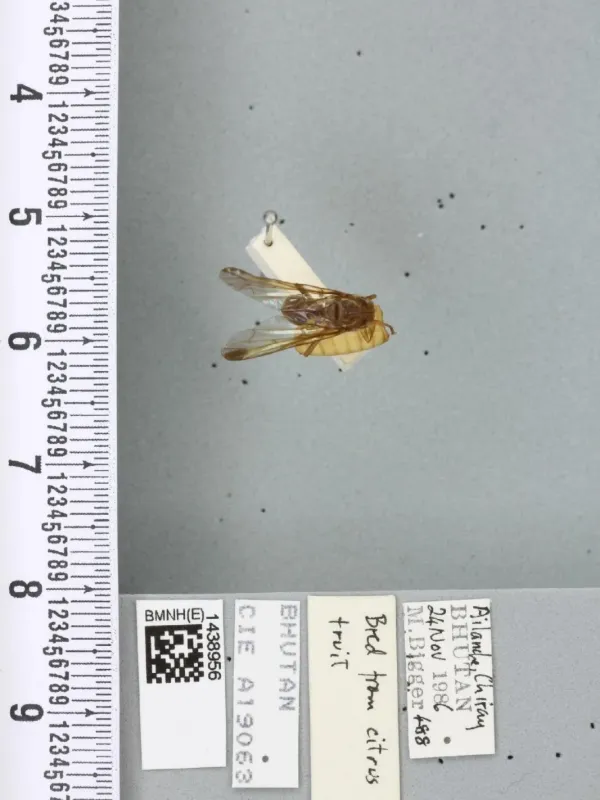
Description
How to identify
The Chinese citrus fly (Bactrocera minax) is a member of the Tephritidae family, also known as the fruit fly family. Adults are large flies, measuring 12–15 mm in length, with dark bodies and clear wings marked by distinct patterns.
The insect's head features prominent eyes, while the thorax displays characteristic yellow markings. A key identifying feature is the female's hardened ovipositor, which is adapted to penetrate the tough rind of citrus fruits to deposit eggs.
The larvae progress through three developmental stages, growing up to 15–20 mm in length. They are cylindrical, creamy-white to yellowish, and reside deep within the fruit tissue, making them difficult to detect during early infestation.
Pupae are barrel-shaped and range from brown to reddish-brown in color. They remain dormant in the soil under the tree canopy, which is a crucial phase for monitoring and targeted soil treatments.
Adult flies are highly mobile and capable of significant dispersal, allowing them to rapidly colonize new orchards, which makes local quarantine and control measures essential.
What it damages
Bactrocera minax primarily targets species within the Rutaceae family, specifically the Citrus genus, including oranges, mandarins, and lemons.
Commercial orange plantations are the most vulnerable to this pest, where unchecked populations can lead to catastrophic yield losses, rendering the crop unmarketable.
Larval feeding destroys the fruit pulp, causing fruits to drop prematurely. Beyond direct loss, the damaged fruit becomes susceptible to secondary bacterial and fungal infections, leading to rapid rotting.
The presence of larval tunnels and exit holes significantly degrades the commercial value of the fruit, making it entirely unfit for export or local processing markets.
Infested fruit falling to the ground serves as a conduit for larvae to exit and pupate in the soil, ensuring the survival of the pest population for the next season.
When it appears
The Chinese citrus fly is univoltine, meaning it completes only one generation per year. Adult emergence typically occurs in the spring or early summer, synchronized with citrus flowering or fruit set.
During the peak flight period, females actively search for developing fruit to oviposit. The incubation period for eggs is followed by larval penetration into the fruit tissue.
The larvae spend the summer months feeding and developing within the fruit. By autumn, mature larvae exit the fruit and burrow into the top 10–15 cm of soil.
Once in the soil, they undergo pupation and remain in diapause through the winter months. This dormancy period is a strategic window for implementing soil-based pest management.
Environmental triggers, particularly rising soil temperatures in the following spring, signal the end of the pupal stage, leading to the emergence of a new generation of adults.
Signs of infestation
Initial signs of infestation appear as tiny, inconspicuous puncture marks on the surface of young fruit, which may eventually develop into depressed, discolored spots.
Premature ripening and yellowing of the skin are classic indicators of infestation. Affected areas often show uneven texture or softening compared to healthy fruits on the same branch.
Cutting open a suspected fruit often reveals a network of tunnels and the presence of white maggots feeding inside the pulp, confirming the infestation.
A foul, putrid odor often accompanies infested fruits, resulting from the combination of larval waste and the opportunistic rot caused by secondary pathogens.
Using yellow sticky traps and protein-based lures helps detect the presence of adults early, allowing growers to initiate control measures before egg-laying becomes widespread.
Control measures
Strict quarantine measures and regulatory monitoring of fruit and nursery stock movement are the primary lines of defense against the spread of this pest.
Good agricultural practices include the thorough collection and deep burial of all dropped fruits to prevent larvae from completing their life cycle in the soil.
Soil management, such as tilling or applying soil insecticides under the tree canopy during the off-season, can effectively disrupt the pupal stage and reduce the emerging population.
- Application of bait sprays containing protein hydrolysates and insecticides.
- Deployment of pheromone traps for population monitoring and mass trapping.
- Timely chemical sprays targeting adults during the peak flight phase.
An Integrated Pest Management (IPM) approach, combining physical, biological, and chemical methods, is essential for sustainable control while maintaining fruit quality.
Taxonomy
- Latin name
- Bactrocera minax
- Order
- Diptera (flies)
- Family
- Tephritidae
- EPPO code
- DACUCT
Discussion
No discussions yet — be the first.