
Pacific fruit fly
Bactrocera melanotus
Description
How to identify
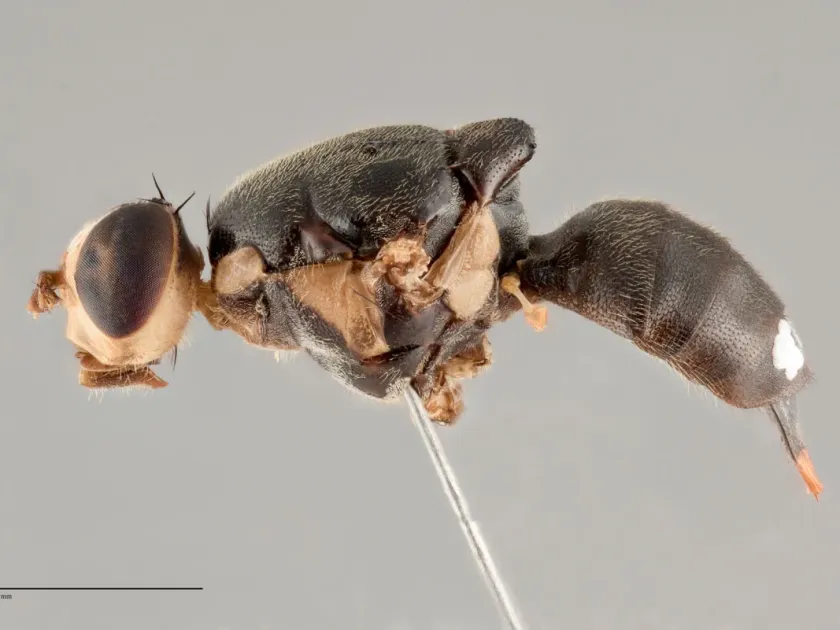
The Pacific fruit fly (Bactrocera melanotus) is a destructive insect species within the family Tephritidae. It is a highly significant agricultural pest in its range.
Adult flies possess a yellow-brown body with distinct dark abdominal patterns. Their wings are transparent with a characteristic dark costal band and anal streak.
The life cycle consists of egg, larva, pupa, and adult stages. Females use their sharp ovipositor to insert eggs into the host fruit tissue, initiating the infestation process.
Pupation primarily occurs in the soil beneath host trees or within the decaying fruit, allowing the population to persist and spread efficiently through various environments.
Due to its potential for rapid spread and severe economic impact, it is considered a quarantine organism in many countries worldwide.
What it damages
This pest infests a wide range of fruit crops, with a particular preference for citrus, mango, papaya, and avocado, often causing catastrophic yield losses.
Larvae feed internally on the fruit, causing tissue breakdown and fermentation. The infested fruit typically rots rapidly and becomes completely inedible.
The puncture marks made by the female during oviposition serve as entry points for pathogens, leading to secondary rot caused by bacteria and fungi.
Even moderate infestations can render an entire harvest commercially non-viable, forcing growers to discard affected produce and suffer significant financial strain.
The rapid life cycle of Bactrocera melanotus allows for multiple generations per year, leading to exponential population growth during the fruiting season.
Signs of infestation
The earliest sign of infestation is the presence of small sting marks or oviposition punctures on the skin of maturing fruit, often surrounded by a discolored area.
Premature fruit drop and subsequent rotting on the ground are key indicators of larval activity occurring inside the fruit flesh.
The interior of affected fruit typically shows a watery, decayed texture with tunnels carved by the larvae as they feed on the fruit pulp.
An unpleasant, fermented, or rotten odor emanating from the canopy is a frequent sign of high-level infestation within the orchard.
Monitoring traps containing specialized lures are essential to detect the presence of adult flies before visible damage appears on the fruit.
Control measures
Effective management relies on Integrated Pest Management (IPM) practices, emphasizing monitoring through pheromone and attractant-baited traps.
Orchard sanitation, including the prompt collection and destruction of fallen or damaged fruit, is the most critical cultural method to interrupt the lifecycle.
Chemical control involving bait sprays can be effective against adults, but must be applied cautiously to prevent negative impacts on beneficial insects.
- Using specialized bait stations to capture adult flies.
- Protecting individual fruit with insect-proof netting or bags.
- Employing biological control agents like parasitoid wasps.
- Strict adherence to quarantine regulations for fruit movement.
Preventative strategies, combined with constant vigilance and early detection, are the only ways to successfully mitigate the risks posed by this invasive species.
Taxonomy
- Latin name
- Bactrocera melanotus
- Order
- Diptera (flies)
- Family
- Tephritidae
- EPPO code
- BCTRME
Discussion
No discussions yet — be the first.