
Fruit fly Bactrocera lineata
Bactrocera lineata
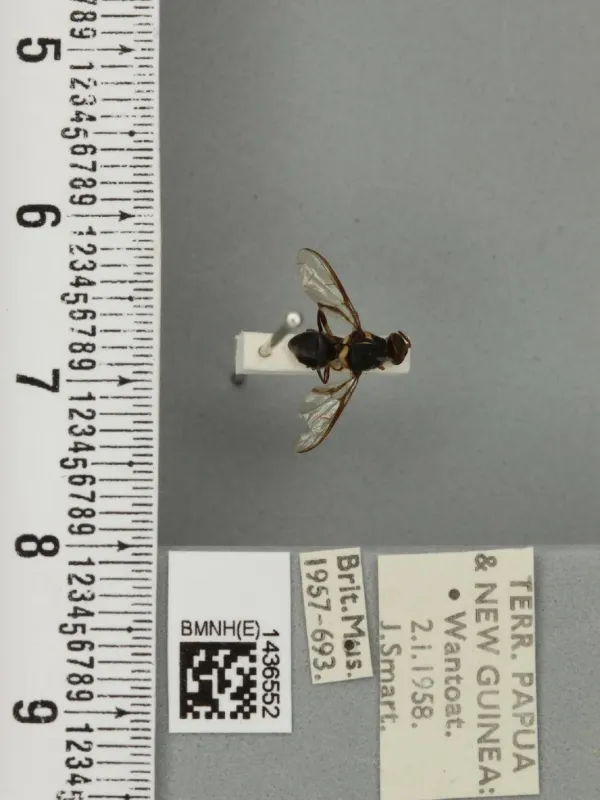
Description
How to identify
Bactrocera lineata is a member of the Tephritidae family, belonging to the order Diptera. These flies are easily distinguished by their size, general brownish-yellow body coloration, and dark patterns on their wings.
The morphology of this species includes a stout ovipositor in females, which is evolved for piercing the skin of host fruits. Adults are highly mobile and exhibit specific flight behaviors associated with finding suitable egg-laying sites.
What it damages
This species acts as a significant pest for various fruit crops. It primarily targets fleshy fruits, particularly those belonging to the Anacardiaceae family, often leading to severe commercial losses.
Damage is caused by the larvae feeding inside the fruit. As they bore through the pulp, they destroy the fruit texture and create entry points for pathogens, causing rapid decay of the produce.
When it appears
The life cycle and peak activity of Bactrocera lineata are synchronized with the ripening stages of host fruits. Favorable environmental temperatures accelerate their reproductive cycles.
The development progresses through four distinct stages: egg, larva, pupa, and adult. The pupation typically occurs in the soil beneath the host tree, where the larvae drop after completing their growth within the fruit.
Signs of infestation
Early infestation signs include small puncture marks on the fruit surface. Over time, these areas may become discolored or sunken as the underlying tissue breaks down due to larval activity.
Infested fruits typically show signs of premature ripening and dropping. Internally, the flesh is often liquefied or riddled with tunnels, rendering the fruit completely unsuitable for human consumption or market distribution.
Control measures
Management strategies rely heavily on strict quarantine regulations to prevent the spread of the pest to new regions. Phytosanitary inspections of imported or transported produce are essential.
Field control measures include:
- Deploying male annihilation technique (MAT) traps with specific lures.
- Regular sanitation by burying or incinerating infested fallen fruits.
- Monitoring pest density using protein-based baits or pheromone attractants.
- Applying selective insecticides only if necessary and when pest thresholds are exceeded.
Taxonomy
- Latin name
- Bactrocera lineata
- Order
- Diptera (flies)
- Family
- Tephritidae
- EPPO code
- BCTRLI
Discussion
No discussions yet — be the first.