
Solanum fruit fly
Bactrocera latifrons
Description
How to identify
The Solanum fruit fly (Bactrocera latifrons) is a significant agricultural pest belonging to the Tephritidae family, which are commonly known as fruit flies or picture-winged flies.
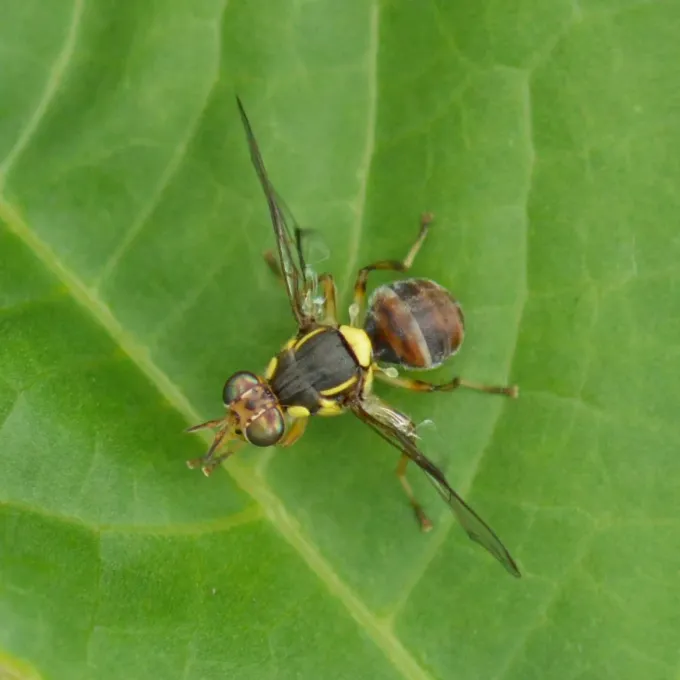
Adult flies are small, typically measuring 5 to 7 millimeters in length, and are easily recognized by their dark bodies with distinctive yellow markings on the thorax and abdomen.
The wings are clear, featuring a narrow dark band along the leading edge. The female possesses a specialized ovipositor, enabling her to insert eggs deep beneath the skin of a fruit.
Larvae pass through three instars within the host fruit before exiting to pupate in the soil. Their developmental speed is highly dependent on ambient temperatures and host availability.
Due to its high mobility and ability to adapt to various climates, this species is considered a serious threat to fruit production across different international regions.
What it damages
The primary hosts of this fly are members of the Solanaceae family, including economically important crops such as chili peppers, tomatoes, bell peppers, and eggplants.
Beyond cultivated crops, the fly utilizes a wide range of wild Solanaceae plants as secondary hosts, which ensures its survival even when main fields are clear of crops.
Larval feeding causes the interior of the fruit to disintegrate into a soft, decaying mass. This internal damage is usually invisible from the outside until the fruit begins to soften.
Secondary infections from opportunistic bacteria and fungi often accompany larval tunneling, leading to rapid rotting of the entire fruit and heavy yield losses.
In highly infested areas, yield losses can range from minor damage to total crop failure, necessitating strict adherence to integrated pest management protocols.
Signs of infestation
The first indicator of an infestation is the presence of tiny, pin-prick size entry marks on the surface of developing or ripening fruits where the female laid her eggs.
Discoloration and soft spots often appear around these puncture marks as the larvae begin feeding and the tissue starts to collapse internally due to decay.
A tell-tale sign is the premature ripening or dropping of fruits, which may appear healthy on the outside but are hollowed out by larval tunneling inside.
Upon cutting open a suspect fruit, growers will often find larvae feeding on the pulp and seeds, accompanied by internal liquid decay and a foul odor.
Small exit holes may be visible on the surface of fallen fruits, indicating that mature larvae have already successfully escaped to pupate in the soil beneath the plant.
Control measures
Strict quarantine regulations are the most effective way to prevent the introduction of this pest into non-infested geographic areas through international trade.
Effective monitoring involves the use of bucket traps or sticky traps baited with synthetic attractants to detect the presence of adults before significant egg-laying occurs.
Sanitation is critical: all fallen and damaged fruits must be gathered and destroyed regularly to break the life cycle and prevent larvae from reaching the soil.
Chemical control focuses on the application of insecticides targeted at adult flies before they have the opportunity to oviposit, often combined with protein-based baits.
Biological control, including the release of parasitic wasps that target fruit fly larvae and pupae, is increasingly integrated into sustainable pest management programs.
Taxonomy
- Latin name
- Bactrocera latifrons
- Order
- Diptera (flies)
- Family
- Tephritidae
- EPPO code
- DACULA
Discussion
No discussions yet — be the first.