
Kirk's fruit fly
Bactrocera kirki
Description
How to identify
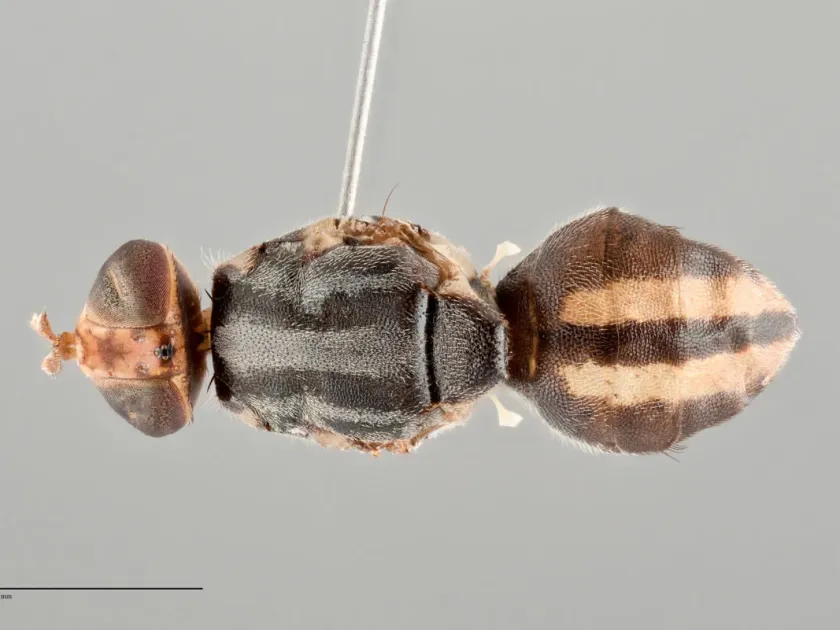
Kirk's fruit fly belongs to the order Diptera, family Tephritidae. It is a medium-sized insect that externally resembles a common fruit fly but possesses a distinct body coloration with dark markings.
Adult specimens have a characteristic wing shape with clear venation patterns. The head and thorax often display yellowish or brownish tones, aiding experts in visual identification within laboratory settings.
For accurate diagnosis in orchards, pheromone traps specific to the Bactrocera genus are utilized. Adult flies are strong fliers capable of covering significant distances to locate suitable fruit for oviposition.
Larvae of this species show typical tephritid morphology: they are legless, whitish or cream-colored, with a tapered anterior end and hook-like mouthparts adapted for consuming fruit flesh.
Eggs are extremely tiny, elongated, and inserted by the female directly under the skin of healthy fruit using a sharp, piercing ovipositor.
What it damages
Bactrocera kirki is a dangerous pest of numerous tropical and subtropical fruit crops. The primary damage is caused by larvae that develop inside the fruit tissues, destroying their internal structure.
The host range is broad, including mango, citrus, papaya, guava, and many other cultural and wild species. The fly typically prefers fruits that are in the ripening stage.
The pest can destroy a significant portion of the harvest, turning the interior of the fruit into a rotting mass, making the produce unfit for consumption or market distribution.
Damaged fruits are often susceptible to secondary infections caused by fungi and bacteria, which accelerate premature fruit drop from the branches.
Due to the high fecundity of females, a single specimen can infest a large number of fruits, leading to serious outbreaks if proper monitoring and control are not maintained.
When it appears
The activity of Kirk's fruit fly is directly linked to temperature and humidity levels. Warm periods that coincide with the fruit ripening season are the most favorable for its development.
The life cycle from egg to adult can occur very rapidly, allowing the insect to produce several generations per year if climatic conditions are permissive.
In regions with distinct seasons, fly activity decreases during cooler months, though they may survive unfavorable conditions as pupae buried in the soil or in sheltered areas.
The peak population density usually aligns with the mass ripening of fruit, requiring increased vigilance and monitoring approximately 2–3 weeks before the harvest period.
Reproduction rates increase significantly during rainy periods characterized by high humidity, as these conditions provide optimal environments for larval survival.
Signs of infestation
The first sign of infestation is the appearance of tiny punctures on the fruit skin, left by the female during oviposition. These spots are often surrounded by slight discoloration or sap leakage.
As the larvae develop inside, the flesh begins to soften, and the fruit surface loses its marketability, becoming deformed at the points of infestation.
- Premature fruit drop, often of fruits that appear healthy on the outside.
- Evidence of tunneling and presence of larvae within the flesh when fruit is sliced.
- A foul, rotting odor emitting from infested fruit still attached to the tree.
When an infested fruit is opened, the active feeding activity of the larvae is exposed, showing how they convert the healthy flesh into a soft, watery mush.
Infested fruits often develop characteristic depressions or soft spots that expand in size as the larvae grow and tunnel deeper into the fruit tissue.
Control measures
The primary control method involves strict quarantine regulations to prevent the spread of the pest into non-infested regions or to new commercial plantations.
Effective management includes the use of pheromone traps, which allow for the monitoring of male population density and provide early warning signs of mass fly emergence.
Sanitation practices are crucial, involving the regular collection and deep burial of fallen fruit to break the insect's life cycle and prevent pupation in the soil.
Insecticide application is reserved for periods of high risk and must be conducted according to environmental regulations to minimize harm to non-target beneficial pollinating insects.
Biological control methods, such as the use of parasitoids or entomopathogenic fungi, are being actively researched as an environmentally friendly alternative to chemical treatments.
Taxonomy
- Latin name
- Bactrocera kirki
- Order
- Diptera (flies)
- Family
- Tephritidae
- EPPO code
- BCTRKI
Discussion
No discussions yet — be the first.