
Kandian fruit fly
Bactrocera kandiensis
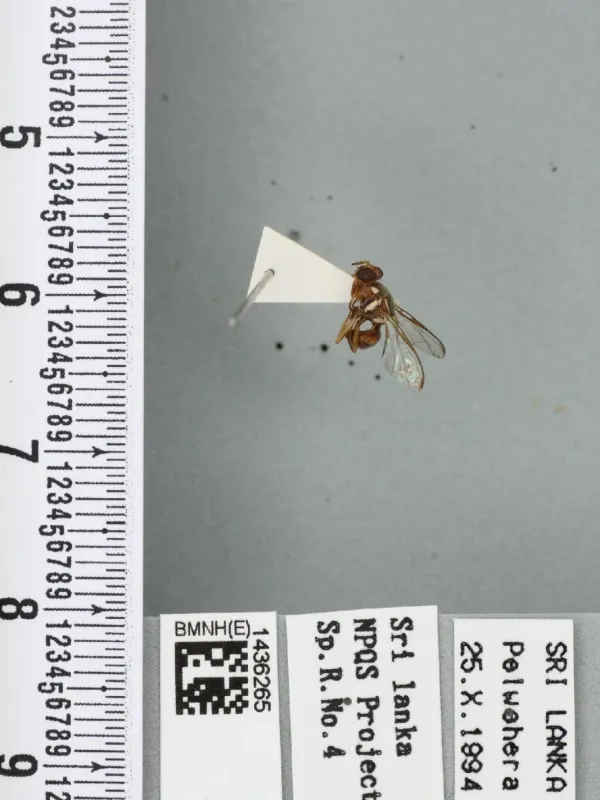
Description
How to identify
The Kandian fruit fly (Bactrocera kandiensis) is a member of the Tephritidae family, order Diptera. This species is a significant pest known for its destructive impact on fruit production.
Adult flies possess a distinct body pattern typical of the Bactrocera genus, necessitating microscopic examination of genital structures for accurate taxonomic identification.
The biological cycle consists of egg, larva, pupa, and adult stages. Females use their ovipositor to insert eggs beneath the surface of suitable host fruits.
Larval development occurs entirely within the fruit tissue, where larvae feed on the pulp, causing internal degradation before exiting to pupate in the soil.
Reproductive success and the duration of life stages are highly influenced by environmental temperature and moisture, allowing for rapid population growth in favorable climates.
What it damages
This species is a polyphagous pest, meaning it attacks a wide array of host plants, particularly tropical and subtropical fruit trees of economic value.
Significant yield losses are observed in crops like mango and guava. Larval feeding activity results in the complete destruction of the fruit's interior quality.
Infested fruits typically exhibit signs of rot and premature ripening or drop. Such fruit is rendered commercially worthless and unsafe for consumption.
The pest often facilitates the entry of secondary pathogens, including bacteria and fungi, which exacerbate the degradation of the fruit harvest.
Economic damage is twofold: direct loss of marketable produce and the indirect cost of implementing quarantine measures to prevent further geographical spread.
Signs of infestation
The presence of the pest is first indicated by minute oviposition punctures on the fruit surface. These may be accompanied by small necrotic or discolored spots.
As larvae feed internally, the fruit tissue becomes soft and watery. A distinct, foul odor often emanates from heavily infested produce as decomposition proceeds.
The most conclusive diagnostic sign is the presence of creamy-white larvae within the pulp. This internal infestation is often only discovered upon slicing the fruit.
Adult populations are best monitored using pheromone traps, which attract males and help determine the presence and density of the pest in the orchard.
Continuous observation of fallen fruit (fruit drop) is essential for early detection, as it serves as a primary site for larvae to transition into the pupal stage.
Control measures
Effective management begins with strict orchard sanitation, emphasizing the prompt removal and destruction of all infested or fallen fruit to disrupt the life cycle.
Pheromone-baited traps and protein-based attractants are critical tools for both monitoring and "mass trapping," which reduces the adult fly population.
Chemical control programs utilize approved insecticides applied during peak fly activity, always adhering to pre-harvest intervals to ensure safety.
Biological control initiatives involve the introduction or conservation of natural parasitoids that target fruit fly larvae, offering a sustainable suppression method.
Quarantine regulations are essential to stop the movement of potentially infested fruit between regions, protecting unaffected areas from localized outbreaks.
Taxonomy
- Latin name
- Bactrocera kandiensis
- Order
- Diptera (flies)
- Family
- Tephritidae
- EPPO code
- BCTRKA
Discussion
No discussions yet — be the first.