
Frauenfeld's fruit fly
Bactrocera frauenfeldi
Description
How to identify
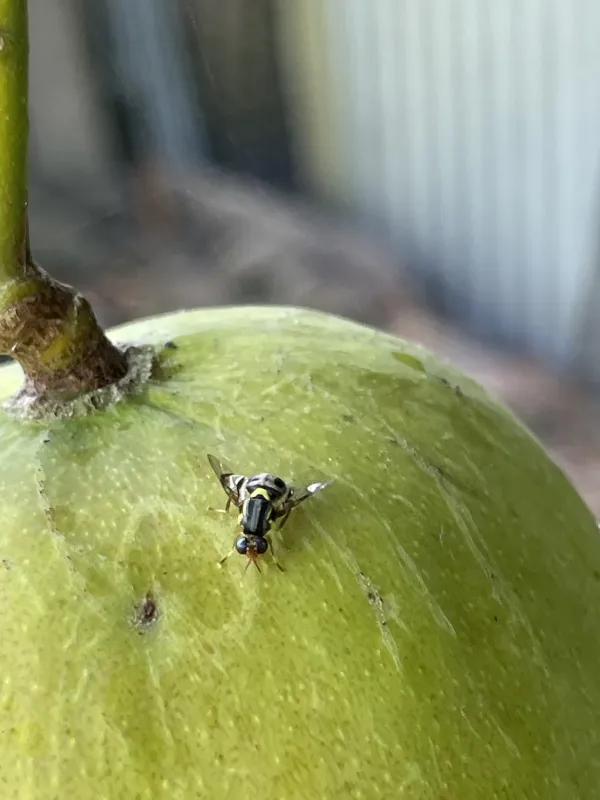
Frauenfeld's fruit fly (Bactrocera frauenfeldi) is a member of the Tephritidae family, order Diptera. This species is a significant pest primarily distributed throughout the tropical regions of the South Pacific and Southeast Asia.
The adult fly typically measures 6–8 mm and features a dark body with distinctive yellow markings on the thorax and abdomen. Its wings are transparent with dark veins and a characteristic pattern that is vital for visual identification in the field.
The biology of this species is highly dependent on warm temperatures and high humidity, which facilitate rapid population growth. The life cycle includes egg, larval, pupal, and adult stages, with pupation often occurring within the soil.
These flies are highly mobile and capable of dispersing over large areas, making them a major challenge for regional agricultural authorities and quarantine services.
To detect the presence of Bactrocera frauenfeldi, specialists deploy pheromone traps designed to attract males, providing essential data for tracking population dynamics and planning intervention strategies.
What it damages
This fruit fly is a polyphagous pest, meaning it attacks a wide variety of fruit-bearing plants. It poses a severe threat to both commercial orchards and backyard fruit gardens.
Common host crops include mangoes, papayas, guavas, and various citrus species. The pest is also known to infest avocados and figs, causing significant economic losses in regions where these crops are major commodities.
The damage is caused by larvae feeding inside the fruit, which effectively destroys the edible pulp and renders the produce unsaleable. This loss of fruit quality results in substantial financial burdens for fruit growers.
Due to the high fecundity of females, a single orchard can become heavily infested in a short period if control measures are not implemented during the peak fruiting season.
Beyond direct feeding damage, the larvae and their entry points facilitate the development of secondary bacterial and fungal infections, which lead to rapid decay and complete crop loss.
Signs of infestation
The initial sign of infestation is the presence of tiny sting-like punctures on the skin of the fruit, created when the female deposits eggs. These spots often develop into discolored, sunken areas or soft rot.
Cutting open an infested fruit typically reveals internal tunneling and the presence of whitish, legless larvae. The texture of the fruit pulp changes from firm to mushy, often accompanied by a fermented odor.
Premature ripening, yellowing, or early fruit drop are key behavioral signs of a heavily infested tree. Growers may also notice fluid leaking from puncture wounds on the fruit surface.
Physical pressure applied to the infested area of the fruit will often cause the skin to collapse into the cavity created by larval feeding, indicating advanced stages of infestation.
Continuous monitoring of traps and regular inspection of fallen fruit are essential for early detection. The sudden appearance of multiple flies on surveillance traps is a critical indicator that immediate action is required.
Control measures
Management of Bactrocera frauenfeldi relies on an integrated pest management (IPM) approach that combines strict quarantine measures with cultural and chemical control.
Cultural practices are paramount, particularly the prompt collection and destruction of fallen fruit. Burying or incinerating infested fruit prevents larvae from reaching the soil to complete their pupal stage.
Protein bait sprays, combined with targeted insecticides, are effective in reducing adult fly populations and preventing females from laying eggs in maturing fruits.
In smaller orchards or for high-value crops, physical exclusion methods like bagging individual fruits or covering trees with fine-mesh netting can provide excellent protection against infestation.
Chemical applications should be used judiciously, adhering to economic threshold levels and safety intervals, to minimize the impact on beneficial insects and ensure the safety of the harvested fruit for market distribution.
Taxonomy
- Latin name
- Bactrocera frauenfeldi
- Order
- Diptera (flies)
- Family
- Tephritidae
- EPPO code
- BCTRFR
Discussion
No discussions yet — be the first.