
Tongan fruit fly
Bactrocera facialis
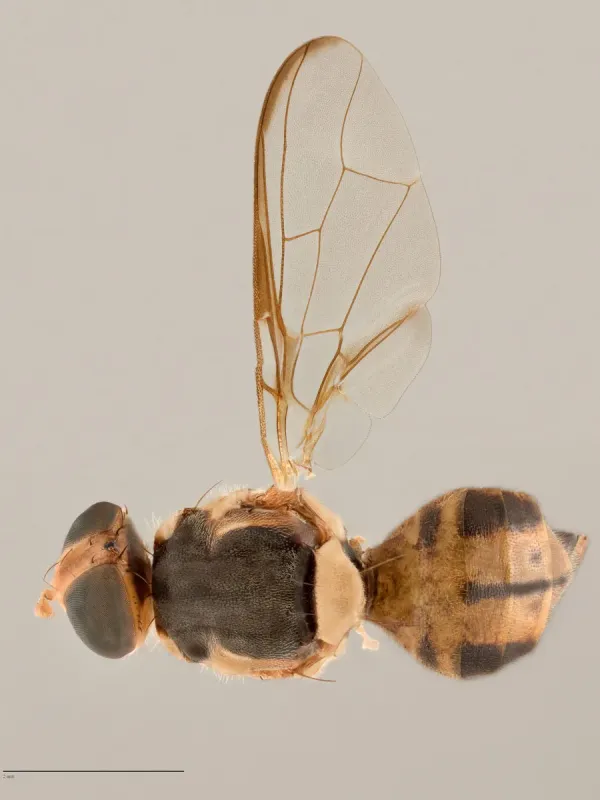
Description
How to identify
The Tongan fruit fly (Bactrocera facialis) is a destructive dipteran insect belonging to the family Tephritidae, widely recognized as a major agricultural pest.
The adult fly possesses distinct morphological features, including specific wing venation patterns and body coloration that are essential for accurate taxonomical identification.
These flies are highly adapted to tropical and subtropical climates, where they can maintain continuous breeding cycles throughout the year given favorable conditions.
The life history consists of egg, larval, pupal, and adult stages. Understanding the duration of each phase is crucial for implementing timely and effective management.
Monitoring programs use specialized traps designed to capture adults, enabling researchers to distinguish this species from other closely related Bactrocera flies.
What it damages
This pest infests a broad range of host fruits and vegetables, significantly impacting both local food security and commercial export markets.
Major crops affected include various solanaceous species, tropical fruits, and other soft-skinned commodities that are prone to larval damage.
Larvae feed internally on the fruit tissue, destroying the structure and nutritional value of the crop within a very short timeframe.
Beyond direct feeding damage, larval activity facilitates secondary rot caused by opportunistic fungi and bacteria, rendering the crop unmarketable.
Economic losses are severe, often involving total destruction of yields and the imposition of strict international trade barriers to prevent pest spread.
Signs of infestation
The earliest symptom is the presence of oviposition punctures on the skin of the fruit, often appearing as small, darkened, or slightly sunken spots.
Fruit may exhibit premature ripening, softening, or color changes that are inconsistent with the healthy development of the plant.
As larvae tunnel through the pulp, they create internal cavities that lead to the rapid decay of the fruit and frequent premature fruit drop.
In advanced cases, internal inspection reveals larvae or the tunnels they have excavated, which are clear signs of a heavy infestation.
Secondary infections often result in a distinctive fermented odor originating from the fruit, attracting other insects and causing surface lesions.
Control measures
Management begins with strict quarantine and movement restrictions on fresh fruit to contain the pest within defined geographical areas.
Integrated Pest Management (IPM) incorporates the use of pheromone-based lures to monitor population density and suppress male mating success.
Sanitation practices, specifically the rapid collection and destruction of fallen fruit, are vital to prevent larvae from completing their life cycle in the soil.
Chemical control measures are carefully timed to target adults before they lay eggs, utilizing protein bait sprays that minimize impact on non-target species.
The Sterile Insect Technique (SIT) has been explored as a sustainable way to control populations by releasing radiation-sterilized males to induce population collapse.
Taxonomy
- Latin name
- Bactrocera facialis
- Order
- Diptera (flies)
- Family
- Tephritidae
- EPPO code
- BCTRFA
Discussion
No discussions yet — be the first.