
Oriental fruit fly
Bactrocera dorsalis
Description
How to identify
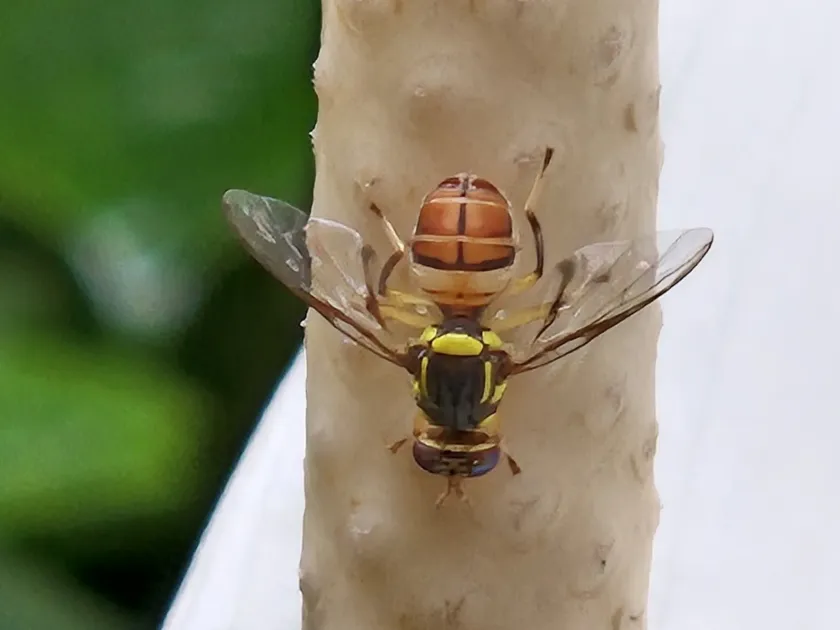
The Oriental fruit fly (Bactrocera dorsalis) is a member of the Tephritidae family, order Diptera. Adult flies typically measure 6–8 mm in length and exhibit a yellow-brown body color.
Key physical traits include a dark T-shaped pattern on the abdomen and transparent wings with a narrow dark stripe along the trailing margin. Females possess a sharp ovipositor for piercing fruit skin.
Larvae are cream-colored, cylindrical, and lack limbs or a distinct head, consistent with the morphology of fruit-infesting maggots. They undergo three distinct larval instars during development.
Pupation occurs in the soil beneath the host plant. The puparium is barrel-shaped and brownish, which helps it remain camouflaged within the ground during the transformation stage.
This species is highly adaptable and can be transported across borders via infested fruit, making it one of the most critical agricultural threats globally.
What it damages
Bactrocera dorsalis is a major polyphagous pest capable of infesting over 400 species of fruits and vegetables, causing severe losses to the agricultural sector.
Preferred hosts include mango, papaya, citrus, guava, avocado, and various stone fruits. It poses an extreme risk to commercial orchards that lack adequate biosecurity measures.
Females lay eggs inside the fruit flesh, which introduces pathogens into the fruit. This interaction triggers rapid decay and secondary infection from bacteria and fungi.
The larvae feed voraciously on the pulp, creating intricate galleries that render the fruit completely inedible. Infested fruits quickly lose their integrity and nutritional value.
Besides physical destruction, this pest triggers strict international trade embargoes, preventing growers from exporting their harvests to unaffected countries.
When it appears
Activity is highly dependent on climate, with optimal reproduction occurring between 25 and 30 degrees Celsius. High humidity levels significantly favor the survival of adult flies.
The entire life cycle from egg to adult can be completed in as little as 15 to 25 days under ideal conditions, allowing for multiple overlapping generations per year.
In regions with mild winters, the Oriental fruit fly can remain active throughout the year, ensuring a continuous presence of the pest in the environment.
Population surges generally align with the fruiting seasons of local host crops. During these periods, the fly actively searches for new oviposition sites, increasing migration rates.
Because the species can recover its population density very rapidly, monitoring must be conducted continuously, rather than just during specific harvest windows.
Signs of infestation
The earliest symptom is the presence of small, barely visible puncture marks on the fruit skin, often surrounded by minor skin discoloration or sap leakage.
Infested fruits frequently display signs of premature ripening or color change. In many cases, the fruit drops to the ground significantly earlier than non-infested fruit.
Internally, the fruit shows signs of tissue breakdown and liquid decomposition. If cut open, the maggot infestation is easily visible as a tunnel network within the pulp.
The use of pheromone traps serves as a primary diagnostic tool. Detecting adult male flies in these traps acts as a clear warning sign of an establishing population.
Heavy infestations are characterized by a soft, mushy texture and a distinct fermented odor emanating from the damaged fruit tissues, indicating advanced larval feeding.
Control measures
Stringent quarantine and phytosanitary inspections are the first line of defense to prevent the spread of the Oriental fruit fly into new geographic regions.
Male annihilation technique (MAT) uses pheromone-baited traps to reduce the male population, which effectively disrupts the mating cycle and suppresses egg-laying success.
Spot-spraying of bait stations (containing protein hydrolysate and an insecticide) is a targeted method to control adult flies without applying chemicals across the entire orchard.
Cultural control involves the rigorous collection and destruction of fallen or infested fruit. Burial or deep-heat treatment is necessary to kill the developing larvae before they reach pupation.
Biological control efforts, including the release of specific parasitoid wasps, have been utilized in some regions to reduce population density naturally and sustainably.
Taxonomy
- Latin name
- Bactrocera dorsalis
- Order
- Diptera (flies)
- Family
- Tephritidae
- EPPO code
- DACUDO
Discussion
No discussions yet — be the first.