
Bactrocera distincta fruit fly
Bactrocera distincta
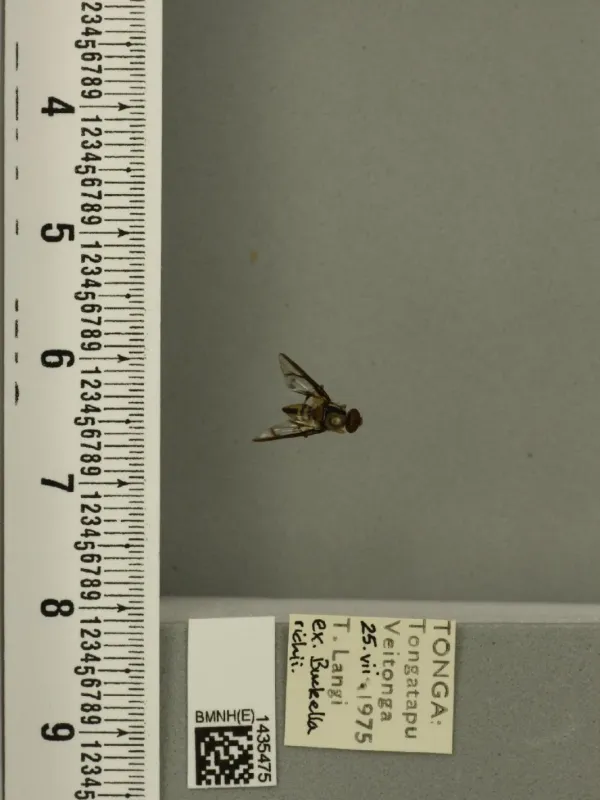
Description
How to identify
Bactrocera distincta belongs to the Tephritidae family, order Diptera. This is a specialized species of fruit fly, morphologically similar to other members of the Bactrocera genus, featuring a distinctive wing and thoracic pattern.
Adults are characterized by a bright yellow-brown body color with dark spots, which aids in camouflage on the fruit surface.
The life cycle consists of four stages: egg, larva (three instars), pupa, and adult. The female possesses a sharp ovipositor, allowing her to pierce fruit skins to lay eggs.
Identification of the species under field conditions is difficult without laboratory analysis of genitalia, so pheromone traps are frequently used for population monitoring.
The insect prefers humid tropical and subtropical climates, reproducing actively during the ripening periods of host plants.
What it damages
Primary hosts include various fruit crops, including tropical fruits and certain commercial varieties of vegetable plants.
Larvae develop inside the fruit flesh, feeding on its tissues, which leads to premature fruit drop and loss of marketability of the produce.
Damage manifests as the destruction of the fruit's internal structure, rendering it unsuitable for human consumption or industrial processing.
Secondary fungal and bacterial infections often penetrate the damaged areas, causing fruit rot while on the tree or during storage.
This species poses a serious threat to agricultural exports, as the presence of larvae inside fruit serves as a strict quarantine barrier.
Signs of infestation
The first visual sign of infestation is punctures on the surface of the fruit skin, where the female inserted her ovipositor.
Small dark areas, indented spots, or softened tissue patches are often observed around the puncture sites due to initial feeding damage.
When the fruit is opened, small whitish larvae are discovered actively boring tunnels through the flesh, causing browning and decay.
Premature yellowing and fruit drop, despite the fruit appearing normal from the outside, are also characteristic signs of the pest's presence.
In later stages, exit holes become visible on the fruit, through which mature larvae leave to pupate in the soil.
Control measures
Effective protection begins with the use of pheromone traps for early detection of adults and assessment of population density.
An important agrotechnical practice is the regular collection and deep burial or destruction of fallen fruit, where larvae develop.
The application of food-based attractants in combination with insecticides helps reduce the adult population before mass egg-laying occurs.
The implementation of quarantine phytosanitary measures, including inspection of products during transport, prevents the spread of Bactrocera distincta to new regions.
- Utilization of biological control methods involving parasitic wasps.
- Crop rotation and cultivation of the soil around the base of trees to destroy pupae.
- Installation of protective nets over fruit trees during the ripening period.
Taxonomy
- Latin name
- Bactrocera distincta
- Order
- Diptera (flies)
- Family
- Tephritidae
- EPPO code
- BCTRDI
Discussion
No discussions yet — be the first.