
Bactrocera curvipennis
Bactrocera curvipennis
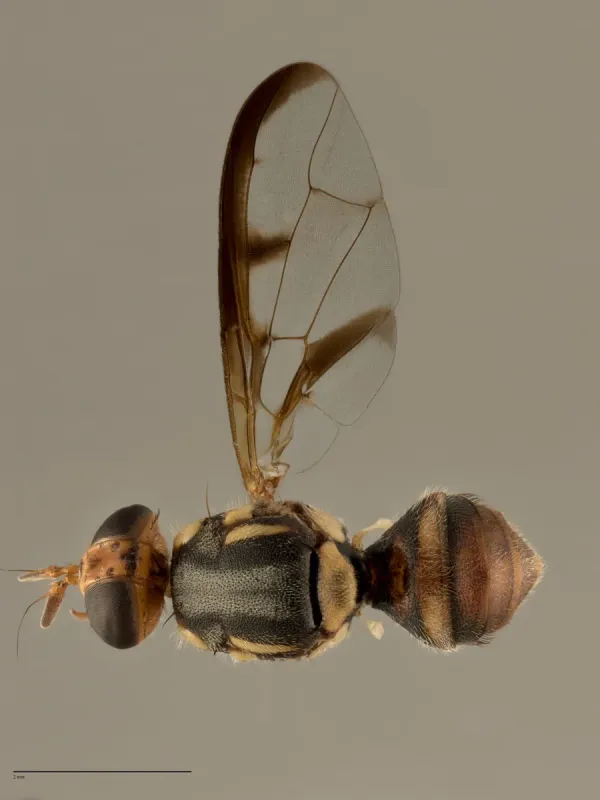
Description
How to identify
Bactrocera curvipennis is a member of the Tephritidae family, also known as fruit flies, belonging to the order Diptera. This species is recognized for its specific morphological features that distinguish it from other fruit-infesting flies.
The adult fly is characterized by unique wing patterns and body coloration, which are crucial diagnostic markers for entomologists monitoring local fruit crops.
The biological cycle consists of four distinct stages: egg, larva, pupa, and adult. Each stage is adapted to survival in the specific environmental conditions of tropical fruit plantations.
Larvae are typically whitish or cream-colored, cylindrical in shape, and possess mouthparts designed to feed efficiently on the internal tissues of host fruits.
Pupation primarily occurs in the soil beneath the host plant, allowing the insect to safely undergo metamorphosis away from predators and environmental extremes.
What it damages
Bactrocera curvipennis is known to cause significant damage to bananas, making it a serious threat to the commercial production of this crop in specific geographic zones.
The primary damage is inflicted by the larvae, which burrow into the fruit, turning the pulp into a soft, decomposed mass that is unfit for consumption.
Infested fruits frequently suffer from secondary infections caused by fungi and bacteria, which gain entry through the initial puncture sites made by the ovipositing female.
The economic impact includes both direct losses of fruit yield and the imposition of strict international phytosanitary trade restrictions in affected regions.
High infestation rates can lead to total loss of fruit bunches, significantly reducing the profitability of plantations if effective control measures are not implemented.
Signs of infestation
The earliest signs of infestation are tiny oviposition punctures on the skin of the fruit, often difficult to spot during the initial stages of the fly's attack.
As the larvae develop inside, dark spots or depressed areas appear on the surface of the banana, signaling that the inner tissue has been compromised.
When an infested banana is cut open, it reveals extensive tunneling and internal rot, which is a definitive indicator of fruit fly presence.
Premature ripening or fruit drop is a common indicator that the internal structure has been destroyed by the activity of the fly larvae.
The presence of adult flies in the orchard, detectable through pheromone trapping, serves as a primary warning sign for growers to initiate control protocols.
Control measures
Integrated Pest Management (IPM) is essential for the control of Bactrocera curvipennis, utilizing both biological and chemical strategies.
Pheromone and protein-based bait traps are highly effective for monitoring population densities and suppressing adult numbers in the field.
Good agricultural practices include the prompt collection and destruction of fallen or infested fruits to prevent the completion of the insect's life cycle.
Chemical applications are targeted to the periods of highest adult activity, reducing the frequency of egg-laying on developing fruit bunches.
- Implementation of pheromone monitoring grids.
- Sanitation protocols to remove infested fruit.
- Application of selective insecticides.
- Phytosanitary inspection of fruit shipments.
Taxonomy
- Latin name
- Bactrocera curvipennis
- Order
- Diptera (flies)
- Family
- Tephritidae
- EPPO code
- DACUCR
Discussion
No discussions yet — be the first.