
Guava fruit fly
Bactrocera correcta
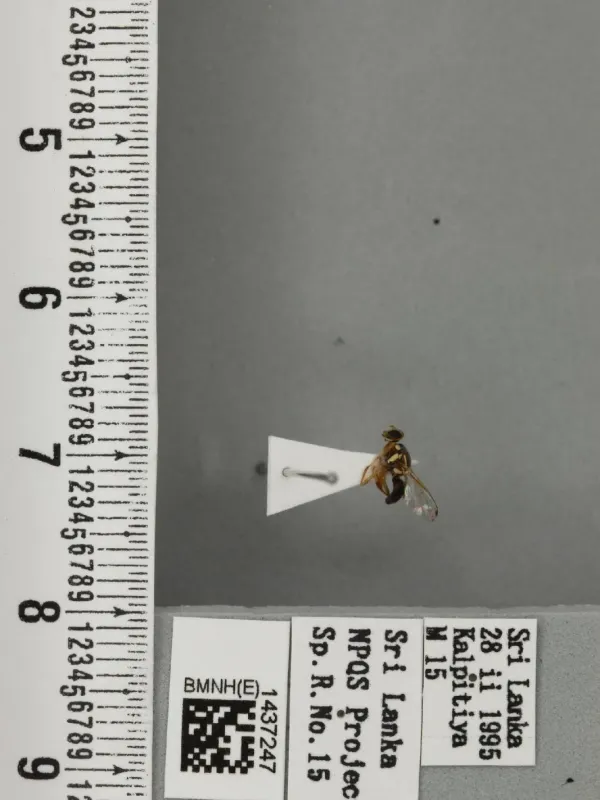
Description
How to identify
The guava fruit fly (Bactrocera correcta) belongs to the order Diptera and the family Tephritidae. It is a significant agricultural pest known for its ability to infest a wide variety of fruit crops in tropical and subtropical regions.
Adult flies are approximately 5–6 mm long and feature a yellowish-brown body with distinct dark markings. Their wings have a characteristic pattern, and the thorax typically displays yellow stripes, which are essential for morphological identification.
The larvae are typical fruit fly maggots: white to creamy in color, legless, and tapered towards the head. They possess specialized mouth hooks used for feeding and tunneling into the fruit flesh.
The lifecycle consists of egg, three larval instars, pupa, and adult. Development speed is highly temperature-dependent, with warmer conditions significantly accelerating the transition between stages.
Pupation primarily occurs in the soil beneath the host tree, where larvae burrow after exiting the fruit. This soil-dwelling phase is a critical point for implementing specific management practices.
What it damages
This species is highly polyphagous, attacking a vast array of hosts including guava, mango, peach, citrus, apricot, and papaya. It causes substantial economic losses in both commercial orchards and backyard gardens.
The primary damage is caused by larvae feeding inside the fruit. As they tunnel through the pulp, they destroy the internal structure, rendering the fruit unmarketable and inedible.
Secondary infections by bacteria and fungi frequently occur through the entry wounds created by the female fly, leading to rapid rotting of the fruit while it is still on the tree.
In cases of severe infestation, 80–100% of the crop may be lost if control measures are not effectively implemented during the susceptible stage of fruit development.
The high reproductive rate of the guava fruit fly allows populations to rebuild rapidly, making it a persistent and challenging pest for farmers to manage throughout the season.
When it appears
Adult activity begins in early spring, triggered by rising temperatures. The flies are most active during the day, showing a preference for sunny and warm conditions that facilitate mating and oviposition.
The prevalence of the pest is closely linked to the availability of ripe fruit. In many regions, multiple generations can occur annually, meaning the threat persists as long as host crops are ripening.
Seasonal patterns can overlap, especially in tropical climates where the fly may reproduce continuously throughout the year, necessitating a comprehensive and year-round monitoring plan.
Peak infestation usually aligns with the fruit maturation cycle. Female flies target fruits as they approach maturity, sensing the volatile compounds emitted by the ripening fruit.
As the weather cools, the population usually decreases, with the pupae in the soil entering a period of quiescence or diapause to survive the winter or dry season.
Signs of infestation
The earliest signs of infestation are small puncture marks on the fruit skin, often surrounded by a localized soft or discolored area, indicating where the female has deposited eggs.
Upon cutting open an infested fruit, one can observe tunnels bored by the larvae. These tunnels are often filled with larval waste and decaying pulp, which gives the fruit a mushy texture.
Premature fruit drop is a strong indicator of an active infestation. Fruits that fall before reaching full maturity often contain active larvae that are about to leave the fruit to pupate.
The presence of adult flies can be confirmed through the use of monitoring traps baited with protein or pheromone lures, which are essential for identifying the start of an infestation.
Sticky residues or weeping spots on the surface of the fruit, where juices leak from the puncture holes, are common symptoms of severe internal larval development.
Control measures
Cultural control is a cornerstone of management, involving the rigorous collection and destruction of fallen or infested fruit to prevent larvae from completing their life cycle in the soil.
The use of food-based or pheromone-based traps is highly effective for both monitoring and mass trapping, helping to reduce the overall adult population in the orchard.
Chemical control should be applied judiciously, focusing on adult flies before they have the chance to lay eggs, while strictly adhering to pre-harvest intervals.
Biological control, including the release of specific parasitoids or the use of entomopathogenic fungi, serves as an environmentally friendly approach within an integrated pest management program.
- Sanitary pruning of canopy to reduce humidity and attractiveness to flies.
- Bagging of individual fruits to prevent female flies from laying eggs.
- Soil cultivation around the drip line to expose and kill overwintering pupae.
Taxonomy
- Latin name
- Bactrocera correcta
- Order
- Diptera (flies)
- Family
- Tephritidae
- EPPO code
- BCTRCO
Discussion
No discussions yet — be the first.