
Cary fruit fly
Bactrocera caryeae
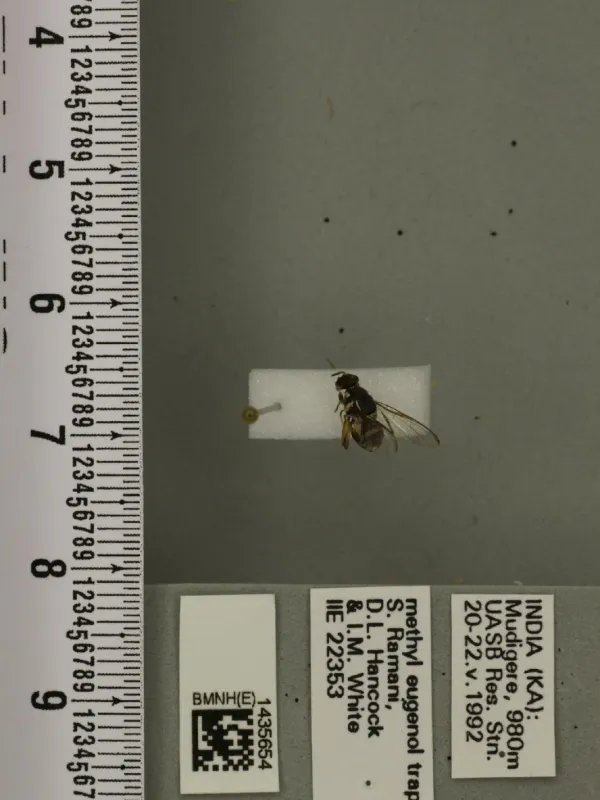
Description
How to identify
The Cary fruit fly, known scientifically as Bactrocera caryeae, is a member of the Tephritidae family, order Diptera. This species is morphologically similar to other members of the Bactrocera dorsalis complex, which complicates field identification.
Adult flies possess a distinctive appearance common to the genus, featuring patterned wings and colored markings on the thorax and abdomen. Accurate identification usually requires examination by an entomologist using microscopic features.
The life cycle consists of four distinct stages: egg, larva, pupa, and adult. The larval stage is the most destructive, as they are legless, cream-colored maggots that feed exclusively within the host fruit.
The duration of the life cycle is heavily influenced by ambient temperature and relative humidity. In optimal tropical conditions, the pest can complete its development in a relatively short timeframe, allowing for multiple generations annually.
Adult flies are highly mobile and rely on volatile chemical cues emitted by ripening fruit to locate suitable oviposition sites. Monitoring these behaviors is crucial for detecting population surges.
What it damages
Bactrocera caryeae is considered a serious polyphagous pest, meaning it attacks a wide variety of fruit crops. The larvae cause extensive internal damage as they tunnel through the ripening pulp.
The primary hosts include various tropical fruits, particularly mangoes and related species. This pest can lead to significant economic losses for commercial growers due to the total loss of fruit marketability.
Infested fruit often exhibits accelerated ripening and secondary fungal or bacterial infections due to the decay initiated by larval feeding. This renders the crop completely unsuitable for human consumption or export.
Early infestation symptoms are often hidden inside the fruit, making detection difficult before damage becomes severe. Premature fruit drop is a common indicator of a high infestation level in an orchard.
- Mango (primary host)
- Guava
- Citrus species
- Various local fleshy fruits
Signs of infestation
The initial sign of infestation is a tiny sting mark or puncture on the fruit skin caused by the female's ovipositor. Occasionally, sap or moisture may be visible around the entry point.
As larvae develop inside, the fruit tissue begins to soften or develop localized discoloration. This is often followed by the development of necrotic spots that quickly spread across the fruit surface.
When the fruit is cut open, the presence of maggots becomes evident. The interior pulp becomes mushy, discolored, and develops a foul odor due to the breakdown of tissue and accumulation of waste.
A later sign is the appearance of exit holes in the fruit rind. These holes are created by mature larvae as they emerge to seek out soil for pupation, leaving the fruit prone to further rapid decay.
Orchard monitoring with pheromone-based traps is the most reliable way to identify the presence of the flies before visible damage occurs to the developing crop.
Control measures
Integrated Pest Management (IPM) is the gold standard for controlling Bactrocera caryeae. This involves combining regulatory quarantine measures with field-based monitoring to prevent rapid spread.
Sanitation is a vital cultural control practice. Regularly collecting and properly disposing of fallen, infested fruit prevents larvae from successfully pupating in the soil and breaking the cycle.
Chemical control programs often utilize protein-based bait sprays. These attractants pull the adult flies to treated spots, allowing for targeted insecticide application that minimizes environmental impact.
Biological control methods are being researched and implemented in various regions. This includes the release of parasitoid wasps that specifically target the larval or pupal stages of the fruit fly.
Mechanical protection, such as individual fruit bagging, provides an effective physical barrier. This method is highly encouraged for organic or small-scale growers to ensure premium quality harvest.
Taxonomy
- Latin name
- Bactrocera caryeae
- Order
- Diptera (flies)
- Family
- Tephritidae
- EPPO code
- BCTRCR
Discussion
No discussions yet — be the first.