
Carambola fruit fly
Bactrocera carambolae
Description
How to identify
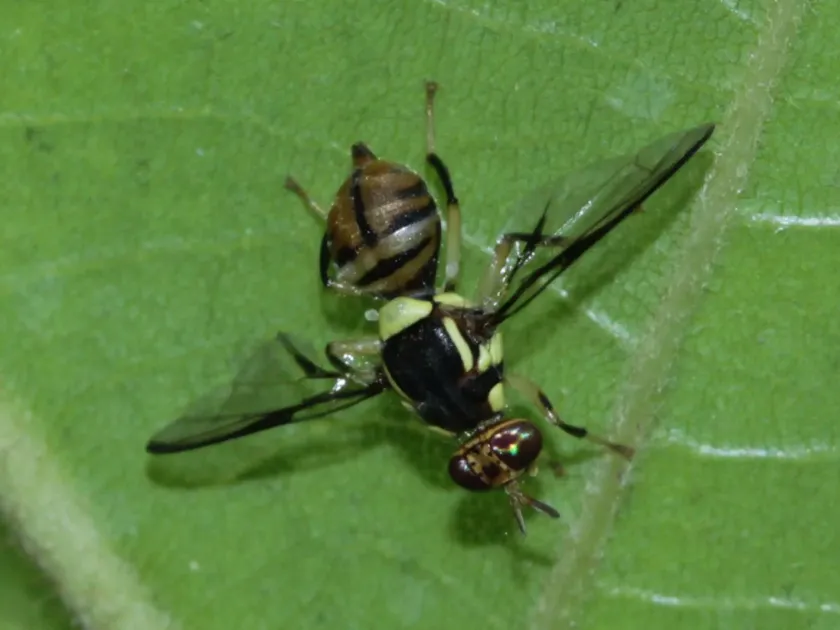
The carambola fruit fly, Bactrocera carambolae, belongs to the Tephritidae family, order Diptera. Adults are characterized by their yellow-black abdominal patterns and transparent wings with distinct dark margins.
Adults typically measure 6–8 mm in length. Females possess a hardened, needle-like ovipositor used to penetrate fruit skin and deposit eggs deep within the pulp.
Identifying this species in the field is difficult due to its visual similarity to other members of the Bactrocera genus, often requiring specialized entomological diagnostic tools.
This fly is a major quarantine pest, and its presence triggers strict trade restrictions and surveillance protocols in many countries worldwide.
The species thrives in humid tropical environments, where stable temperatures and year-round fruit availability allow for continuous population growth.
What it damages
The pest attacks over 30 different host plants, primarily targeting tropical and subtropical fruit-bearing trees.
Commonly affected crops include carambola (star fruit), mango, papaya, guava, and various species of citrus and other local fruits.
Larvae develop internally within the fruit, consuming the pulp and rendering the harvest completely inedible and non-marketable.
Internal feeding causes fruit to decay rapidly due to the introduction of opportunistic bacteria and fungi, leading to early abscission.
In untreated orchards, infestation rates can be devastating, frequently resulting in losses ranging from 50% to over 90% of the annual fruit yield.
When it appears
The life cycle involves four stages: egg, larva, pupa, and adult. Under ideal tropical conditions, this cycle can be completed in approximately 20 to 40 days.
Females lay eggs under the skin of ripening fruit, providing immediate access to nutrition for the larvae upon hatching.
Once larvae mature, they emerge from the fruit and drop to the ground, where they pupate in the soil until the next adult stage emerges.
Because there is no winter dormancy in their native tropical range, the generations overlap, creating a constant threat to fruit production throughout the year.
Adult flies are highly mobile and fly between host trees, feeding on nectar, plant juices, and honeydew while searching for suitable sites for oviposition.
Signs of infestation
The earliest sign of infestation is the presence of small puncture marks on the skin of ripening fruits, left by the female's ovipositor.
Discoloration, softening of the fruit skin, and premature ripening or color change often surround the sites where eggs were laid.
Cutting open an infested fruit typically reveals the presence of creamy-white larvae actively tunneling through the fruit tissue.
A common sign of severe infestation is the premature drop of seemingly healthy-looking fruit, which, upon inspection, contains larvae.
In advanced stages of decay, small exit holes may be visible on the surface of fallen fruit, indicating that the larvae have exited to pupate in the soil.
Control measures
Strict quarantine measures are the primary defense, aiming to prevent the movement of infested fruit out of endemic regions.
Monitoring and management rely heavily on male annihilation techniques using methyl eugenol-baited traps to capture adult males and disrupt reproduction.
Good orchard sanitation, including the regular collection and deep burial or proper disposal of fallen fruit, is critical to interrupting the larval life cycle.
Protein-bait sprays combined with low doses of insecticides are used to attract and kill adult flies without the need for total cover spraying.
Integrated pest management (IPM) programs, incorporating biological controls and regional monitoring networks, are essential for keeping populations below economic injury levels.
Taxonomy
- Latin name
- Bactrocera carambolae
- Order
- Diptera (flies)
- Family
- Tephritidae
- EPPO code
- BCTRCB
Discussion
No discussions yet — be the first.