
Bryonia fruit fly
Bactrocera bryoniae
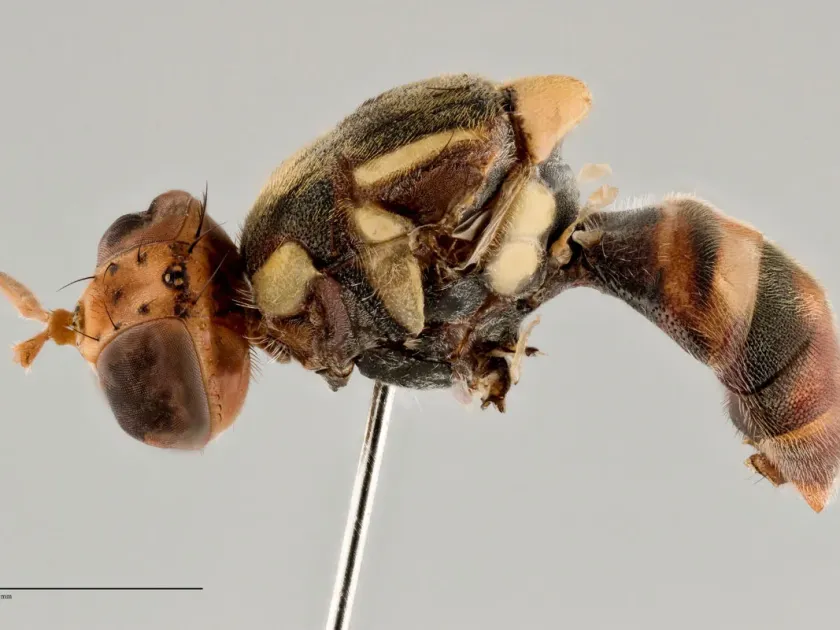
Description
How to identify
The Bryonia fruit fly, scientifically known as Bactrocera bryoniae, belongs to the Tephritidae family, which includes some of the most destructive agricultural pests worldwide. Adult flies are characterized by a specific wing pattern and body markings.
They possess large, compound eyes and a specialized ovipositor in females, designed for piercing the skin of host fruits. The coloration is generally adapted to blend into the environment where they forage.
Larvae pass through three distinct instars. They are maggot-like, creamy-white in color, and possess mouth hooks that allow them to tunnel through plant tissues efficiently for nutrition.
The pupal stage occurs primarily in the soil beneath the host plant, although some species may pupate within the fruit under specific conditions. The duration of each developmental stage is heavily dependent on ambient temperature and humidity.
Correct identification is vital, as several species within the Bactrocera genus are morphologically similar. Experts rely on the analysis of specific anatomical structures to confirm the species during pest monitoring programs.
What it damages
This pest primarily attacks members of the Cucurbitaceae family, including cucumbers, melons, pumpkins, and squashes. The damage is cumulative and can rapidly escalate if the population is not monitored.
The female fly punctures the fruit surface to deposit eggs. Once hatched, the larvae feed on the internal flesh, creating a network of tunnels that causes the fruit to deteriorate from the inside out.
Secondary infections from bacteria and fungi are extremely common in fruits attacked by this fly, leading to rapid rotting and the development of foul odors that make the produce unmarketable.
Infestation often results in the premature abscission of fruit, leading to significant yield losses. In severe cases, the entire harvest of a specific crop can be rendered completely non-viable for sale.
The hidden nature of larval feeding makes it difficult for farmers to detect the problem until substantial damage has already occurred, necessitating proactive prevention and early intervention.
Signs of infestation
The most reliable sign of initial infestation is the presence of tiny "sting" marks or small punctures on the skin of young or ripening fruit. These are the entry points created by the female ovipositor.
As the larvae grow, the surface of the fruit may exhibit soft spots, irregular indentations, or clear signs of discoloration. These areas often correspond to the internal feeding galleries.
In some cases, fruit may show signs of premature ripening or yellowing, even when they are still relatively small. This physiological change is a response to the internal damage caused by the larvae.
Adult flies can be detected by using attractant-based or sticky yellow traps placed strategically in the orchard or field. Seeing multiple adults on traps is a clear signal of an active population.
Decaying fruit on the ground, often with visible exit holes where mature larvae have emerged to pupate, is a final indicator of an established and thriving pest cycle in the area.
Control measures
Integrated Pest Management (IPM) is the most effective approach. Sanitation is the first line of defense: all fallen and infested fruit must be collected and disposed of by burying or deep-freezing to stop the life cycle.
Monitoring using pheromone-based lures is essential for tracking population levels. This helps in timing insecticide applications or other interventions to ensure they are most effective against the active adult population.
Chemical control focuses on the use of bait sprays or systemic insecticides that target the adults before they can deposit eggs. The choice of chemical must comply with local agricultural safety regulations.
Cultural practices such as soil cultivation can disturb the pupae located in the ground. Rotating crops and using physical barriers, such as fruit bagging, can also be highly effective in smaller gardens.
- Implement a regular trapping program to monitor population density.
- Ensure rapid removal and destruction of all infested produce.
- Consider biological controls where native parasitic wasps are available.
Taxonomy
- Latin name
- Bactrocera bryoniae
- Order
- Diptera (flies)
- Family
- Tephritidae
- EPPO code
- BCTRBR
Discussion
No discussions yet — be the first.