
Bancroft's Fruit Fly
Bactrocera bancroftii
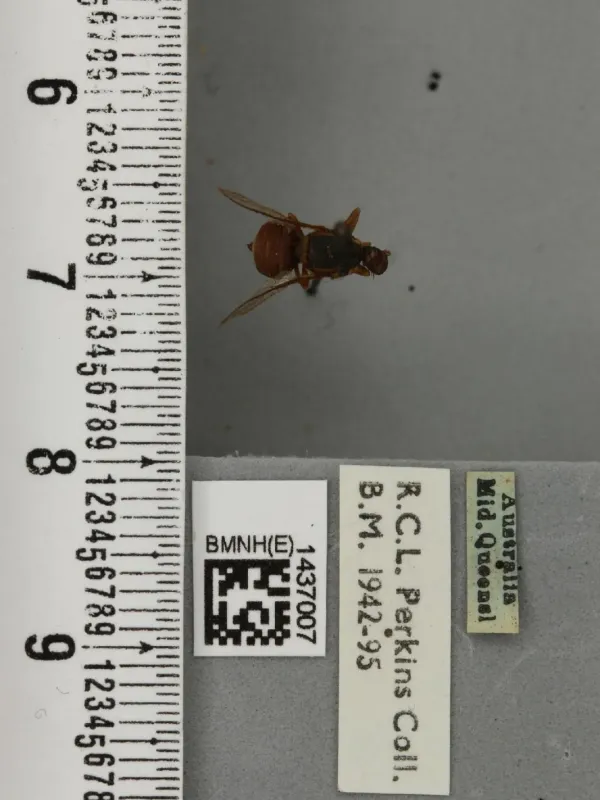
Description
How to identify
Bancroft's fruit fly (Bactrocera bancroftii) is a destructive pest belonging to the Tephritidae family. Like many other members of the Bactrocera genus, it is a highly specialized insect adapted to exploit fleshy fruit for its larval development.
Adult flies are visually similar to other related species, often displaying a patterned thorax and abdomen that serves as a protective mimicry. Accurate identification usually requires expert morphological analysis or the use of specific pheromone lures.
The life cycle consists of four distinct stages: egg, larva, pupa, and adult. The success of this pest lies in its ability to navigate through the orchard environment, finding suitable hosts at the peak of fruit maturity.
Females are equipped with a sharp, piercing ovipositor, which allows them to deposit eggs beneath the skin of a fruit. This internal method of egg-laying protects the offspring from external predation and environmental stressors.
This species is well-adapted to warm, humid climates, where it can maintain a high level of reproductive activity throughout the growing season, posing a constant threat to fruit producers.
What it damages
The damage is primarily caused by the larvae, which feed on the pulp of host fruits. This feeding activity rapidly breaks down the internal tissues, leading to the destruction of the fruit's texture and nutritional quality.
Target crops typically include a variety of tropical and subtropical fruits. Because the larvae develop inside the fruit, the damage is often unseen until significant internal rot has already occurred.
Infested fruits frequently suffer from premature abscission, falling to the ground before they reach commercial maturity. This causes direct yield loss for farmers and reduces the overall quality of the harvest.
The entry points created by the female during oviposition often serve as infection sites for secondary pathogens, including bacteria and fungi, which accelerate the decomposition process.
As a result of this damage, Bactrocera bancroftii is considered a significant quarantine pest, often triggering trade restrictions on agricultural produce from infested regions to prevent its spread.
When it appears
The activity of Bancroft's fruit fly is highly seasonal, aligning with the ripening stages of host fruits. Increased temperatures generally stimulate higher rates of reproduction and faster life cycle completion.
Adults emerge from pupae found in the soil and begin their search for mates and suitable oviposition sites. Monitoring during the early fruit-set phase is crucial for effective intervention.
In regions with mild winters, the insect may remain active or survive in protected microclimates. However, the most intense infestation periods occur during the warmer, wetter months of the year.
Agronomists rely on phenological data to predict the timing of emergence. Understanding the relationship between local weather patterns and the fly’s development is key to timely orchard management.
Consistent monitoring using trapping systems is essential throughout the season to determine the population density and decide when to escalate control efforts in the orchard.
Signs of infestation
The first sign of infestation is often the appearance of tiny puncture wounds on the fruit surface. These marks, sometimes accompanied by slight discoloration, indicate where the female has laid her eggs.
In later stages, infested fruit may exhibit soft spots or water-soaked areas on the skin. A close inspection might reveal decay developing around the egg-laying puncture marks.
Premature ripening and the sudden drop of fruits are strong indicators of larval presence. When a fallen fruit is cut open, one can often find larvae tunneling through the decaying pulp.
High capture rates of adult flies in monitoring traps are a definitive sign of active infestation. This alert requires an immediate response to mitigate potential harvest loss.
Occasionally, an unusual odor associated with the fermentation of fruit tissues can be detected in the canopy, signaling that larvae have already caused substantial structural damage to the fruit.
Control measures
Successful management of Bactrocera bancroftii involves an Integrated Pest Management (IPM) approach that minimizes chemical reliance while maximizing protective efficacy.
- Deployment of pheromone-based monitoring traps to track population fluctuations.
- Rigorous orchard sanitation, involving the collection and deep-burial of fallen fruits.
- Use of protein-based insecticide baits that target adult flies while preserving beneficial insect populations.
- Soil management techniques, such as cultivation, to disturb and eliminate pupating larvae.
- Implementation of strict phytosanitary and quarantine procedures for the movement of fruit.
Biological control methods, such as the release of parasitic wasps, are becoming increasingly important in sustainable management programs to suppress populations naturally.
Chemical applications, when necessary, must be scheduled to avoid harvest intervals and ensure compliance with food safety standards. Careful timing is critical to achieve the best results.
Finally, training staff to identify the early warning signs of infestation ensures that the orchard management team can act proactively, keeping the pest population below economic damage thresholds.
Taxonomy
- Latin name
- Bactrocera bancroftii
- Order
- Diptera (flies)
- Family
- Tephritidae
- EPPO code
- BCTRBA
Discussion
No discussions yet — be the first.